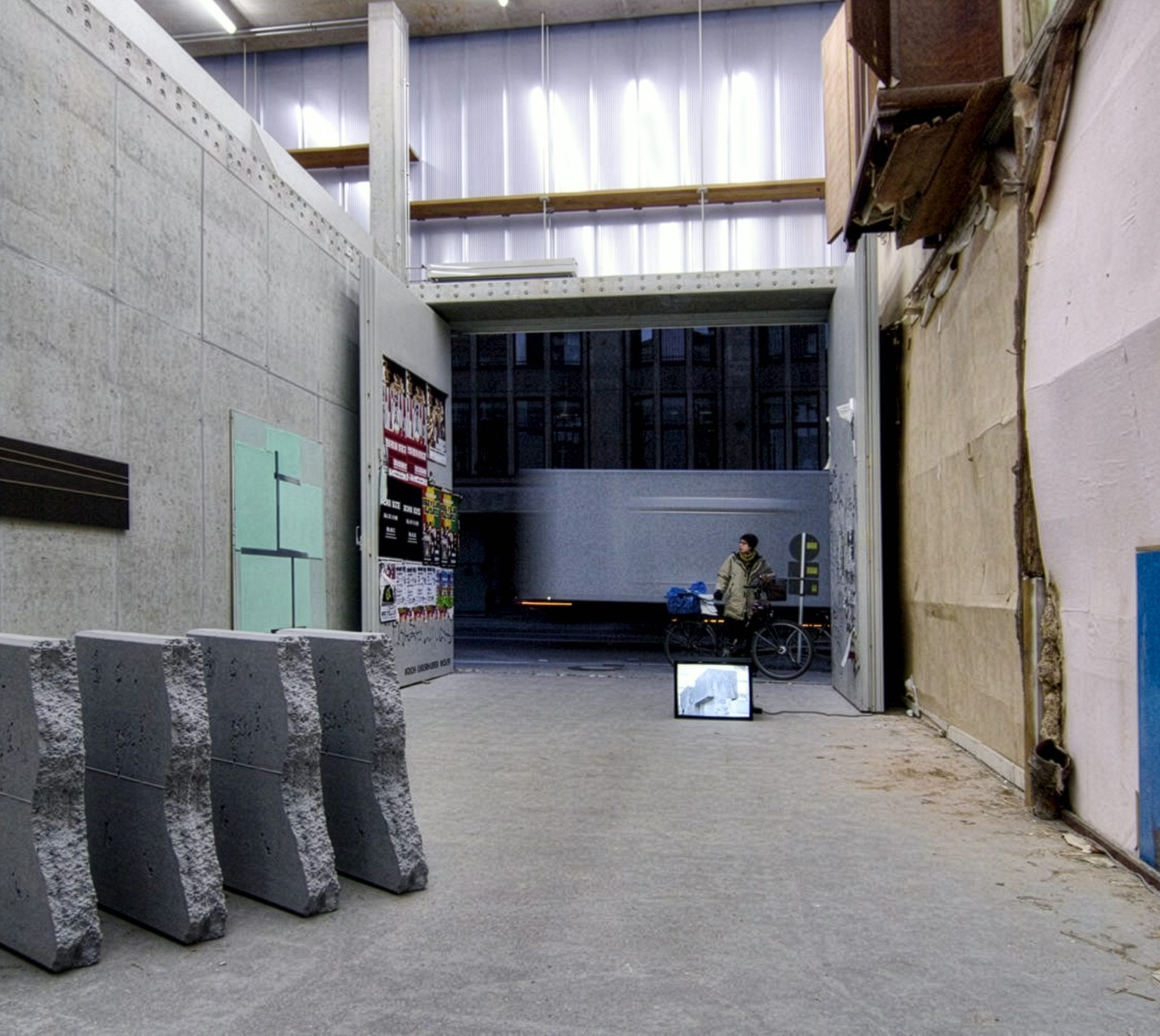
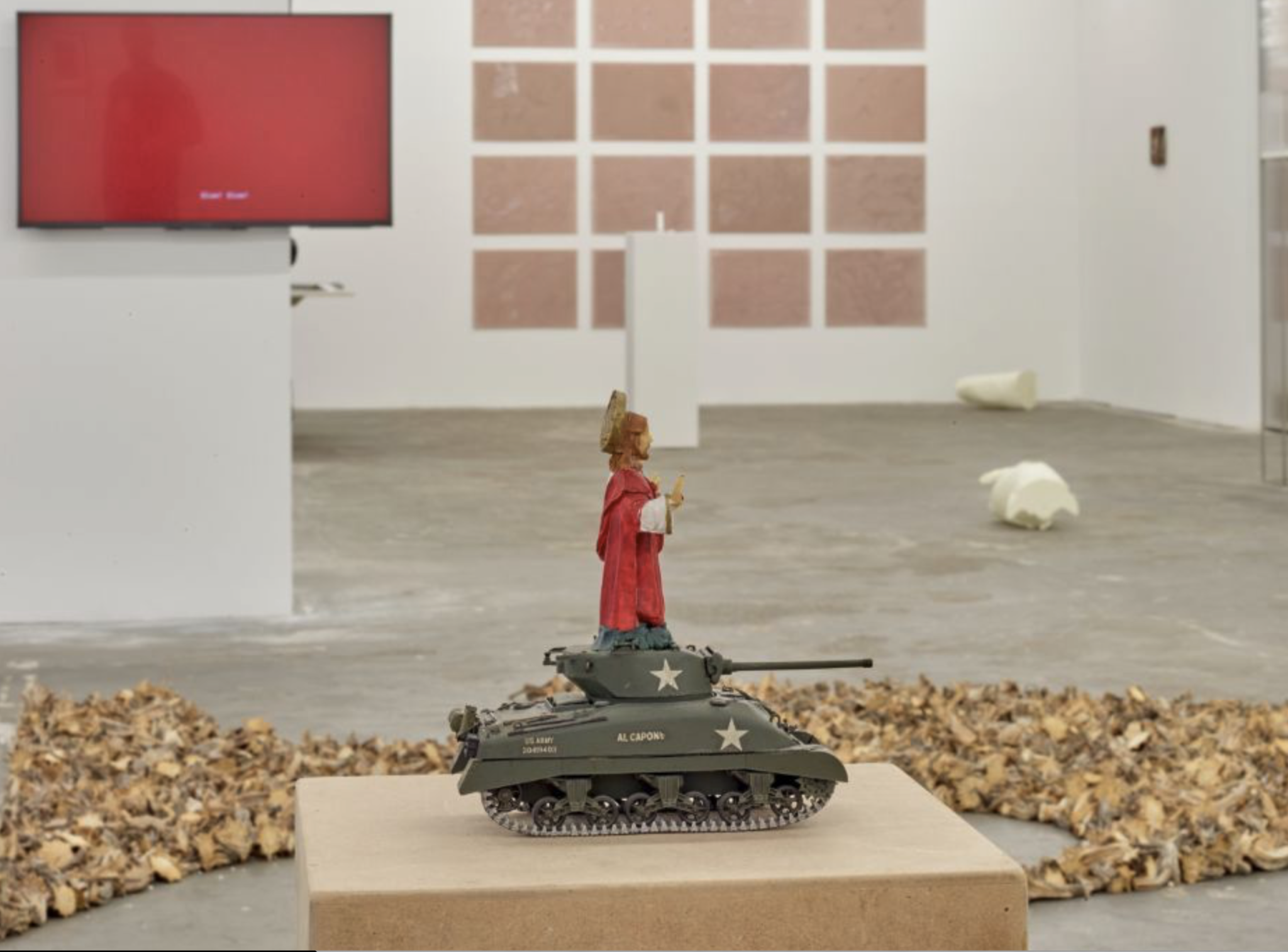
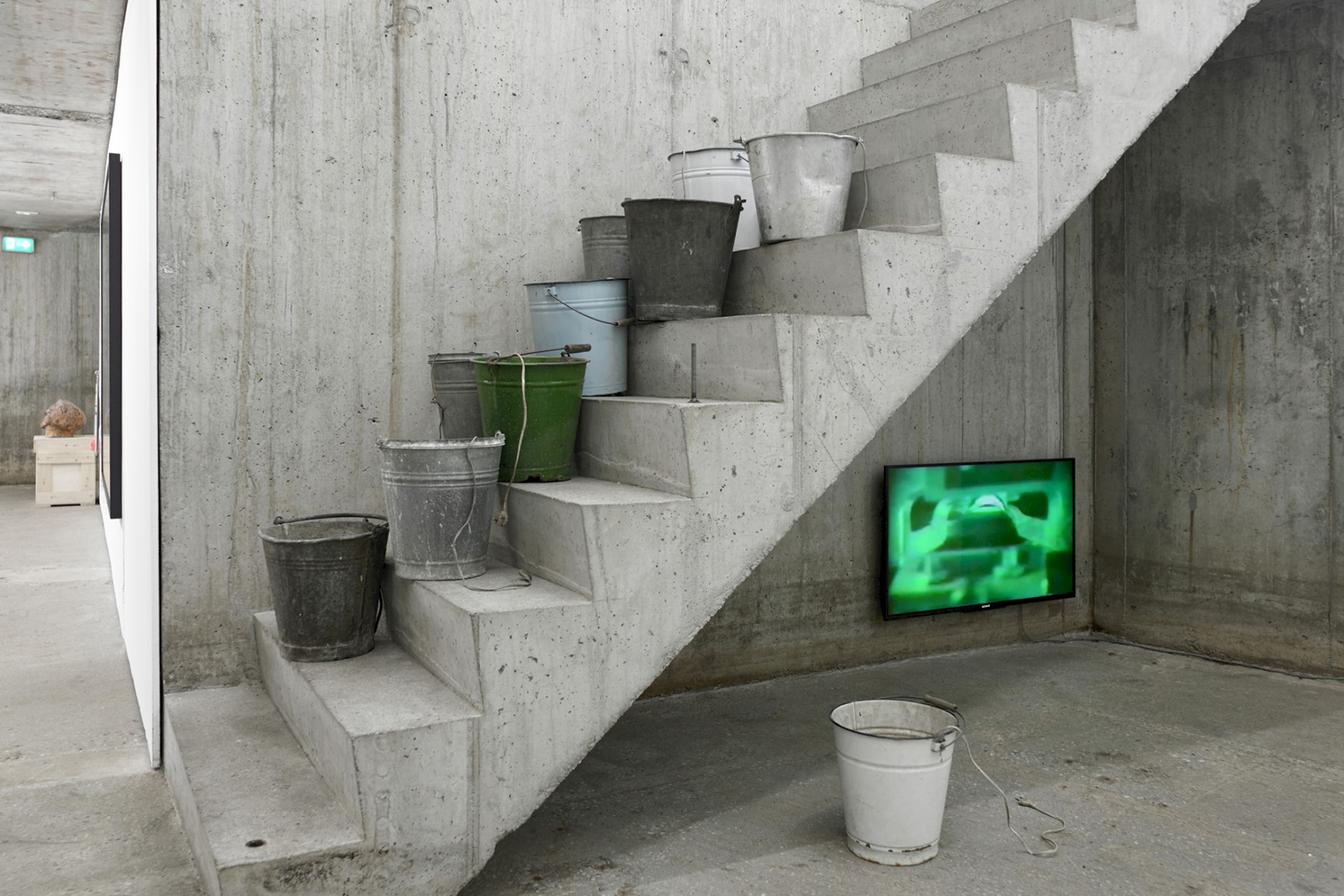
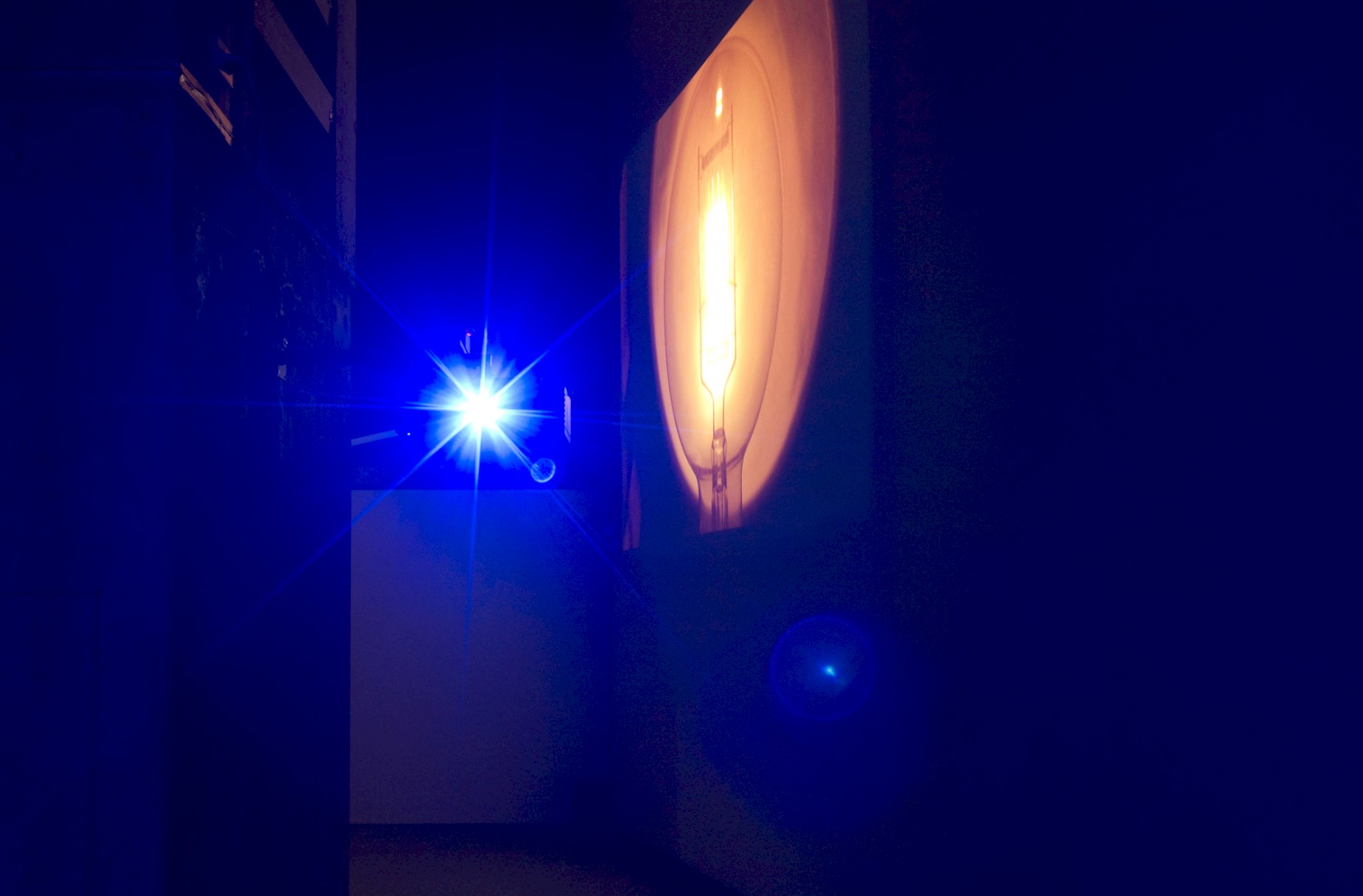
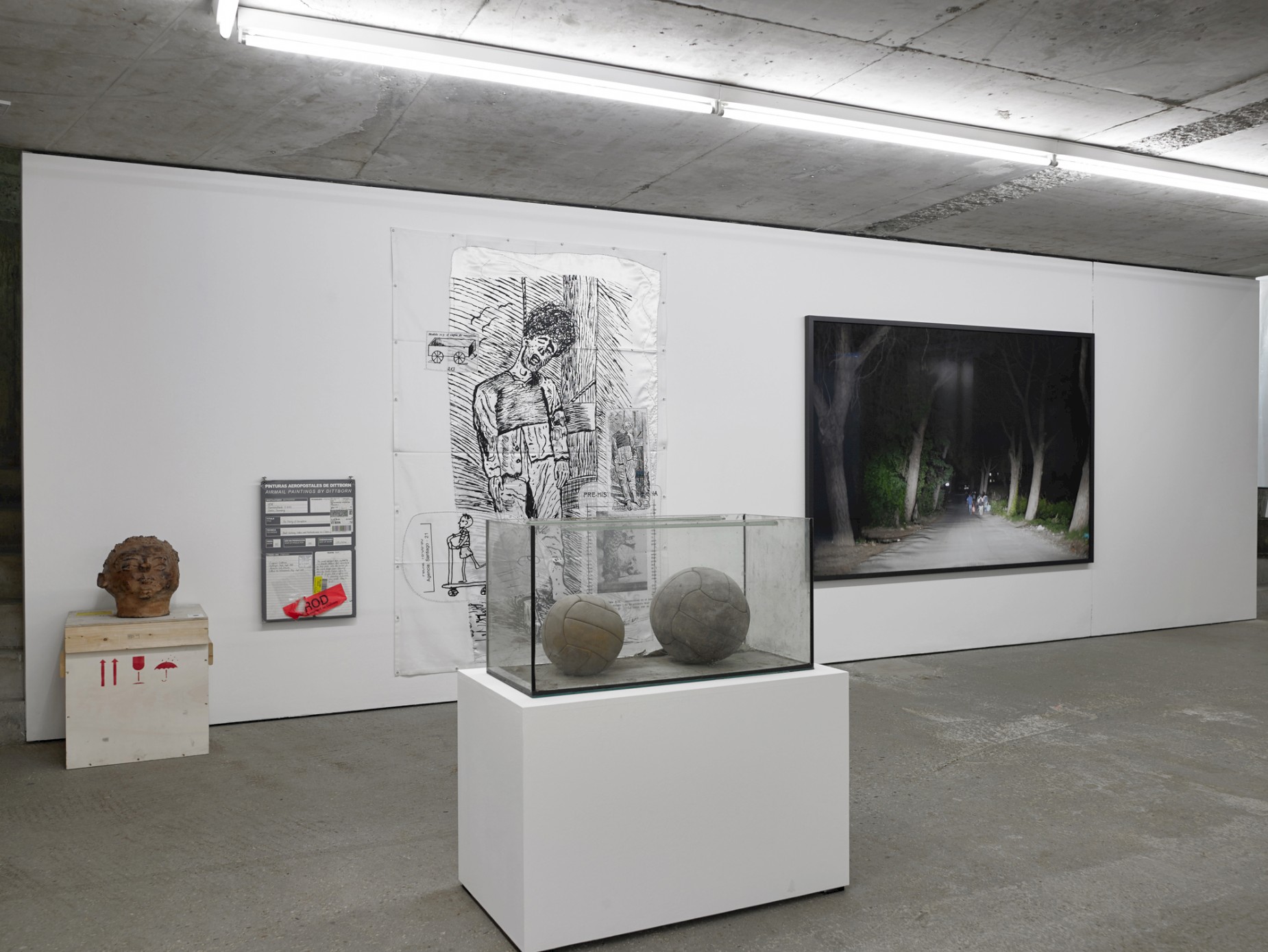
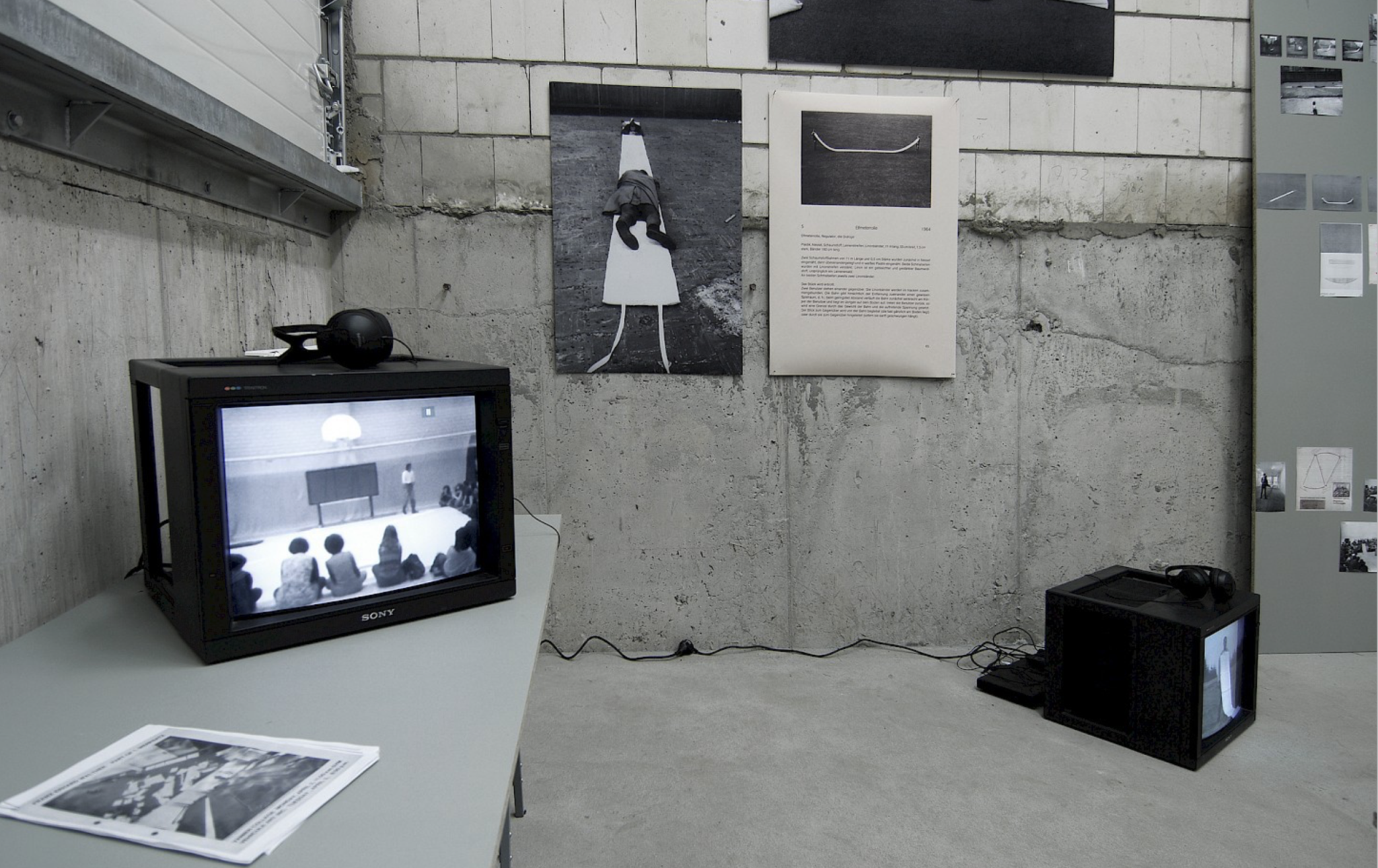
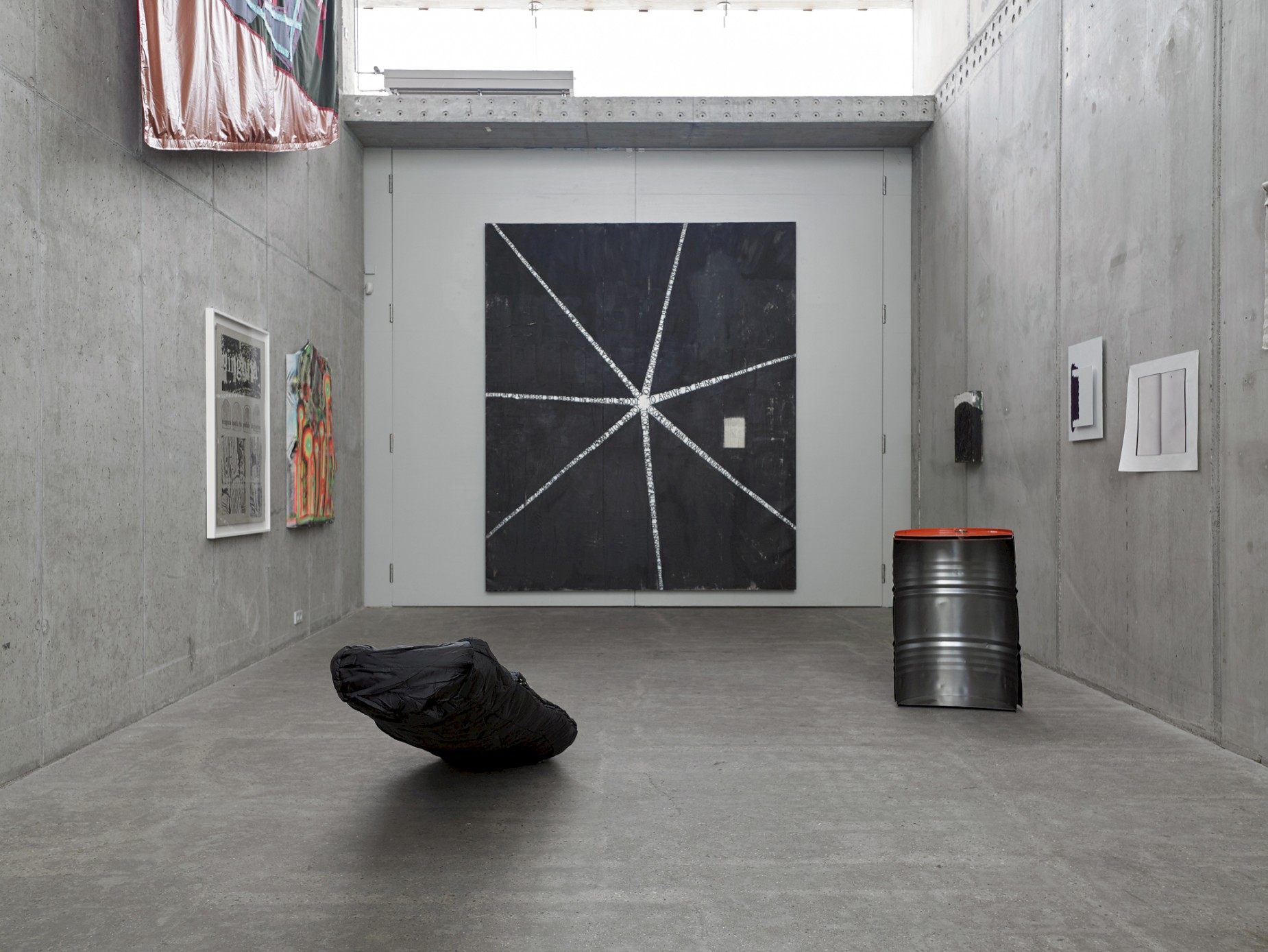
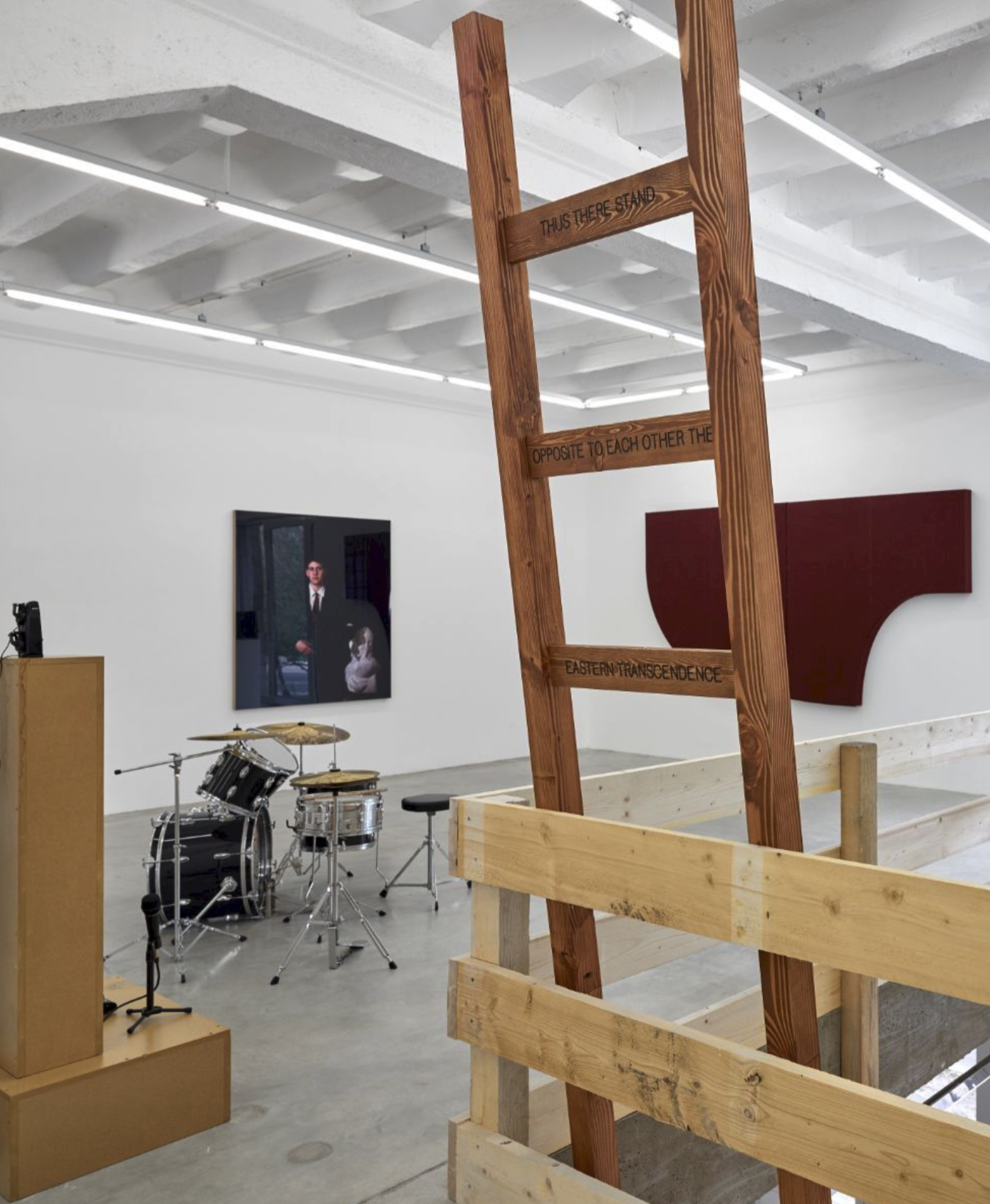
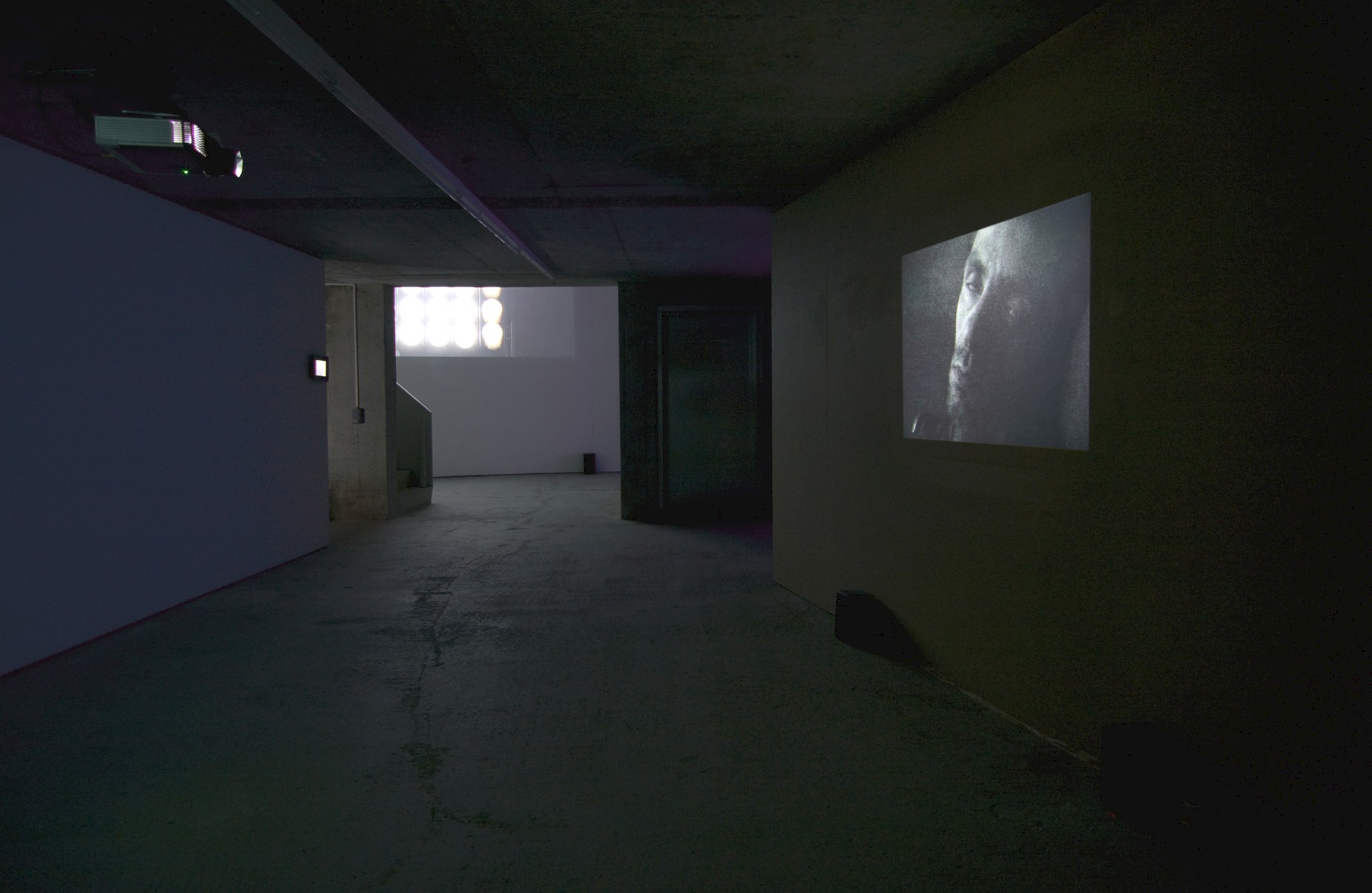
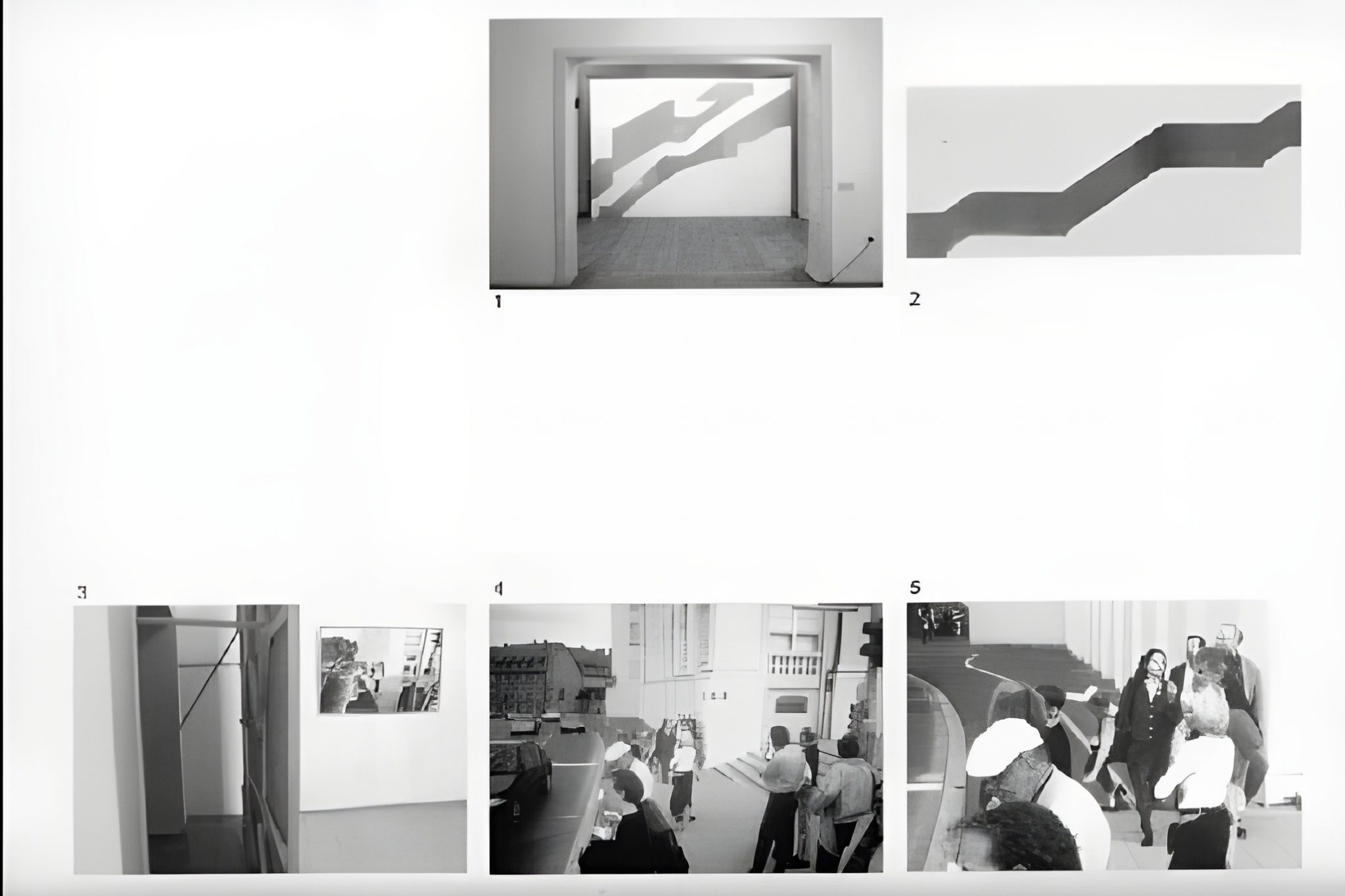
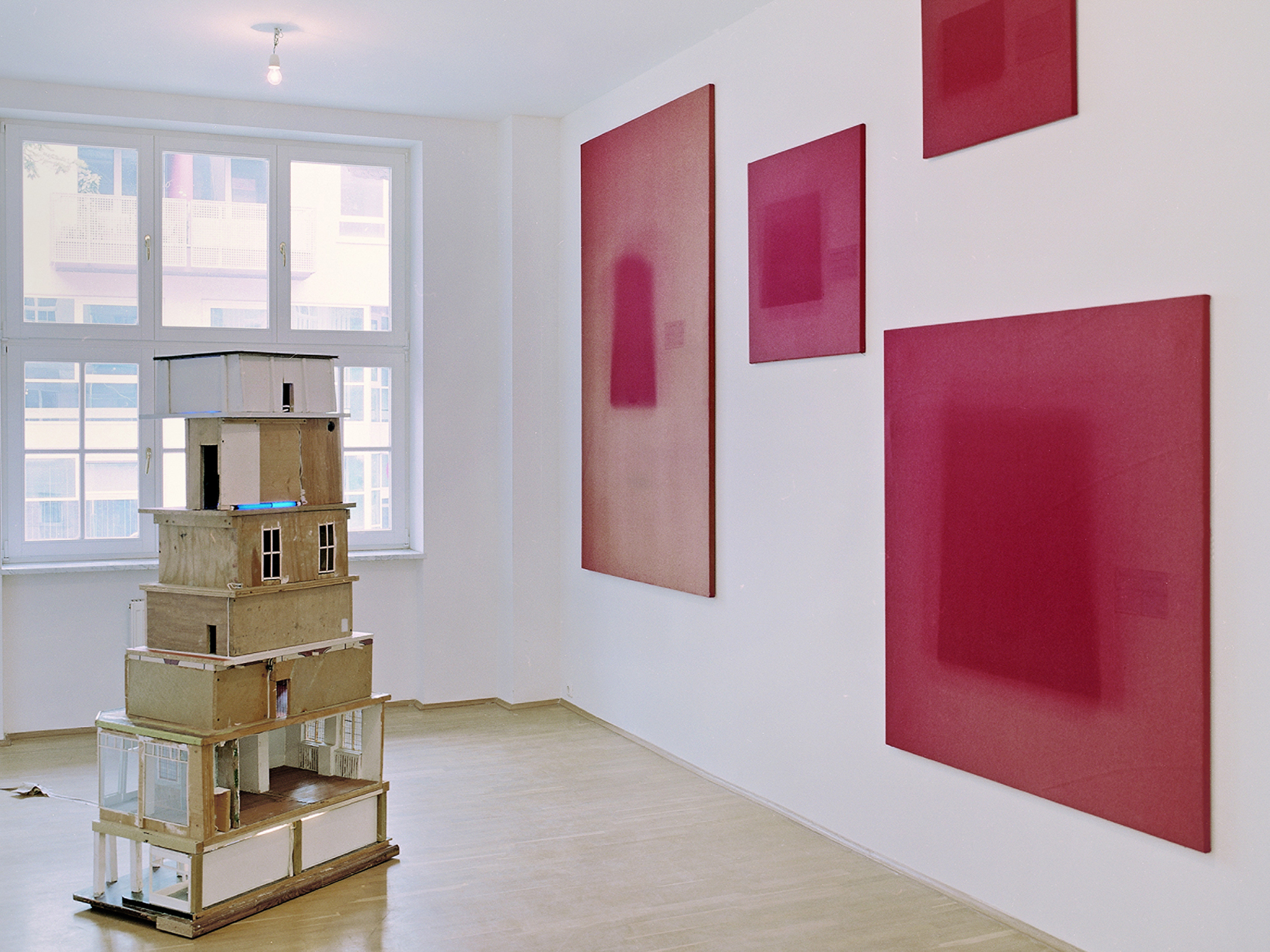
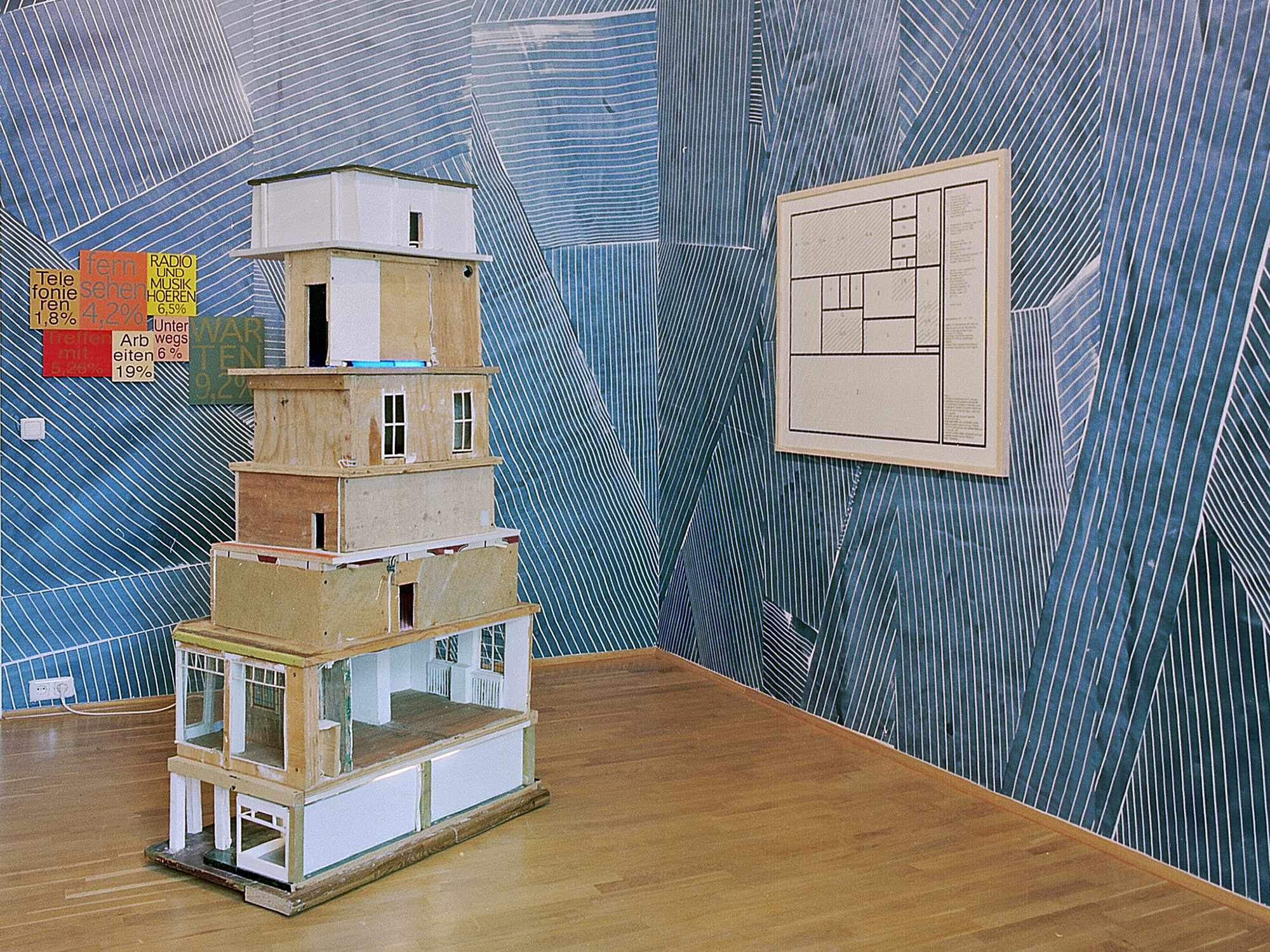
At KOW, the architect examines his own townhouse Brunnenstraße 9 in the context of this set of issues. Designed as an economic architectural and gallery model supporting heterogeneous uses, it is nonetheless itself one of those Mitte islands that reinforce social homogenization. All the building’s users (KOW, 032c magazine, Brandlhuber’s architecture studio, and an artist’s studio) are agents of the culture industry archipelago and attract their own kind. They may take a critical view of their role, but that does not change much. Three years after the gallery’s opening, Brandlhuber now revisits his architecture project with KOW to examine its accessibility and its openness to critique. He demonstratively unlocks the gallery’s doors and gates, while blocking the basement by flooding it—a throwback to the damp abandoned construction project he took over, erecting his new building on its foundations. The water disrupts all access to and use of the gallery space while also acting as a reflective surface that heightens the visual impression of the space.
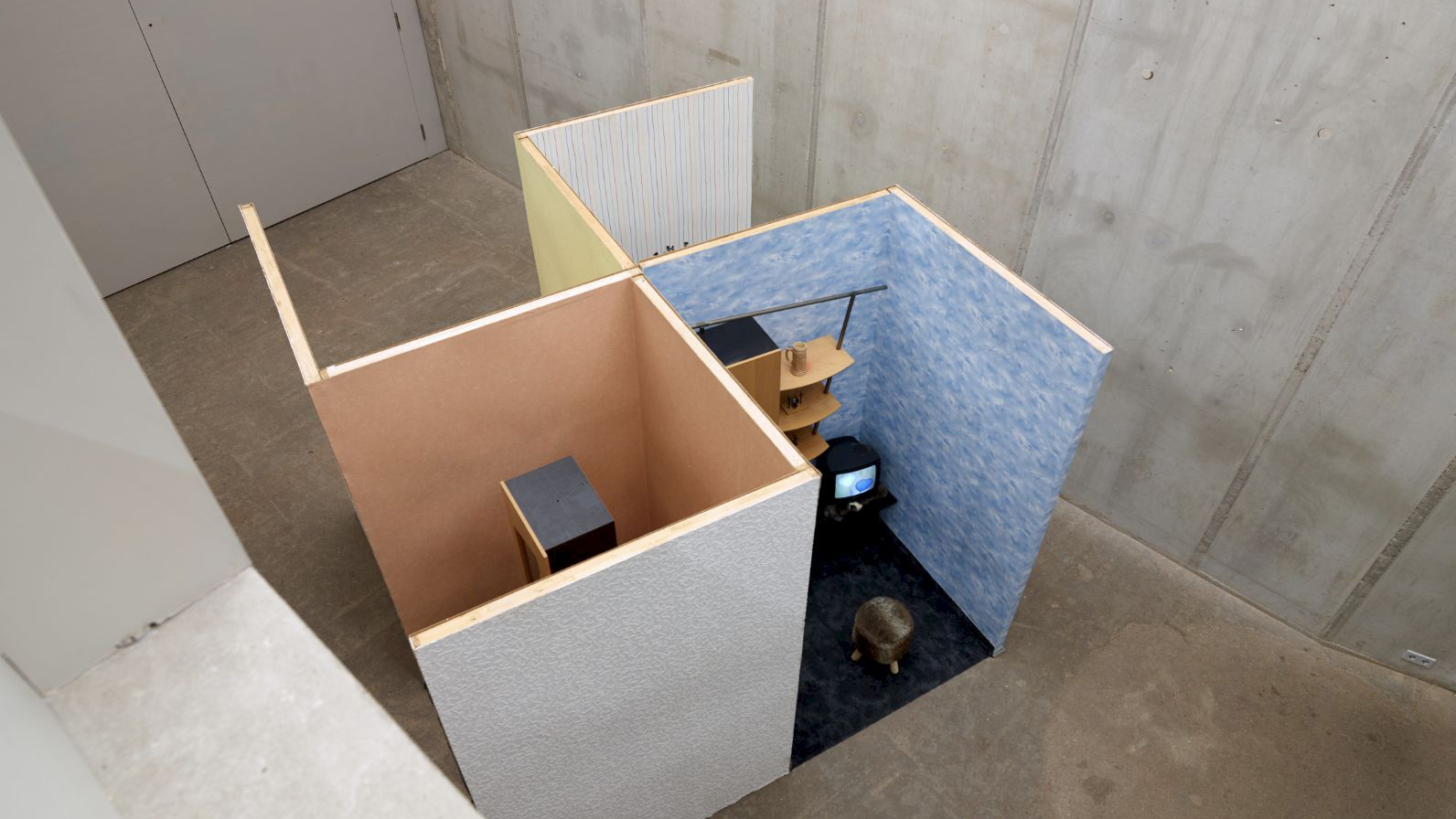
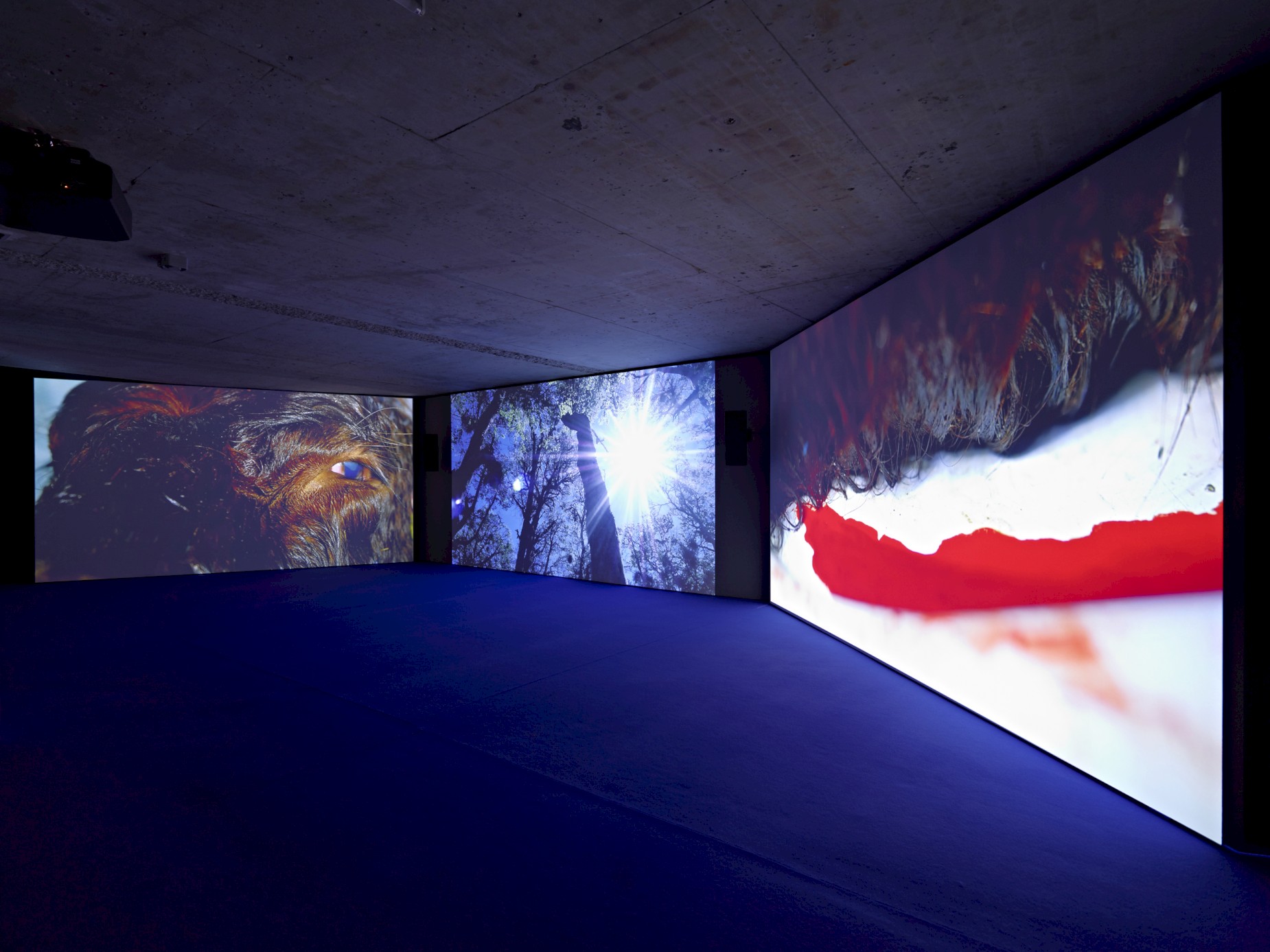
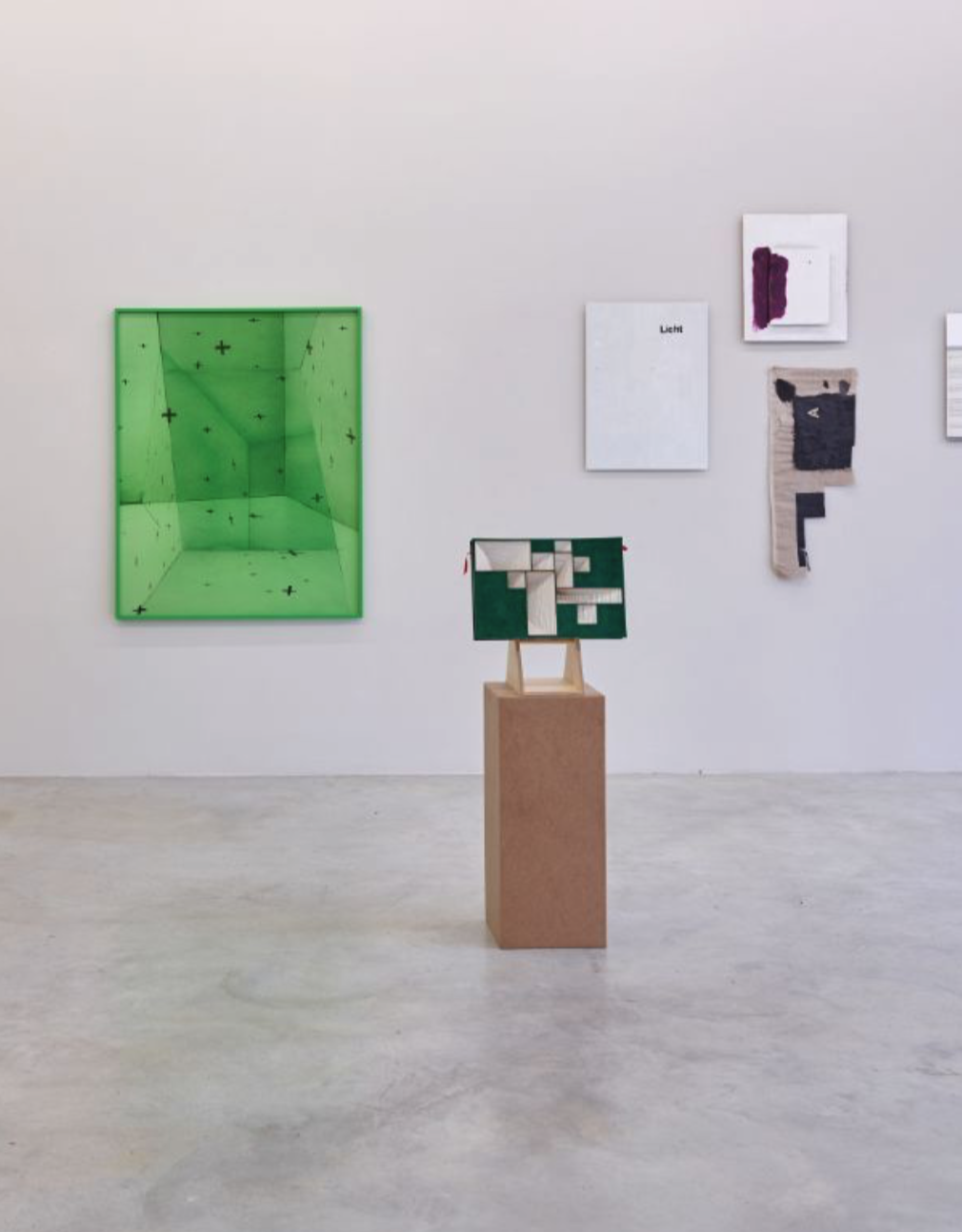
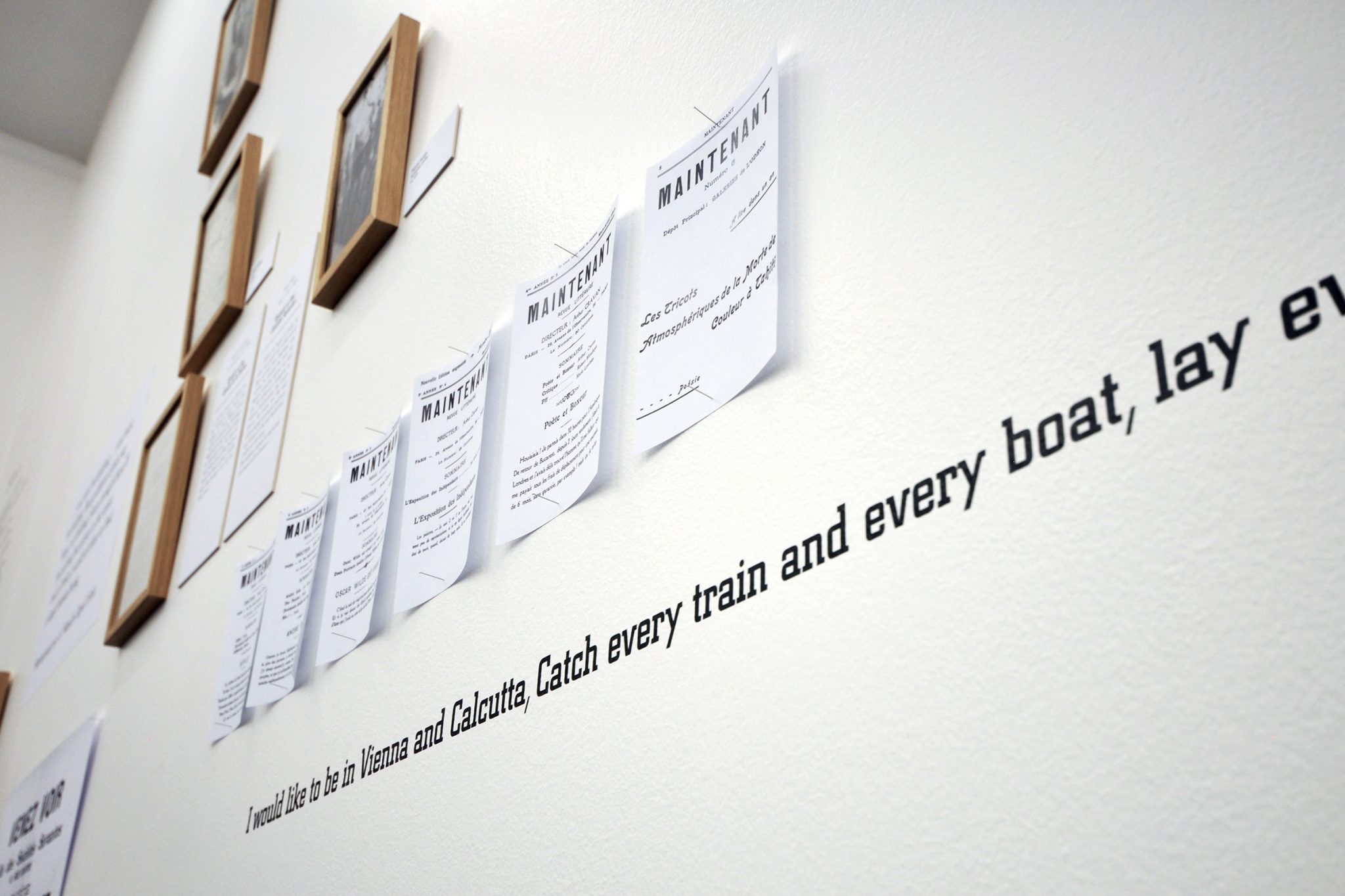
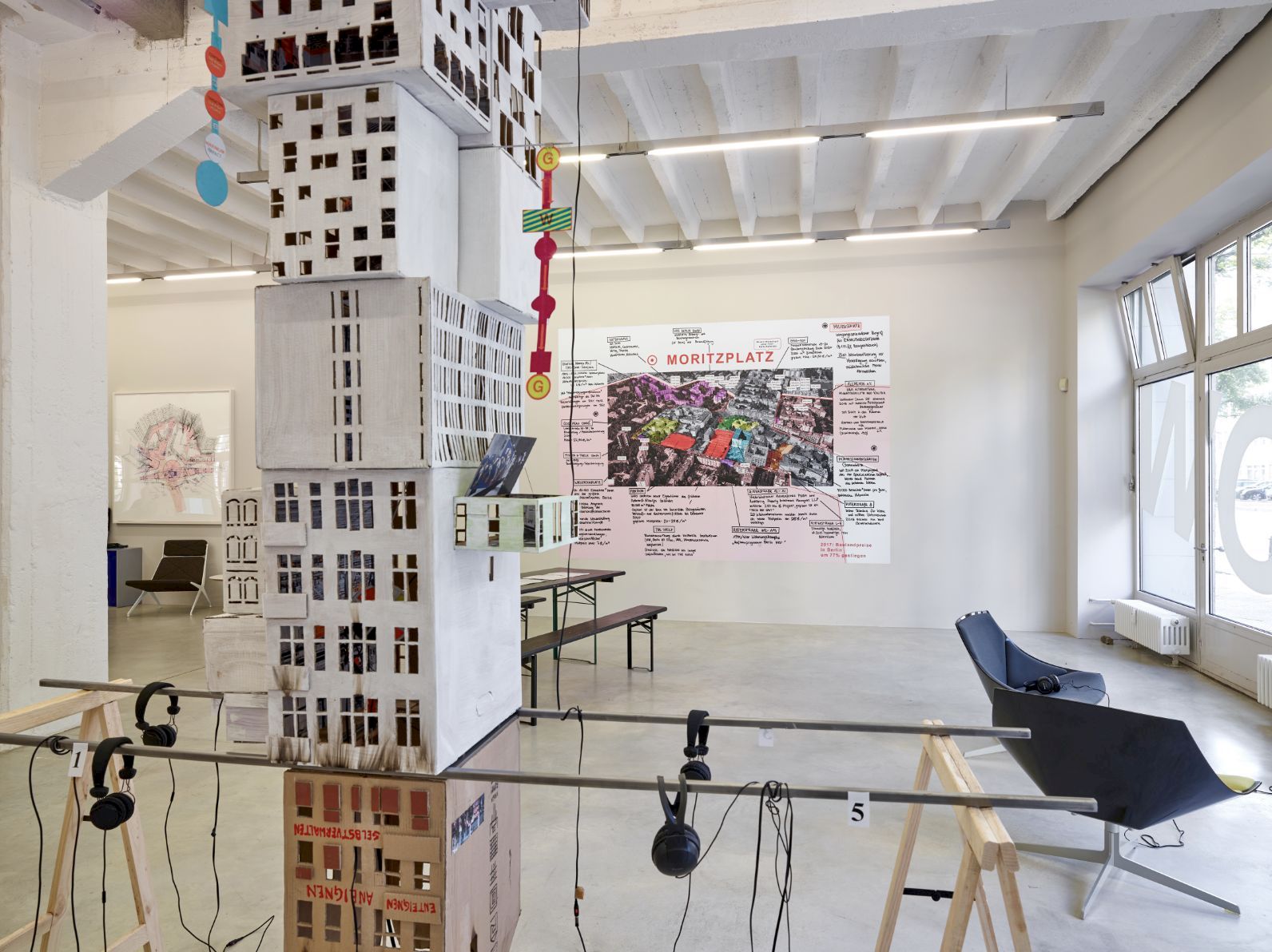
On the acoustic level, a sound piece by Mark Bain fills the basement: seismographic sensors in the structure render even the slightest reverberation audible. The building thus reproduces its resonant relation to its surroundings in its sonic interior. Brandlhuber reprints articles about real estate politics and the housing market he has collected from German dailies over the course of a year in the form of a newspaper, retracing the trajectory of the public discourse his own urban-policy demands helped shape. For comparison, the staff at KOW and Brandlhuber’s studio hold daily readings from the Green Urban Archipelago for the visitors to the gallery. The gallery team’s computer screens everyone crowds into two work islands near the entrance—show advertising clips for the upscale residential developments that now set new historic records for housing prices in Berlin. A map documenting the housing stock owned by a municipal real estate holding corporation whose rent index might guide social policies designed to counter the trend is on display in the showroom, entitled Model of Heterogeneity.
The homogenization of social relations undercuts the basis of the polity: diversity. Brandlhuber watches the redivision of the city and calls for active measures to foster its heterogeneity. His project also highlights the art world’s own tendency to form archipelagoes—rendering a debate over how everyone’s right to be part of the city can be secured in the future no easier, but certainly more urgent. We present Arno Brandlhuber as an engaged participant in discourses and cultural producer who brings his influence to bear on fields ranging from architecture and art to politics and media. His first solo project at a gallery opens on occasion of KOW’s third anniversary and is flanked by KOW ISSUE 9.
Text and photos: Alexander Koch / Translation: Gerrit Jackson