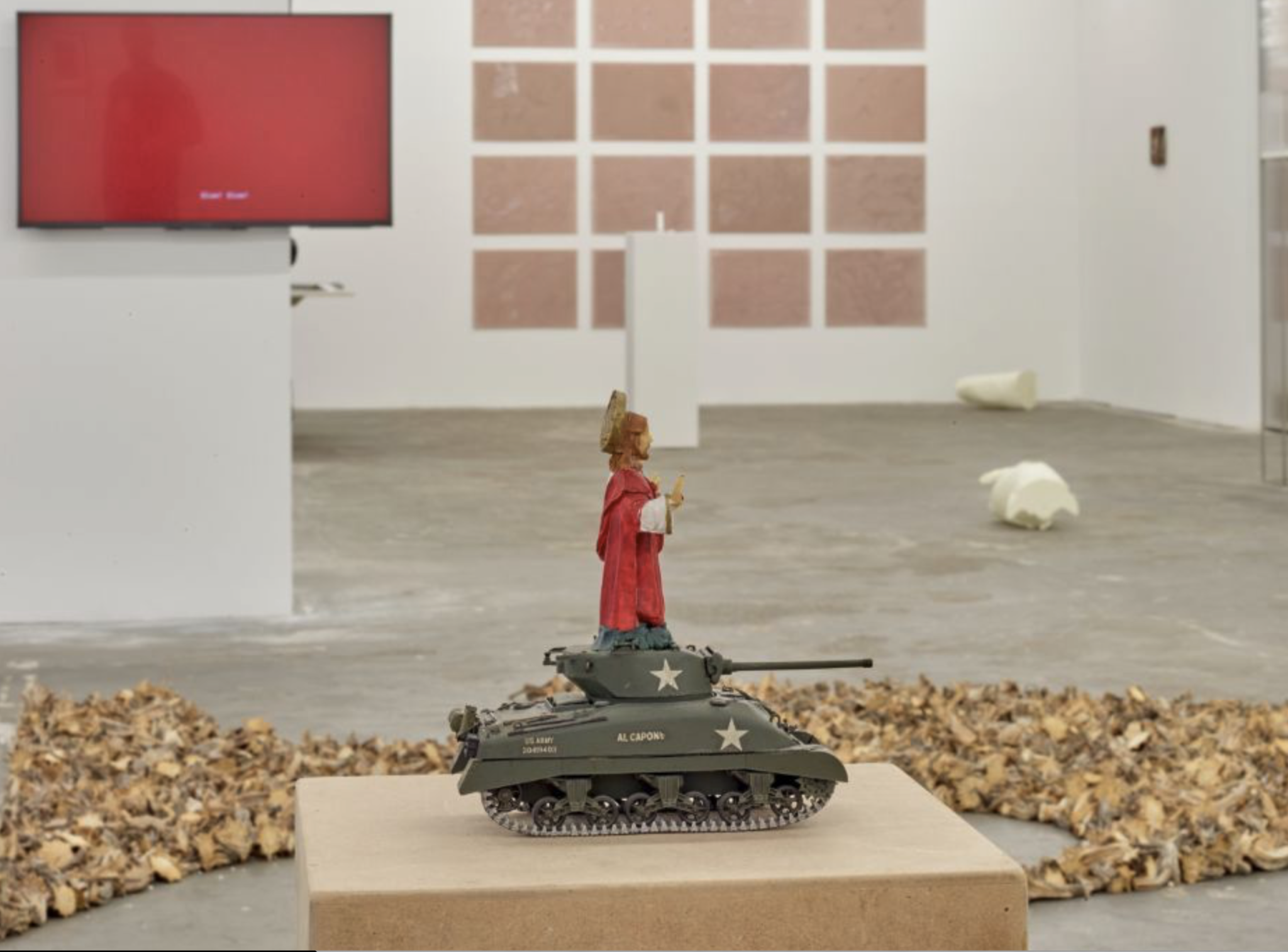
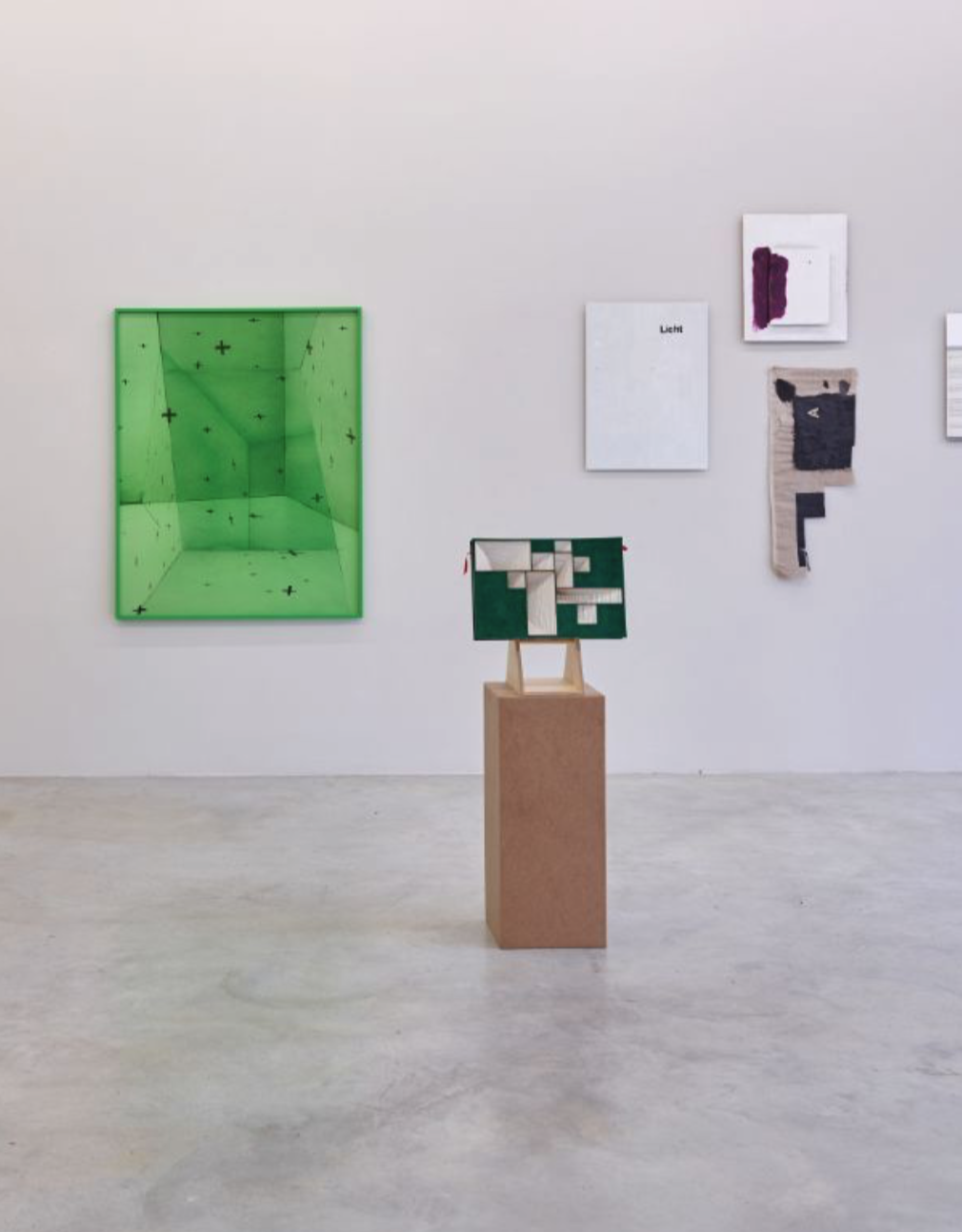
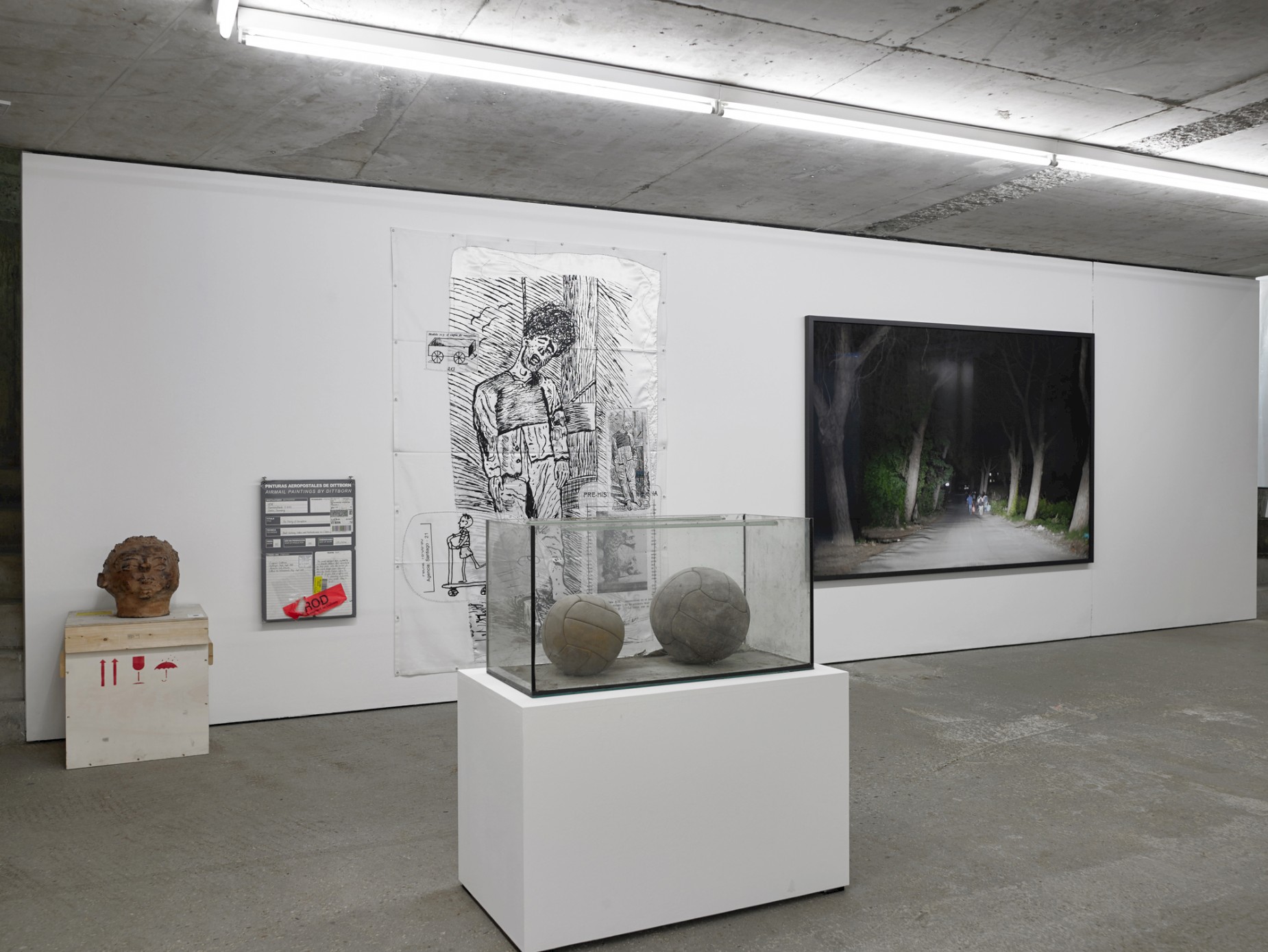
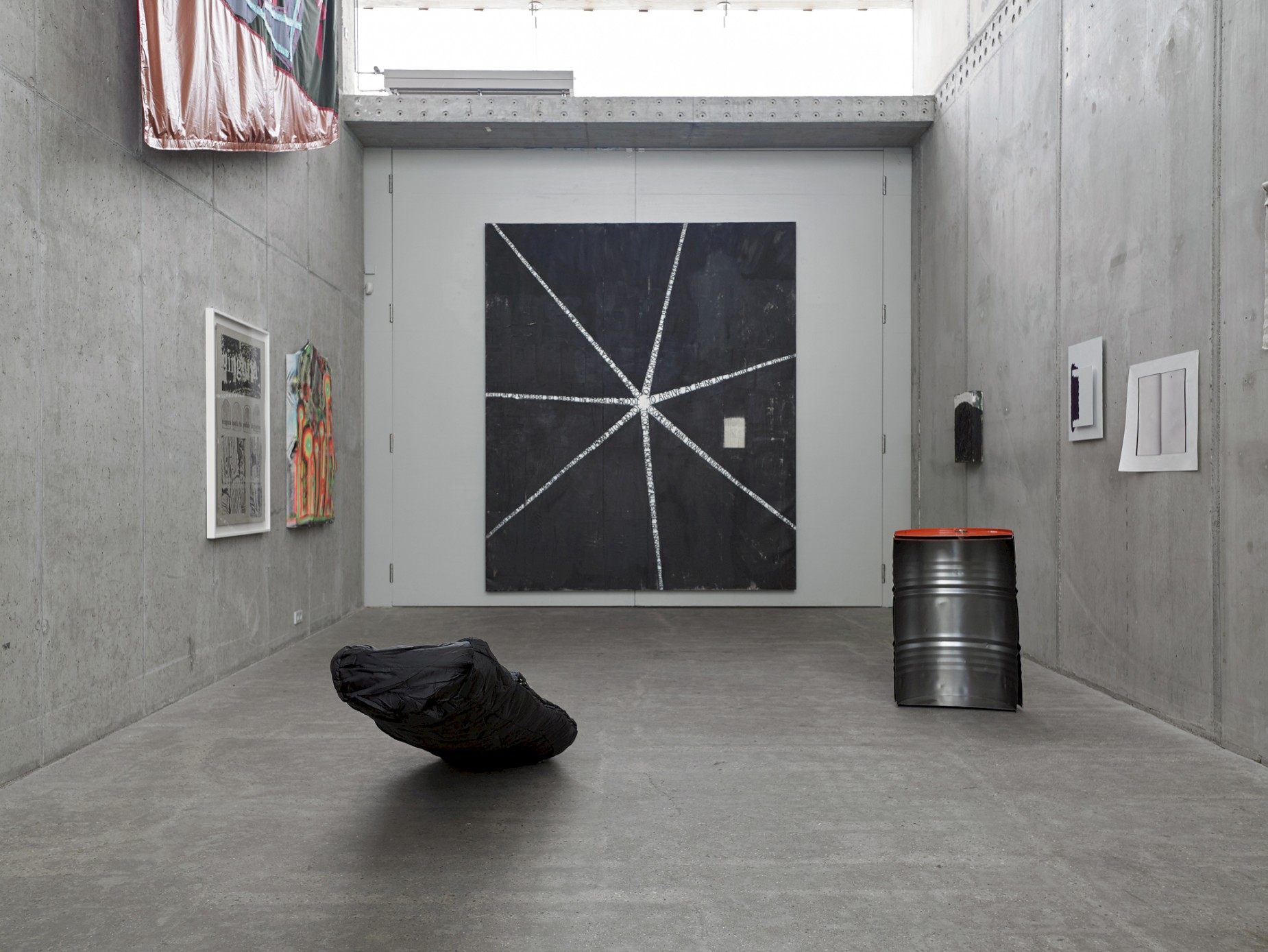
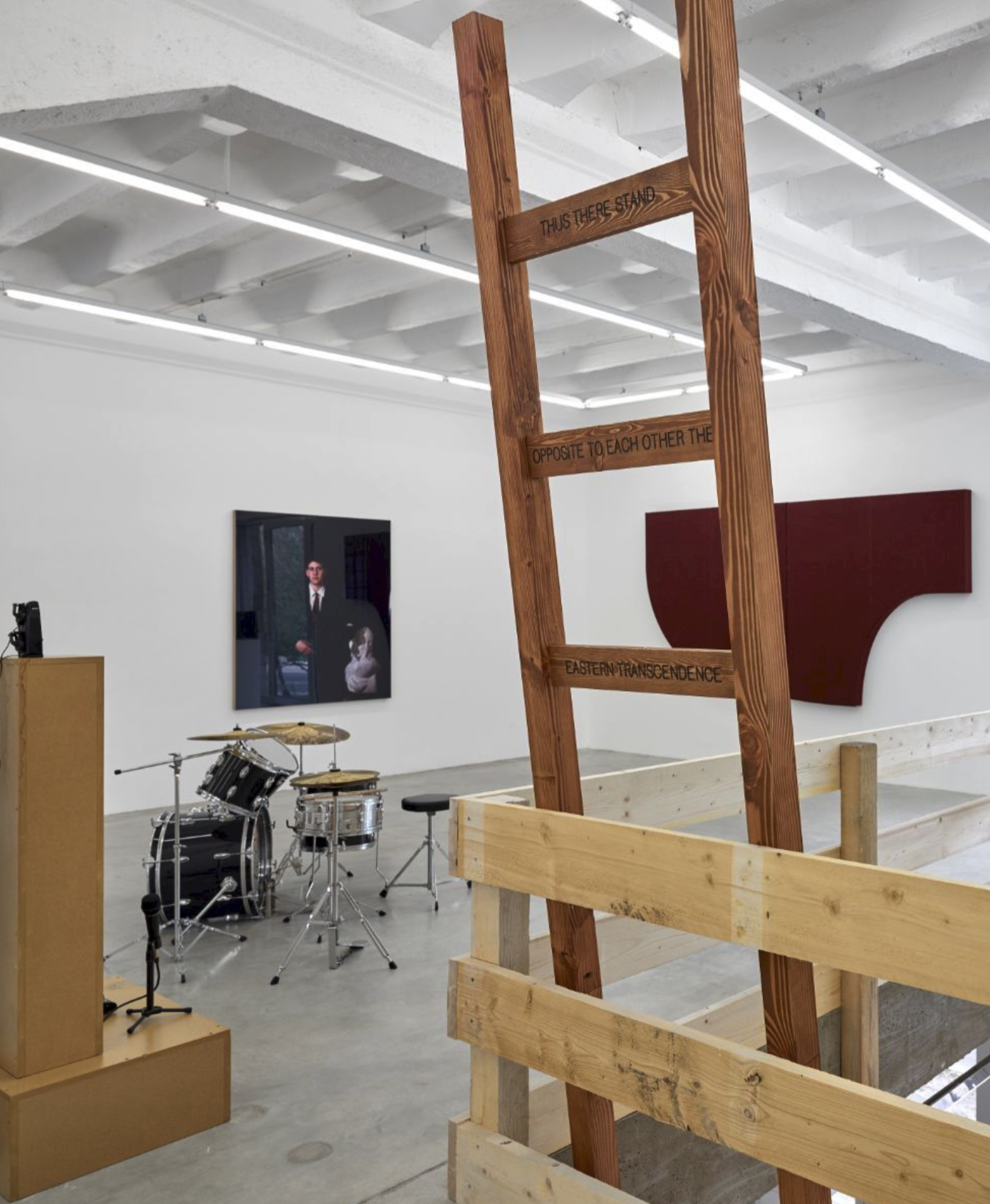
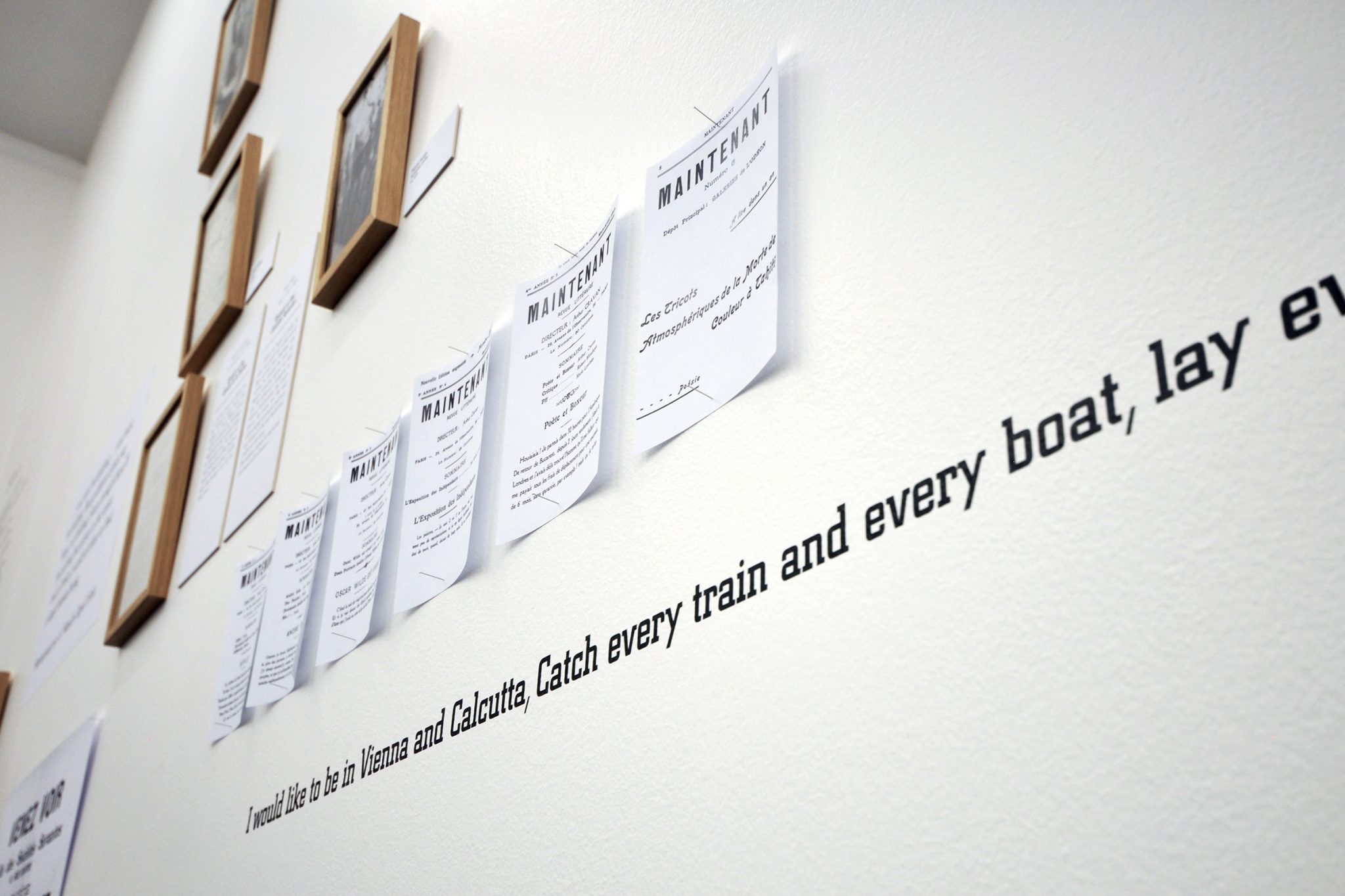
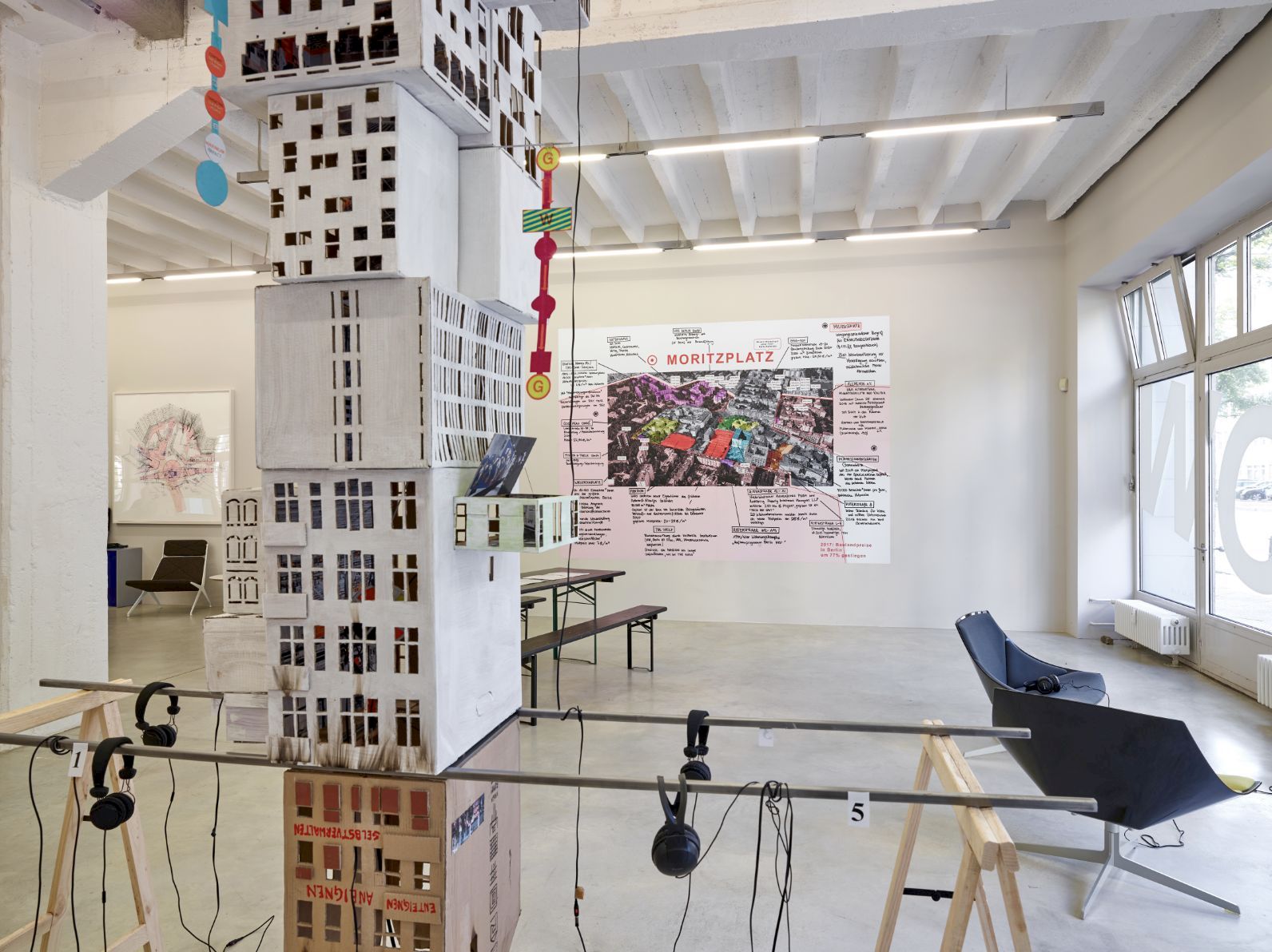
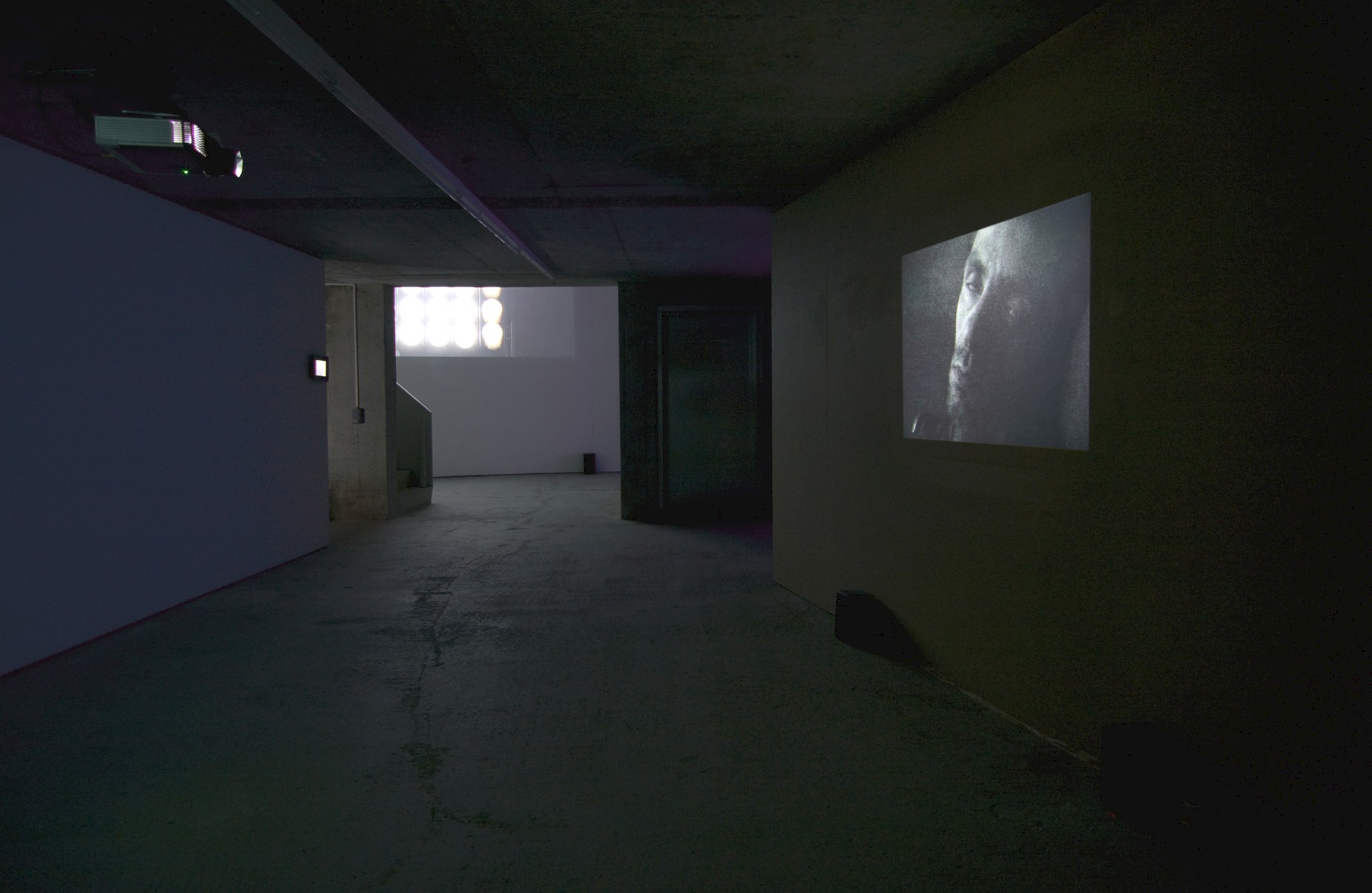
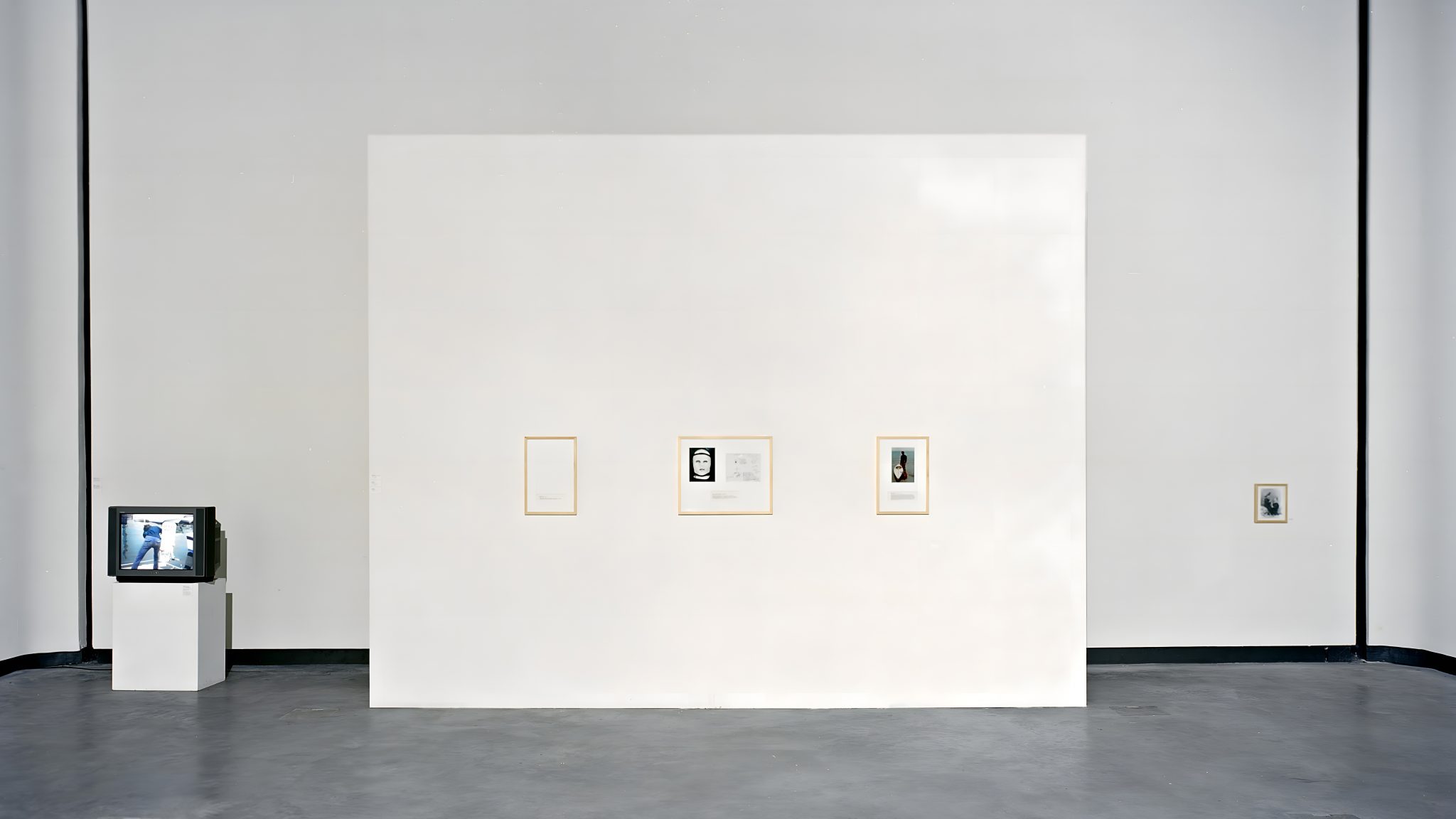
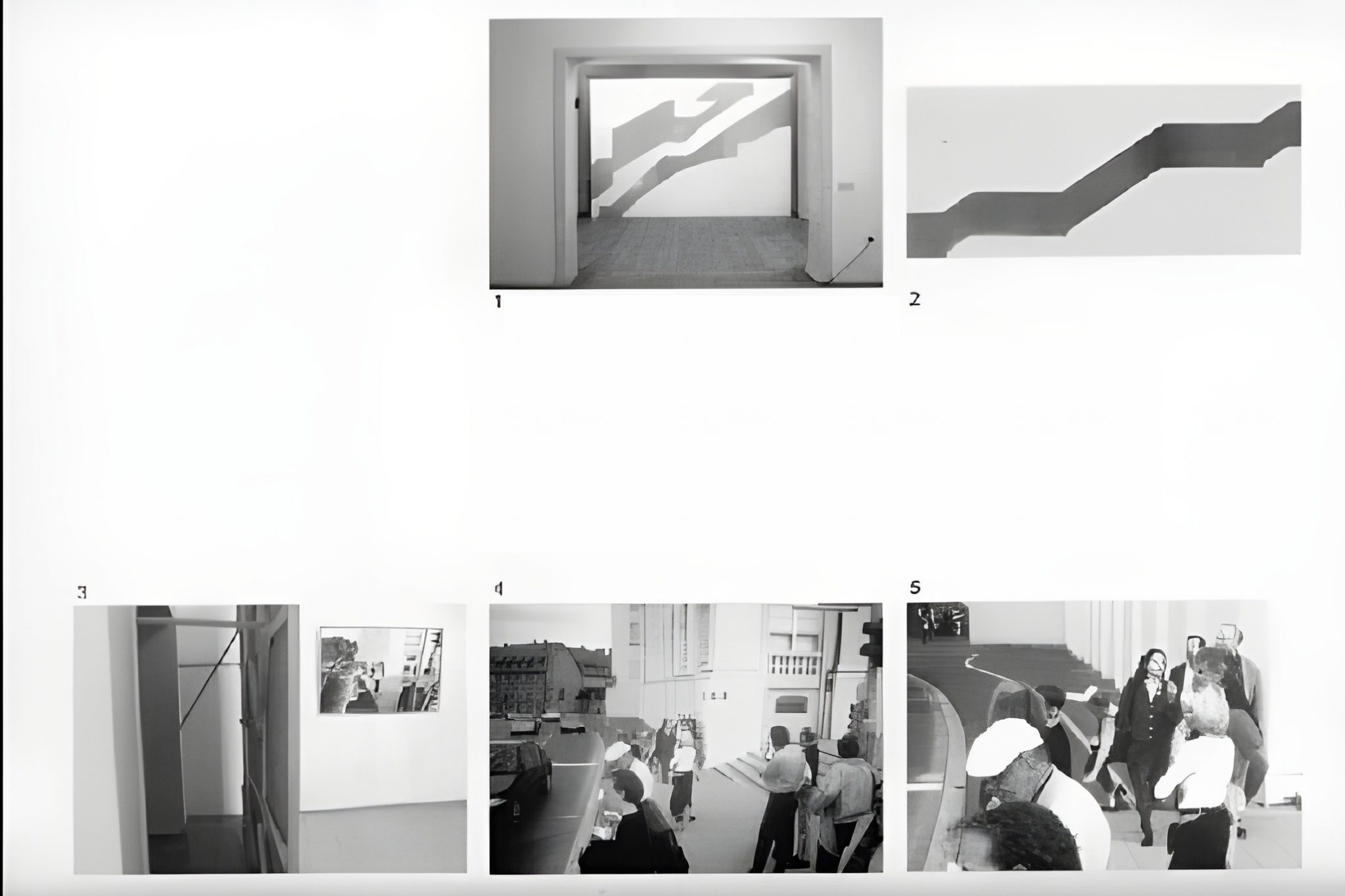
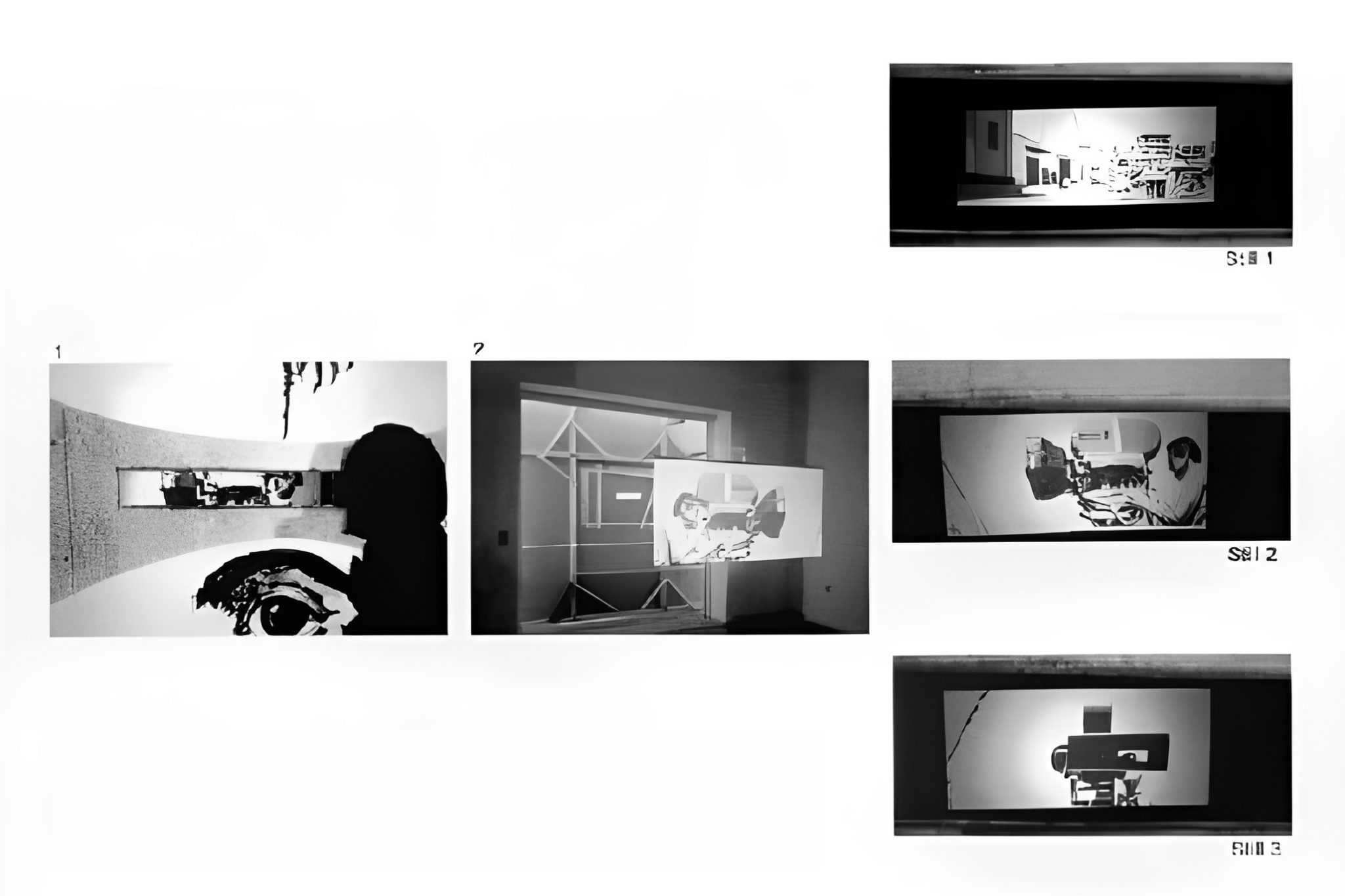
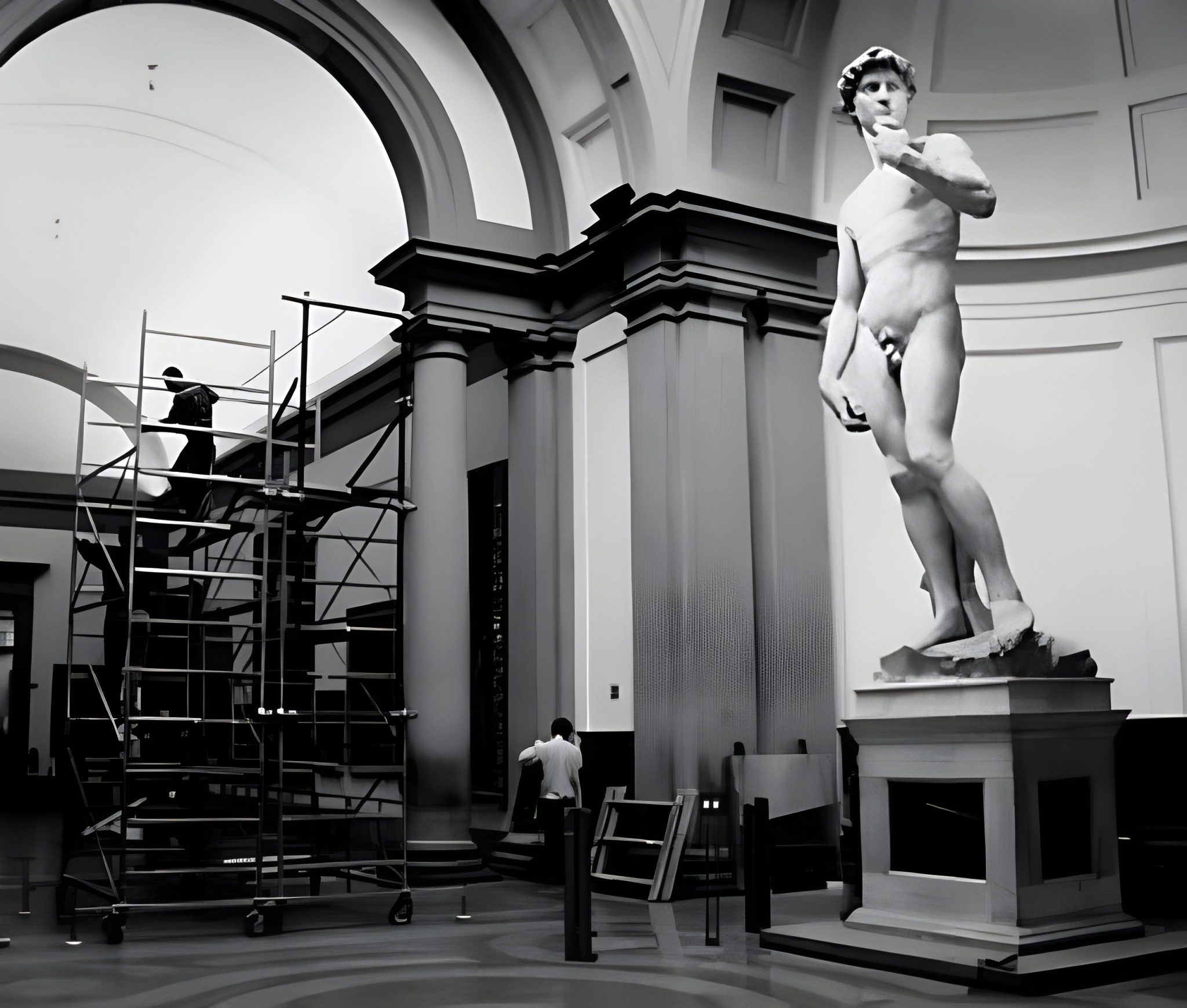
Behind the wooden slats of crates and layers of bubble wrap looms the dark realm of aesthetic inertia. It’s a classical quandary of art theory: was the Venus de Milo a work of art during all the centuries it spent underground? Potentially: yes. De facto: no. Beginning in the mid-1980s, Chris Martin’s studio in Brooklyn filled up with hundreds of paintings, mostly in large formats, and eventually swelled into an enormous magazine only a few pictures managed to escape. It wasn’t until about a decade ago, when Martin’s art attracted international interest, that his stock started to thin out. We present “St. John of the Cross,” a major work from the 1990s, which has been parked at KOW since Martin’s retrospective at Kunsthalle Düsseldorf in 2011. In the case of Eugenio Dittborn, it was the geographical and cultural isolation of Chile under the Pinochet dictatorship that prevented his work from reaching a wider public audience, and so, from 1986 on, he participated in the international exhibition circuit by mailing his paintings on folded fabric panels—he dubbed them pinturas aeropostales—to addressees abroad.
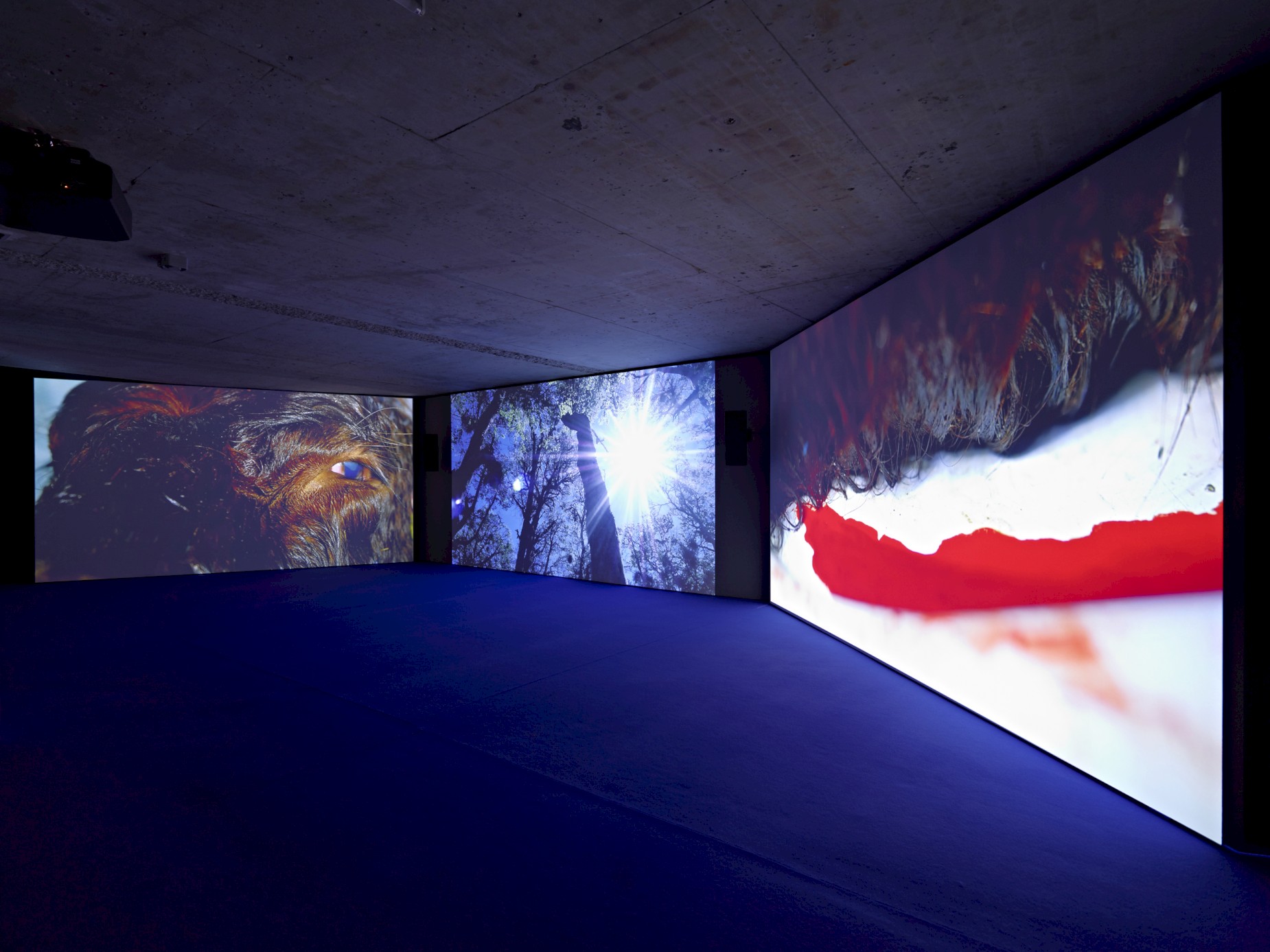
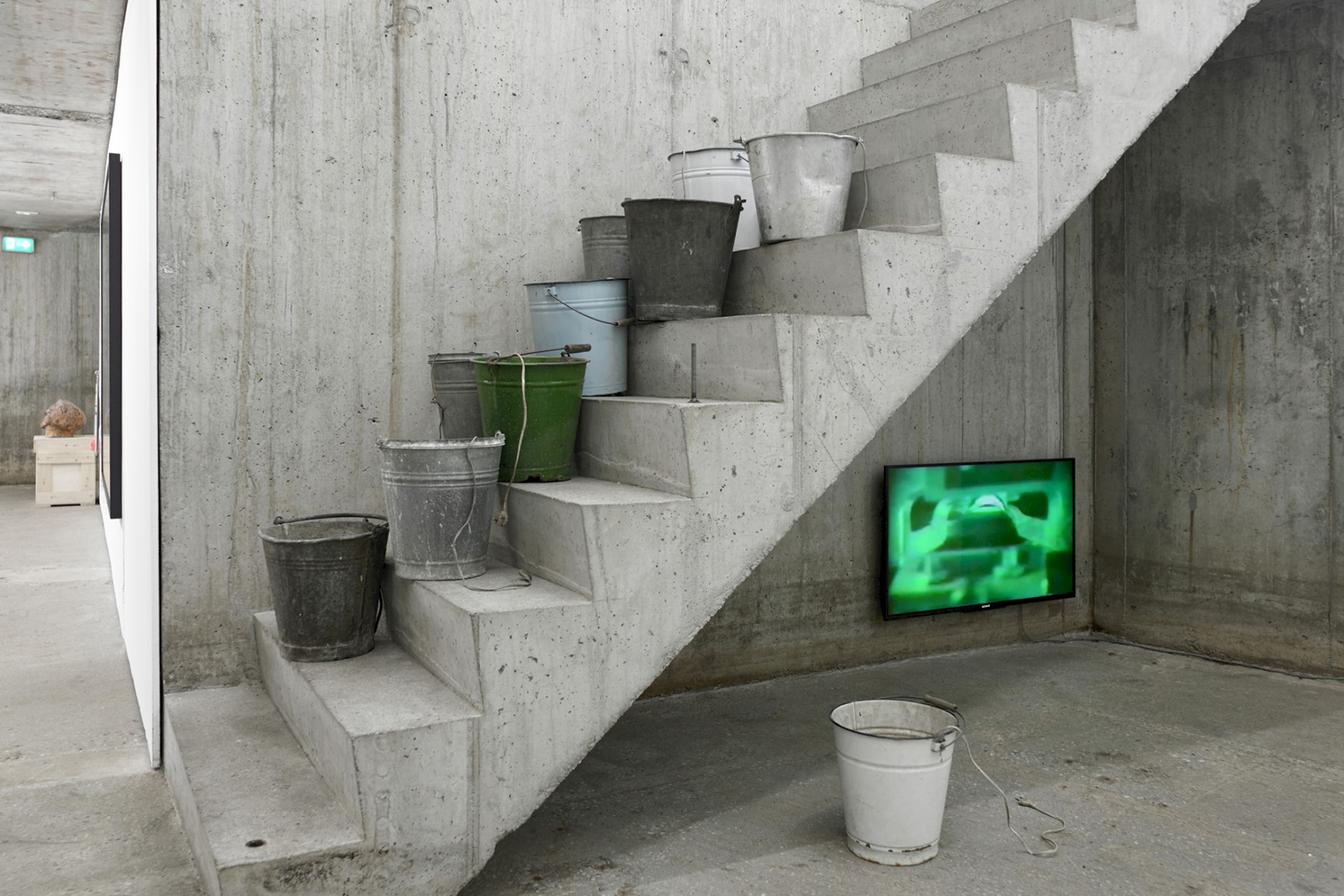
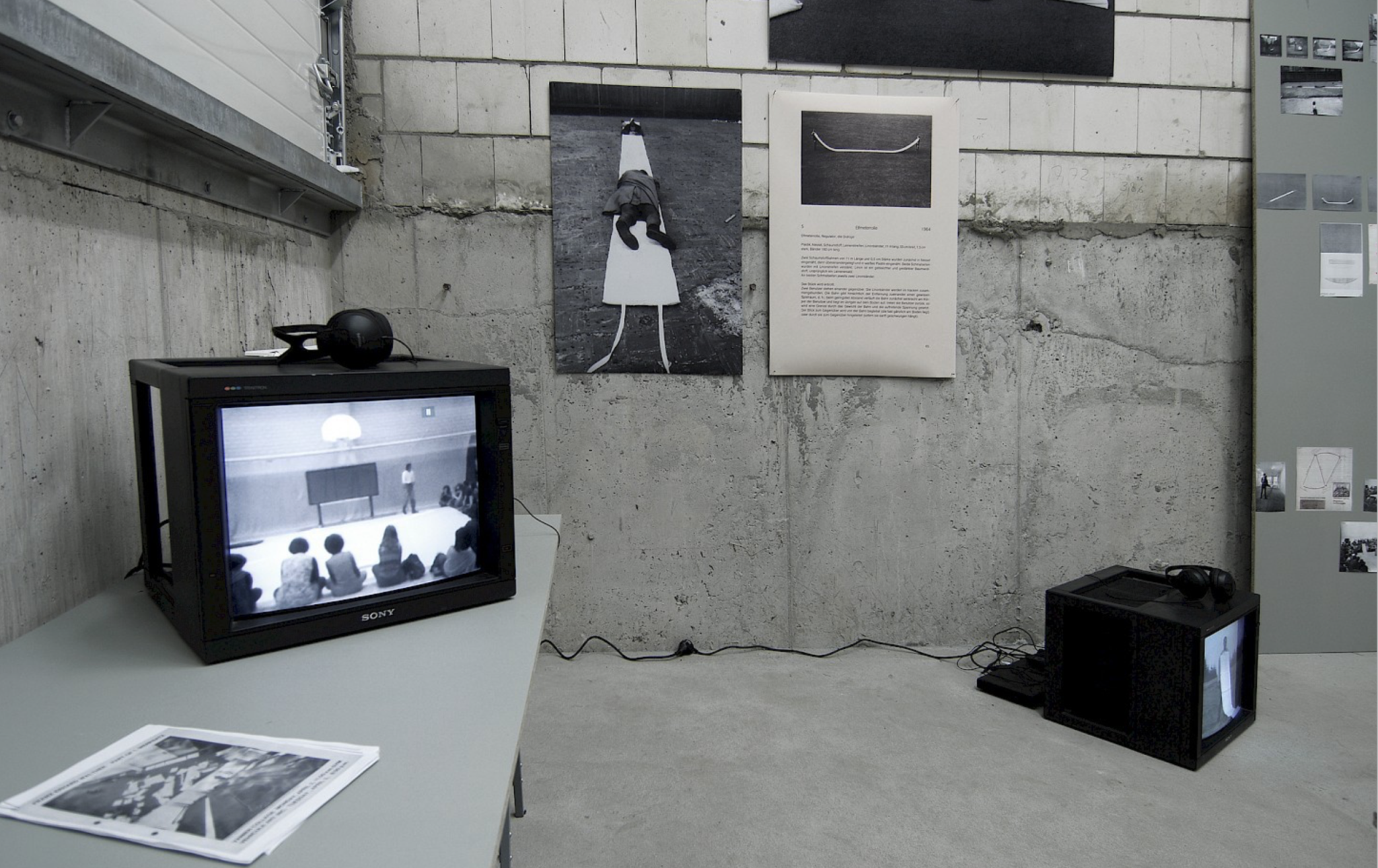
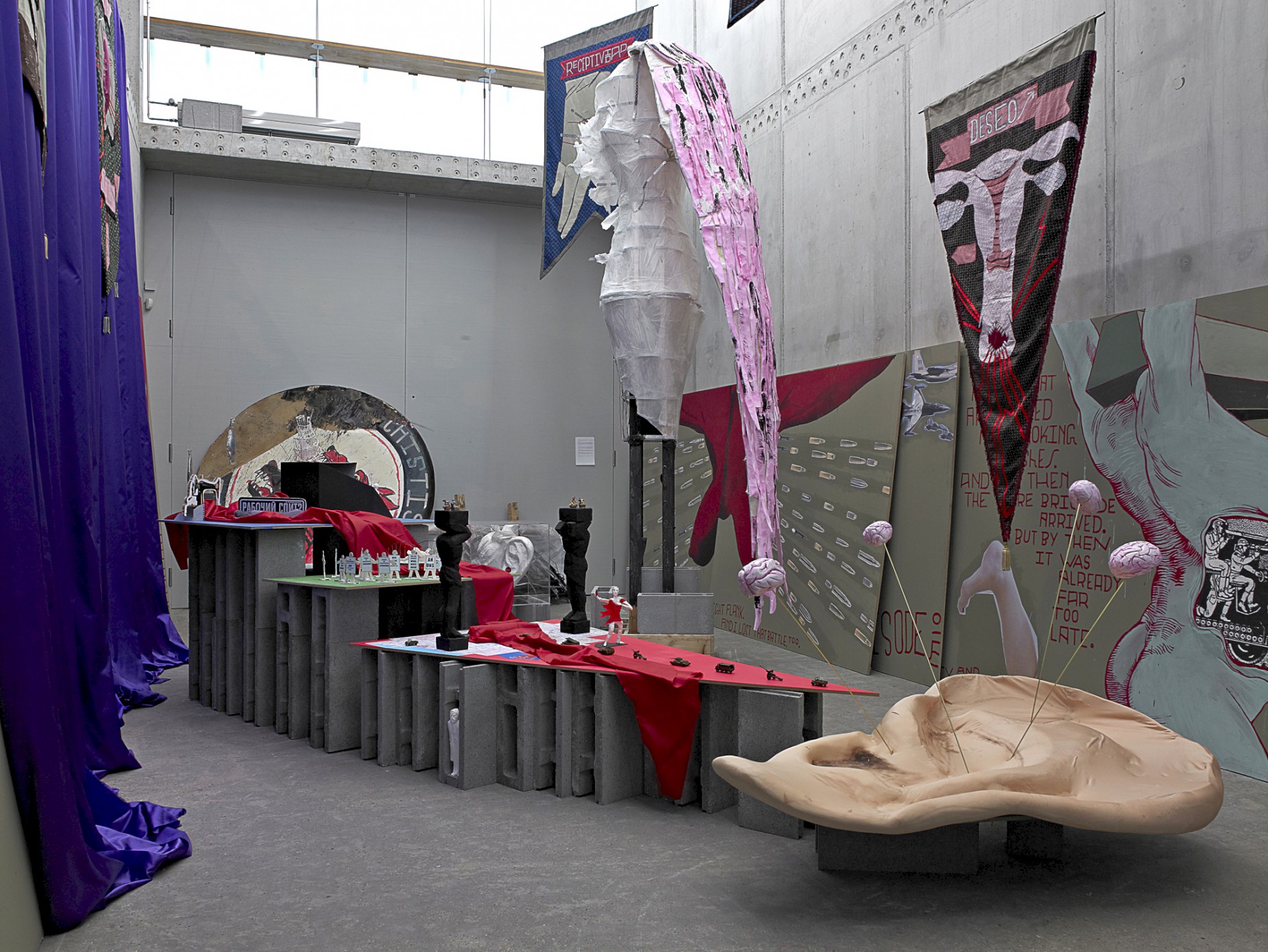
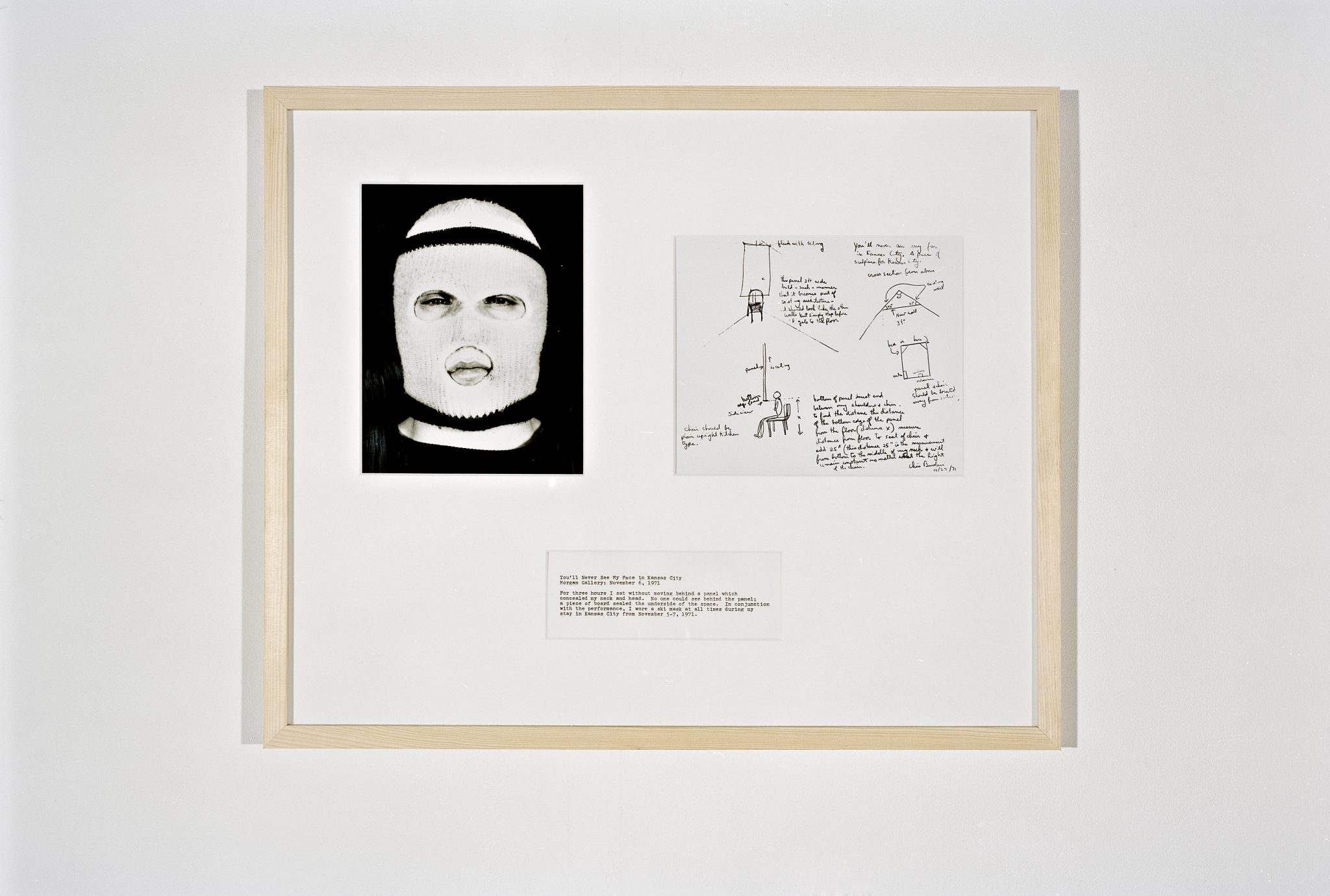
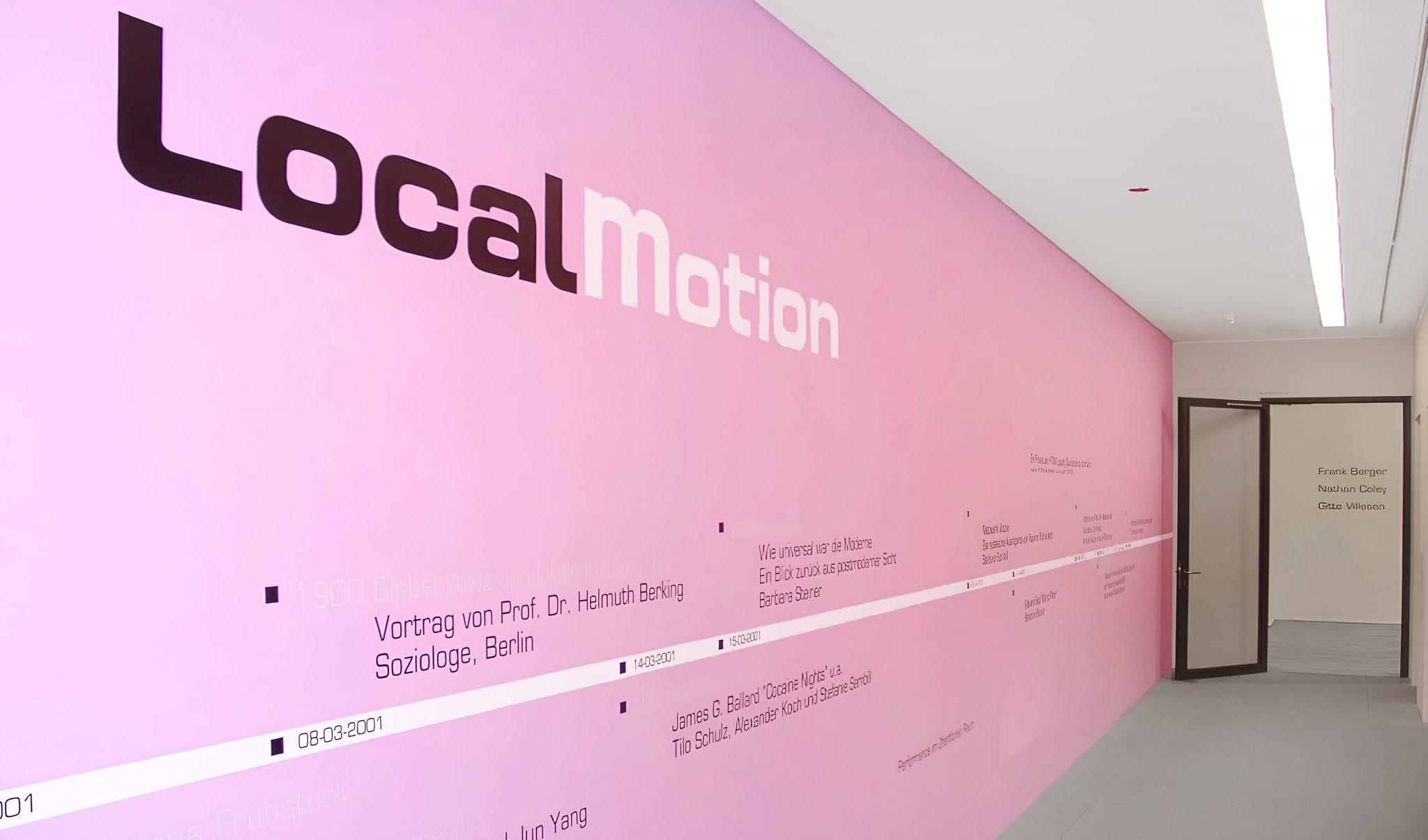
More recently, Renzo Martens has relied on the Internet to bring the heavy clay sculptures created by the Congolese Plantation Workers Art League to Europe: instead of going to the trouble of arranging for shipment from the Congo, he sends 3D data sets to Holland, where the works are replicated in chocolate so they can be fed into the Western art market . “Why did I go into debt?” Dierk Schmidt asks in 1997; Alice Creischer’s Show Master Jacket (1999) is a caustically funny comment on the profit expectations that fuel the gallery business. In 2004, the Museum der bildenden Künste in Leipzig features in Clemens von Wedemeyer’s dramatic production of the art museum–as–homeless shelter. Barbara Hammer’s photographs documenting the feminist guerrilla actions she staged in empty museum halls in 1972 sat in her studio for four decades, unseen by anyone. Also on display are early videos by Frédéric Moser & Philippe Schwinger and selections from the expansive multipart installations of the Russian collective Chto Delat, plus works by Heinrich Dunst, Hiwa K, Mario Pfeifer, Tina Schulz, Michael E. Smith, and Tobias Zielony.
Text: Alexander Koch / Translation: Gerrit Jackson