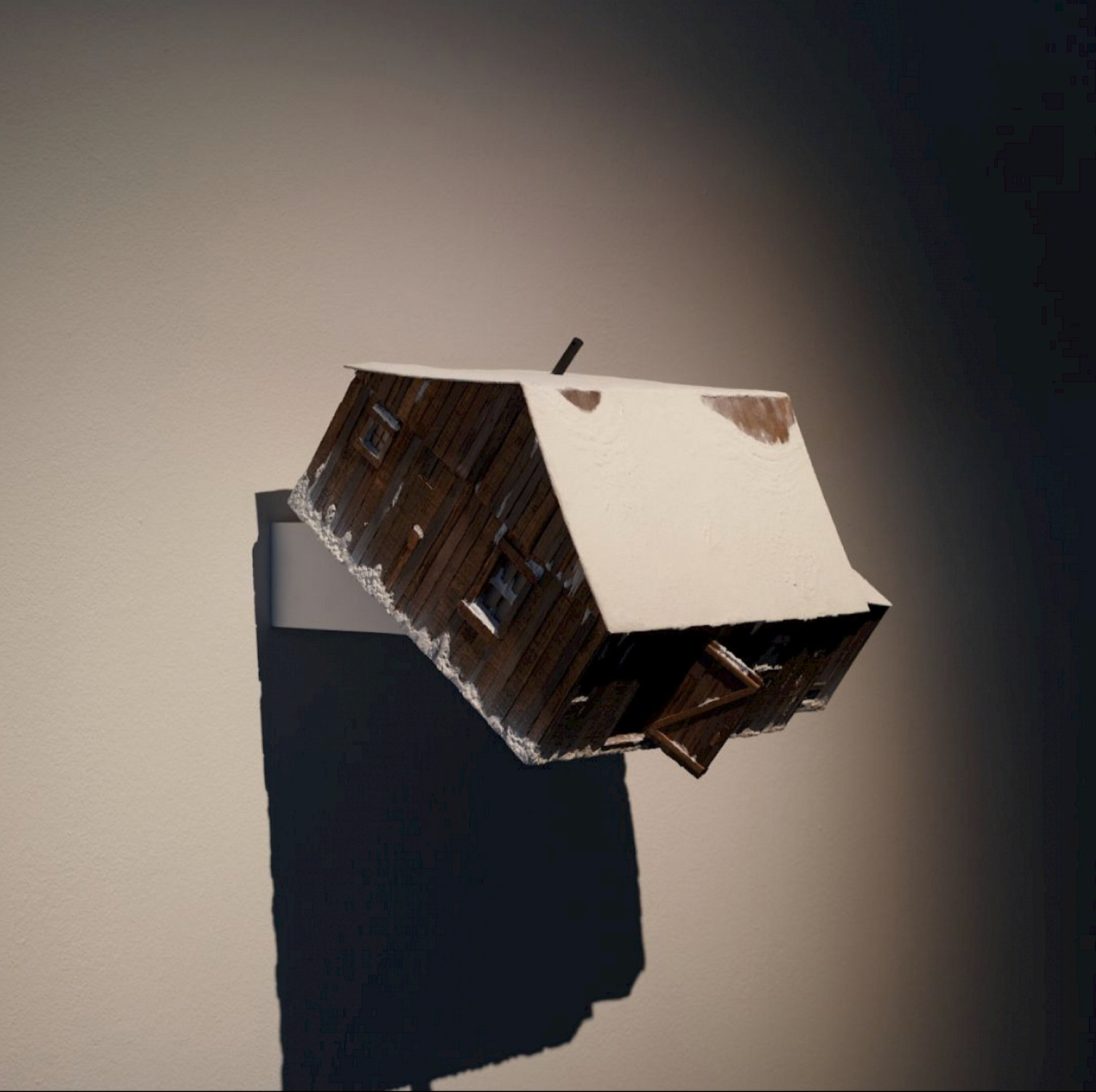
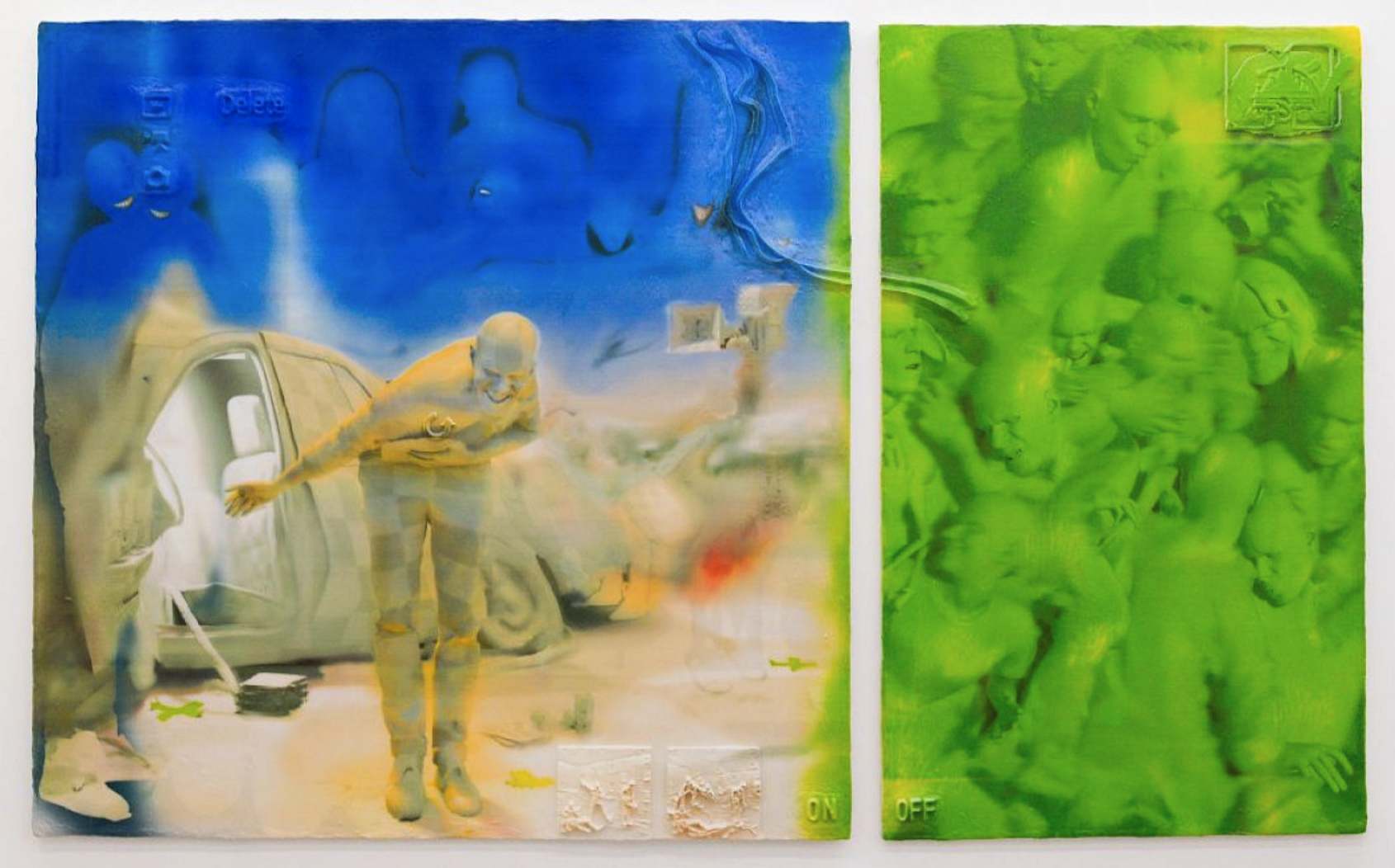
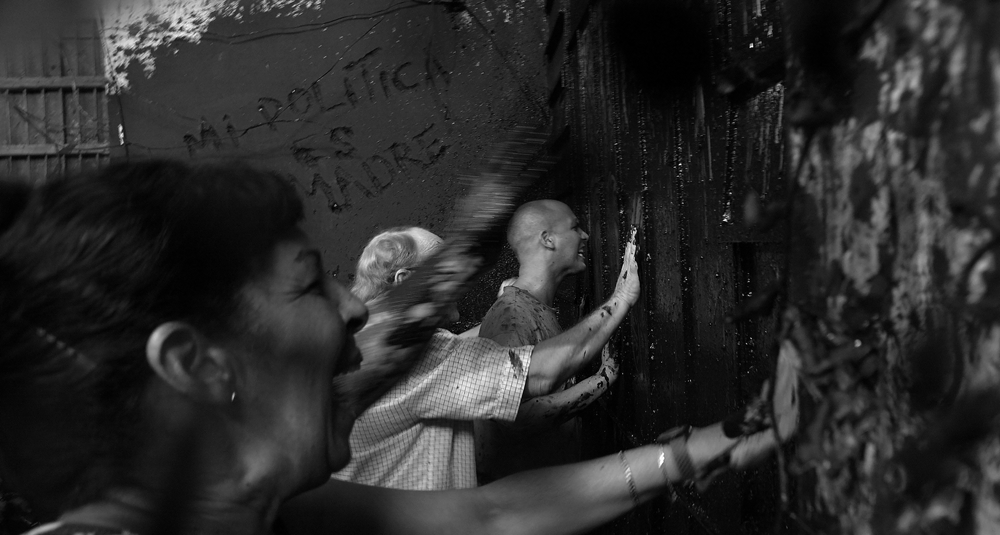
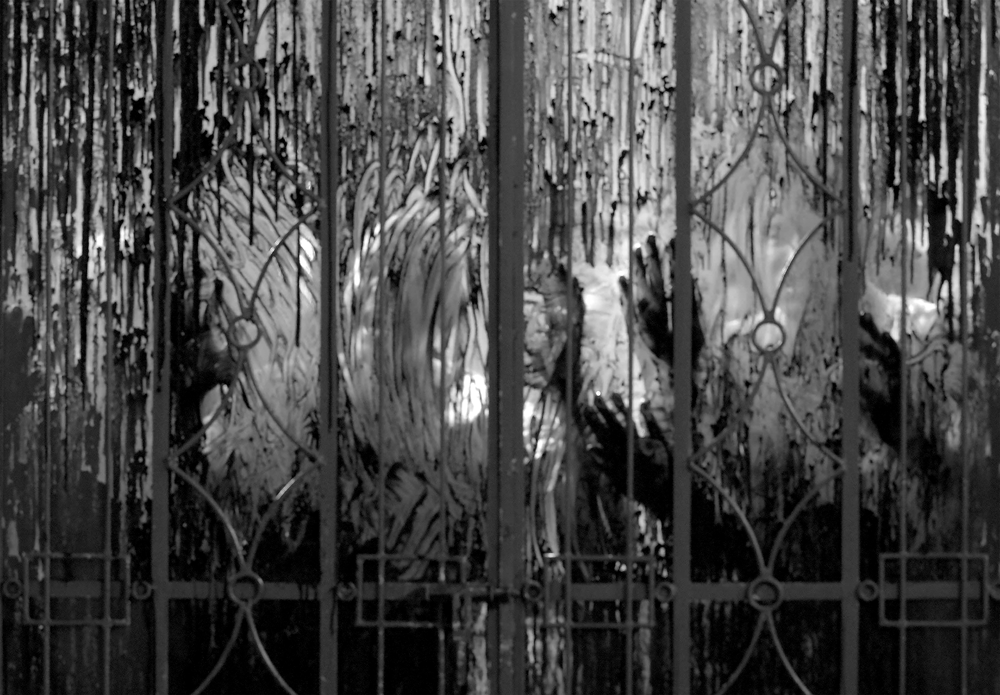
Over the years, my writings have appeared in a wide range of contexts—here I present a selected compilation. These include essays, exhibition texts, theoretical writings on art, and (cultural) political statements. Certain themes show continuity: art commissioned by citizens—the “New Patrons”—as well as the idea of exiting from art. Other texts take a monographic approach, such as those on Santiago Sierra and Michael E. Smith. The selection includes a biting polemic on “East German Success Painting,” an early essay on curatorial (un)consciousness, and various other pieces. Since 2009, I have been writing regularly for KOW—some of these texts I consider among my best.
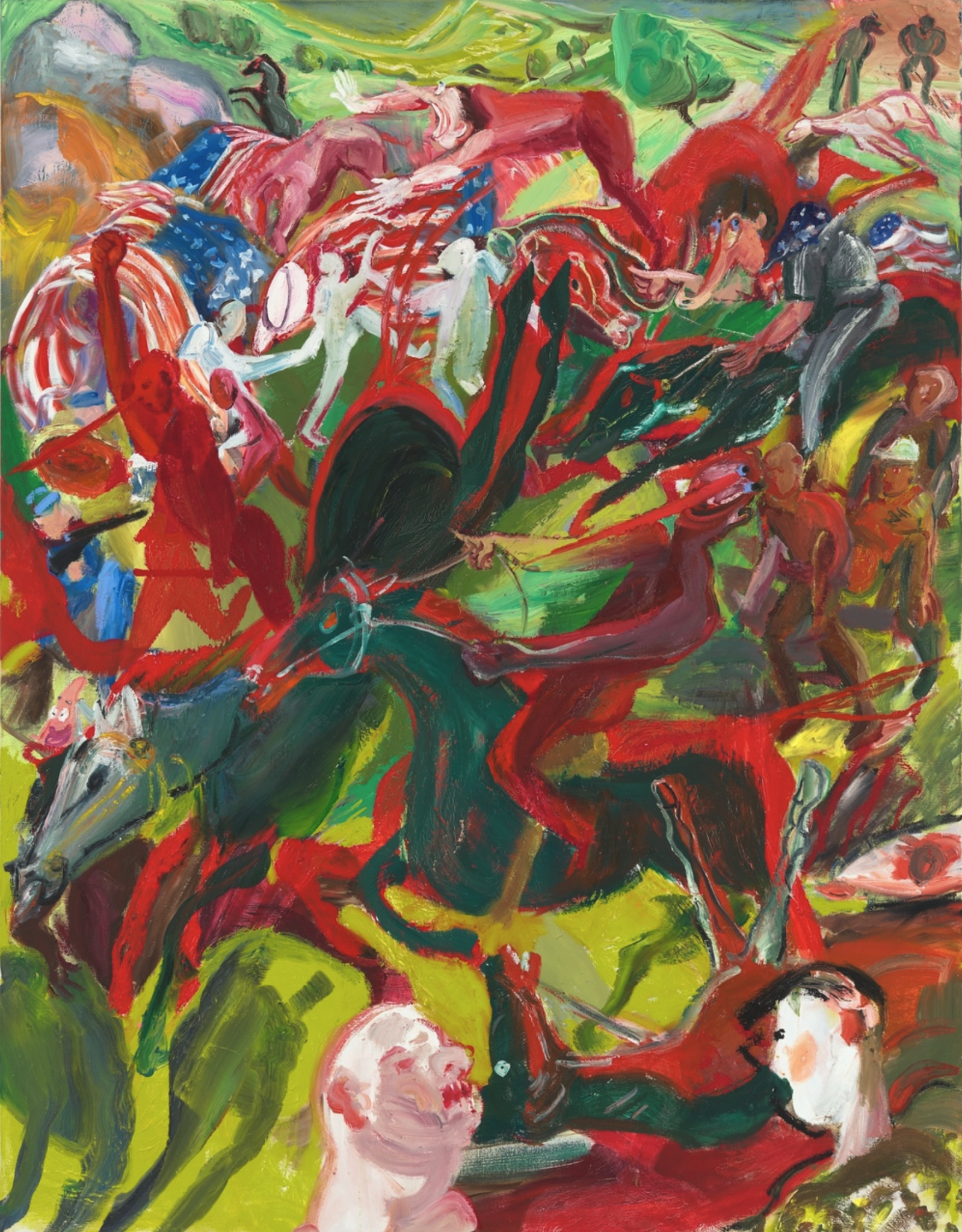
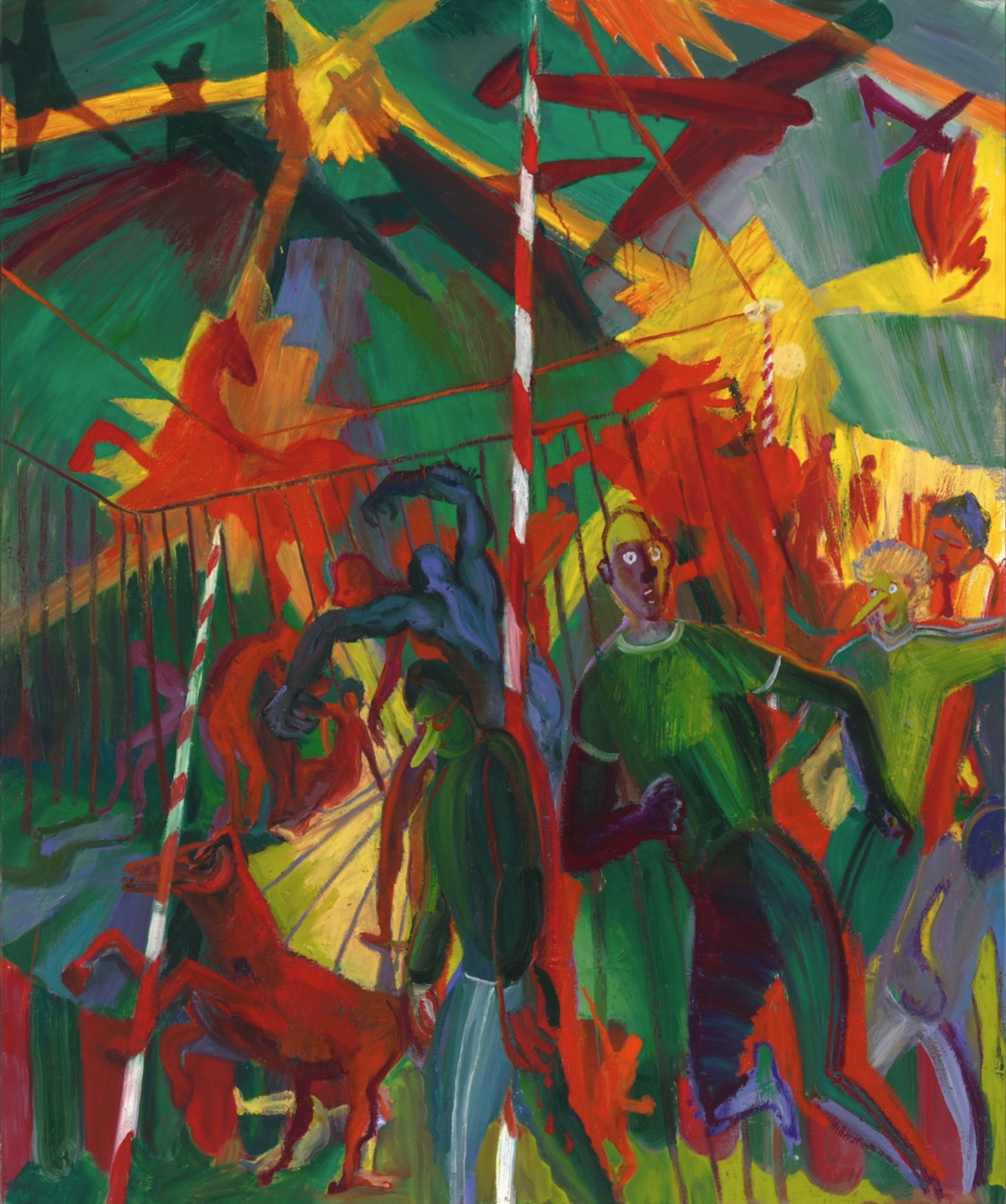
Bomber und Flakscheinwerfer im Himmel, Panik am Boden. Fliehende Menschen, wehende Fahnen und rasende Pferde. Die Farben sind expressiv überhöht, die Figuration ist karnevalesk, mitunter comicartig. Es herrscht totaler Irrsinn.
Als ich Nazim Ünal Yılmaz Diptychon Circus Maximus aus dem Jahr 2024 sah, musste ich an das Triptychon Das Tausendjährige Reich (1938) des Dresdener Künstlers Hans Grundig (1901–1958) denken, weil es verblüffende thematische, und formale Ähnlichkeiten gibt. Grundig malte sein Triptychon am Vorabend des Zweiten Weltkriegs, als ein irre gewordenes Deutsches Volk mit ganzer Kraft in die Apokalypse rannte. Die mittlere Bildtafel zeigt das zerbombte, brennende Dresden in geradezu prophetischer Vorausschau, sieben Jahre bevor die deutsche Barockstadt im apokalyptischen Bombenhagel am 13. Februar 1945 zerstört wurde. … read more
Pınar Ögrencis Werk versteht es, uns die Vergangenheit so in den Schoß zu legen, dass wir uns um sie kümmern müssen. Mit ihrem Projekt Glück auf in Deutschland! stieg Ögrenci 2024 hinab in die Archive der Gastarbeitergeschichte des Ruhrgebiets und brachte Leben und Bilder zu Tage, die unbekannt sind.
Körper und Stimmen von Menschen tauchen auf, die jahrzehntelang Deutschland mit aufgebaut haben und bis heute migrantisiert im Hintergrund stehen. Ögrenci zeigt, wie wenige Jahre nach dem Ende des Faschismus eine neue migrantische Arbeiterklasse in Deutschland erneut von denjenigen Unternehmen missbraucht und gedemütigt wurde, die den Naziterror industriell ermöglicht haben.
Im wichtigsten fotografischen Archiv zur Bergbaugeschichte des Ruhrgebiets im Ruhrmuseum Essen suchte Ögrenci nach den … read more
When it comes to the question of how to frame a challenging creative position amid the push and pull of history, Alice Creischer is a profound voice of political art in Germany. Her fourth exhibition at KOW is about art and overproduction in the age of climate–disaster and proposes—hear, hear!—an encouraging deliberation.
More, always more! There is no other way. The machinery of production cannot be shut down. Not even the machinery of art production. For art does not simply drop from the sky like plums from a tree. Art is production. In fact, it is part of the overproduction, the too-much, that humans bring forth in capitalism. Art wears out and overheats the planet, burns too many resources, and so causes scarcity elsewhere. Like many other things that people do today, it acts in disastrous ways. Art, to put it bluntly, is part and parcel of the … read more
Wie ordnen wir uns an? Wie werden wir angeordnet? Und wie lässt sich das zeigen? Clemens von Wedemeyers neue Filme tauchen ein in die Frage nach der Netzwerkhaftigkeit unserer Existenz und problematisieren deren Darstellbarkeit.
Hauptwerk der Ausstellung ist ein abstrakter Animationsfilm. Vor schwarzem Grund nehmen weiße Punkte und Linien immer neue, immer kompliziertere und immer fulminantere Formen an: Beziehungen zwischen Individuen, menschliche Netzwerkwelten, soziale Geometrien. Die eindrückliche Stimme der britischen Musikerin Anne Clark lenkt die Aufmerksamkeit auf das, was wir in der Abstraktion sehen werden: A group of friends. A class system. A revolution, erupting. Doch je komplexer die Konstellationen, umso deutlicher werden die Grenzen der modellhaften Darstellung – was sich sozial ereignet, mögen vielleicht Maschinen noch nachvollziehen, Menschen nicht. … read more
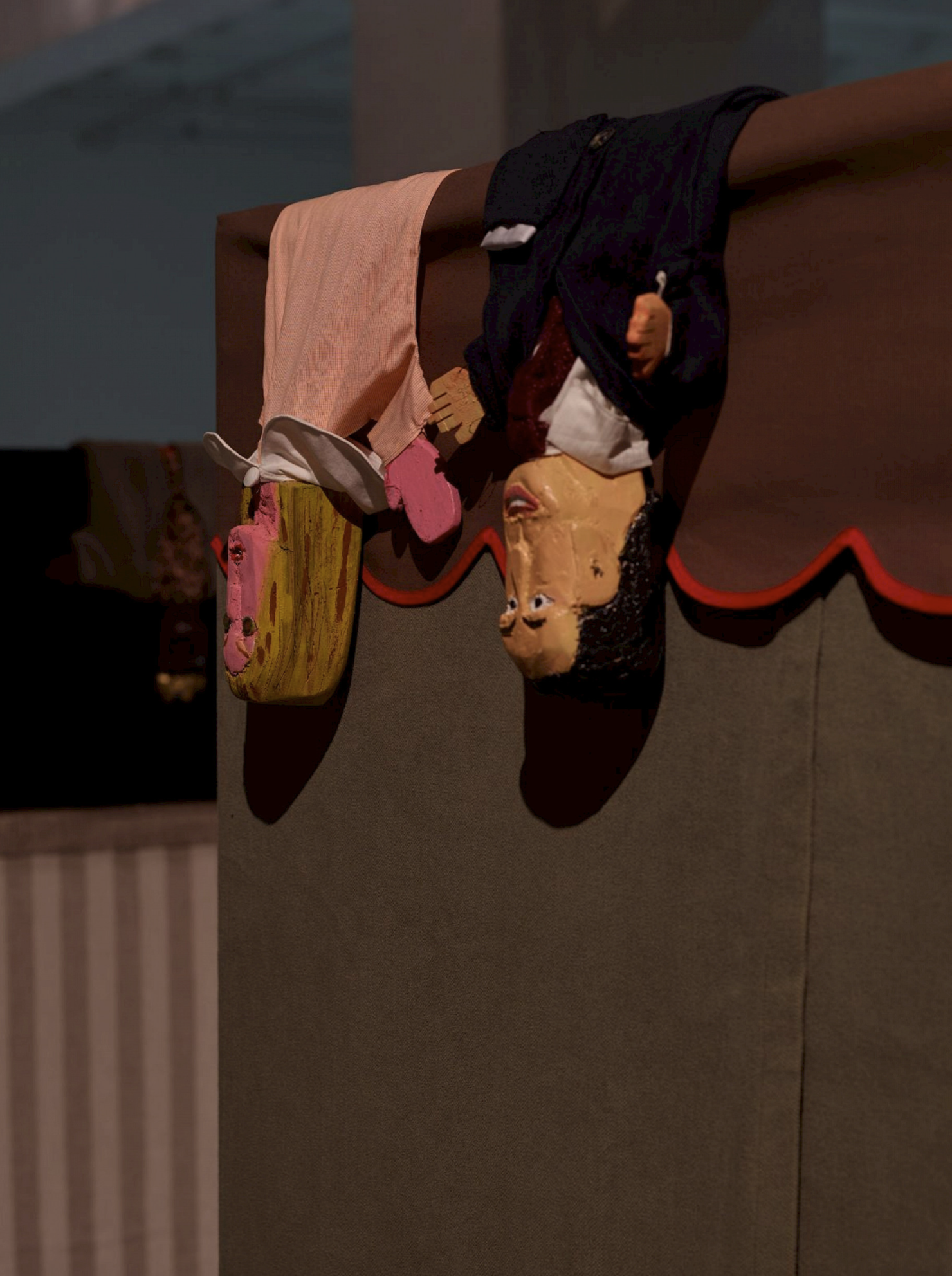
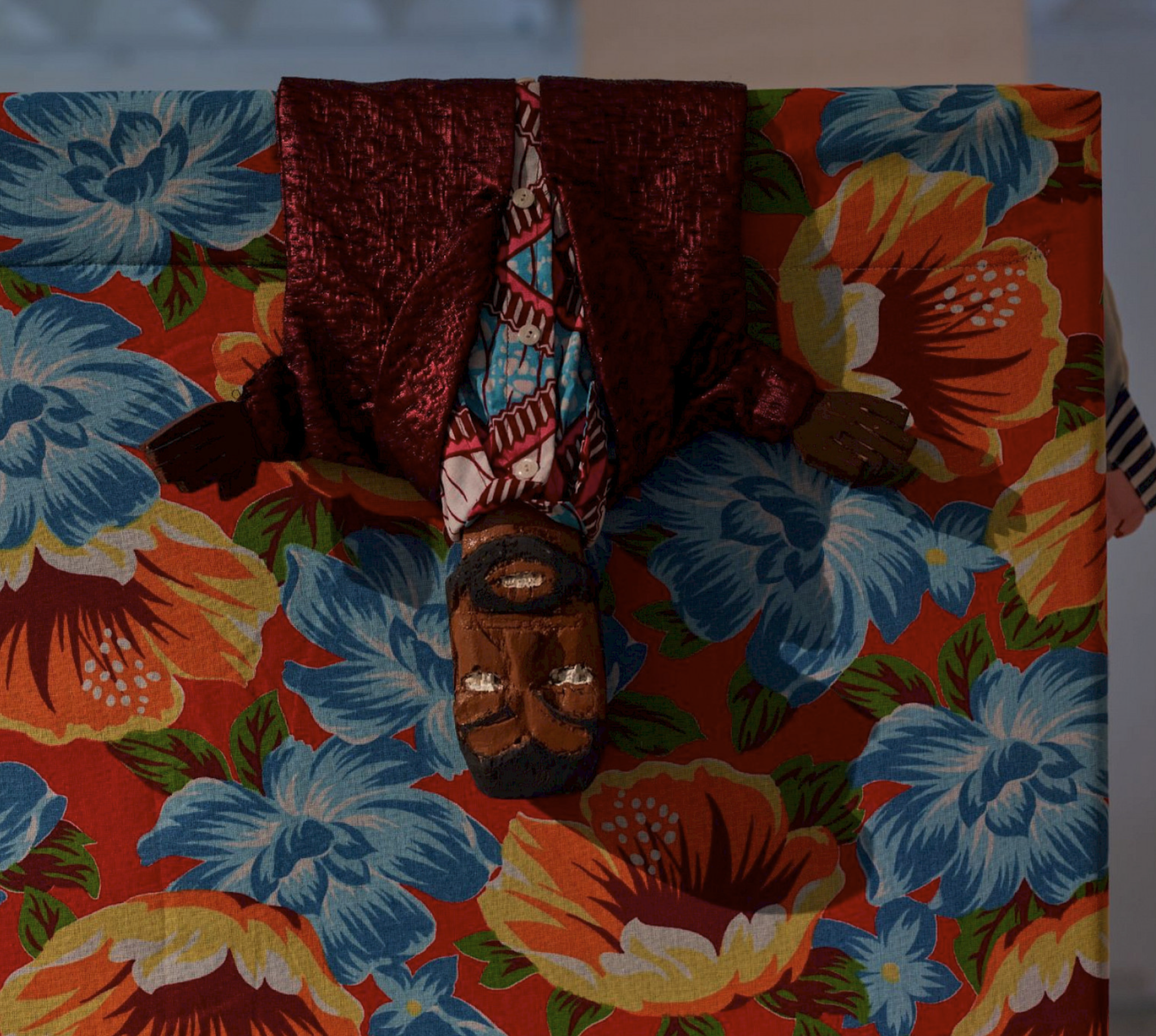
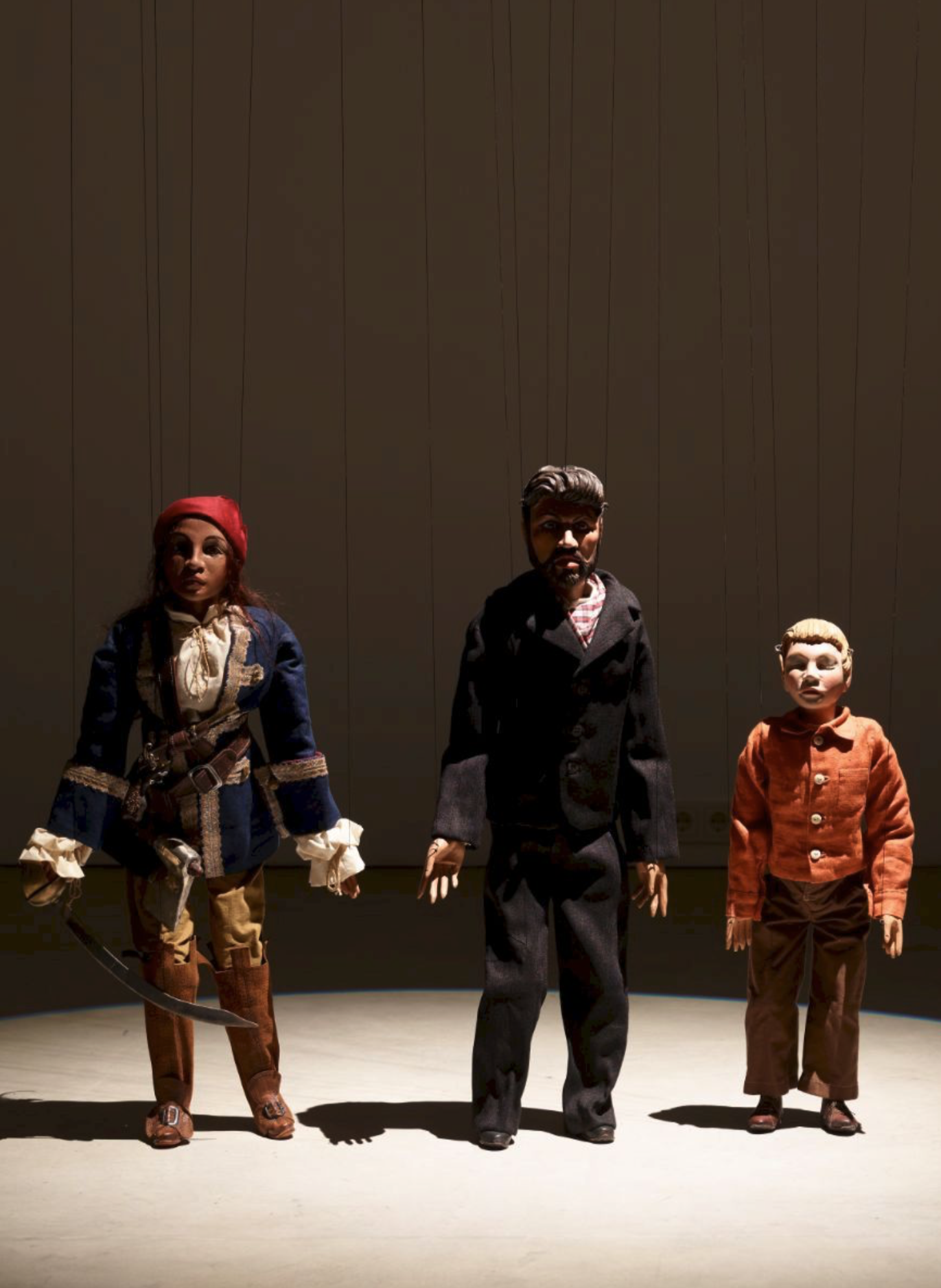
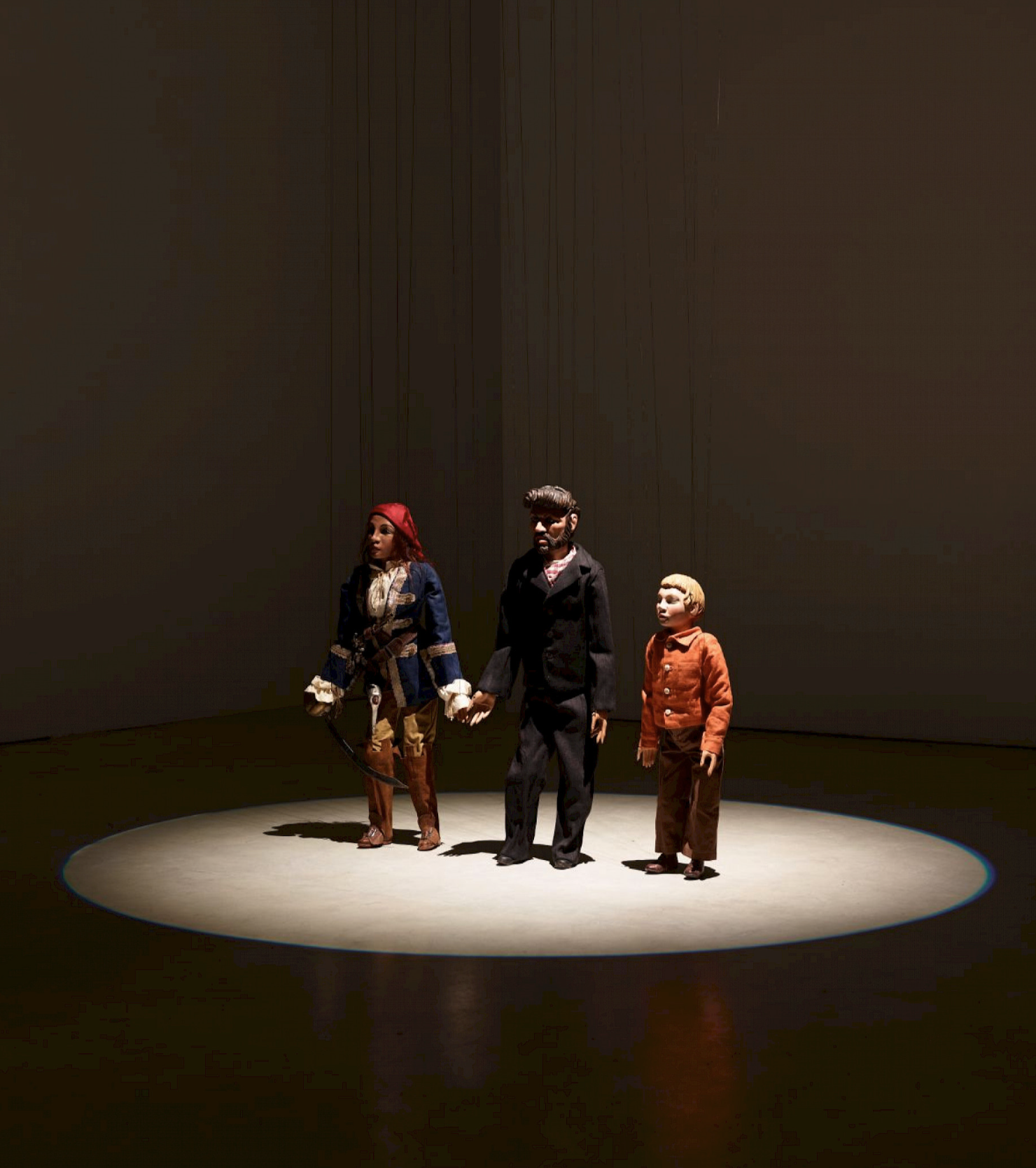
Peter Friedl is a historian. Historians want to tell (hi)stories, and that, we might say, is what Friedl does, though he doesn’t tell them in linear fashion and certainly not through to the end. Rather, Friedl creates spectacles—in Greek, theatra—: scenes where there is something to see. Situations in which something happens, or perhaps put more precisely: is inclined to happen. We stand in sculptural settings, contemplating plastic figures or their outer shells, which manifestly have a lot to say and relate—we believe, we can see they’re capable of it. Just as you believe, you see an actor will deliver who leaves her dressing room in full costume to go onstage, and before the play even begins you can see it coming, before you even know what she’ll play.
In fact, the cast Friedl arrays at KOW consists of famous as well as ostensibly marginal protagonists who in their day … read more
"Anyone who wishes to do so, alone or in association with others, can take responsibility for commissioning a work from an artist". Can this fundamental idea of the New Patrons' Protocol be universal in scope, when the notion of the universal has been corrupted by the colonial fantasy of Western societies, which believed themselves entitled to dictate their own criteria of value to the whole globe?
But this protocol was not conceived as a lesson to the world, but as an answer to a question. In a democracy like France, what policy can be pursued to best respond to the reality of cultural needs? And it was only when it appeared that a remarkable response could be provided thanks to this Protocol designed by an artist, that this mode of action was gradually proposed and taken up in neighboring European countries, and then beyond. … read more
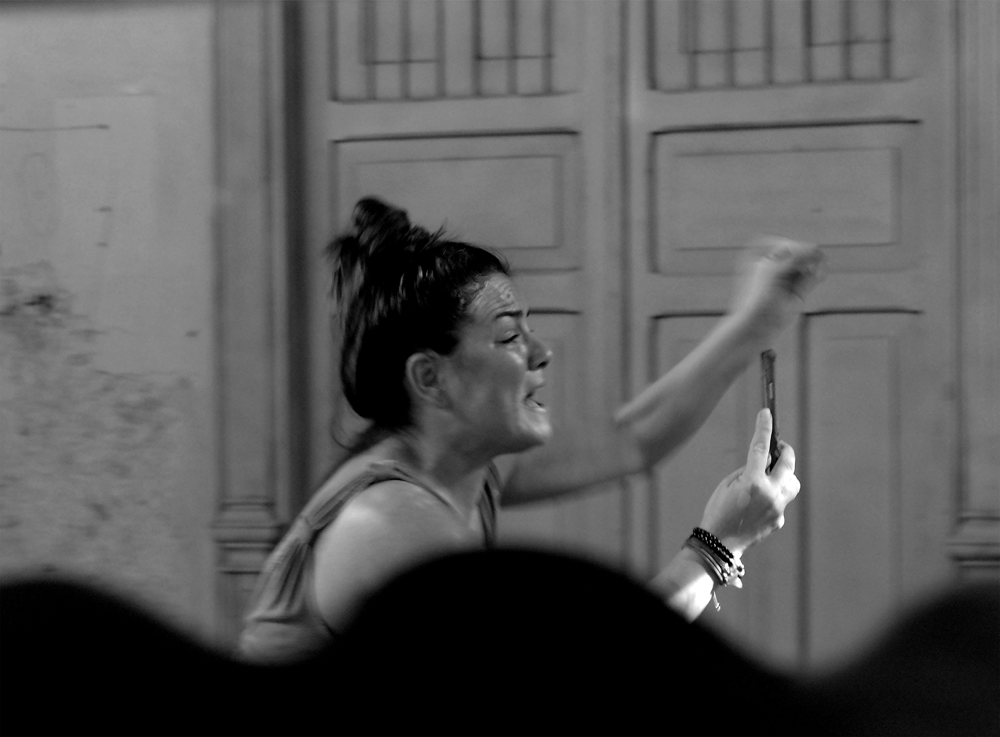
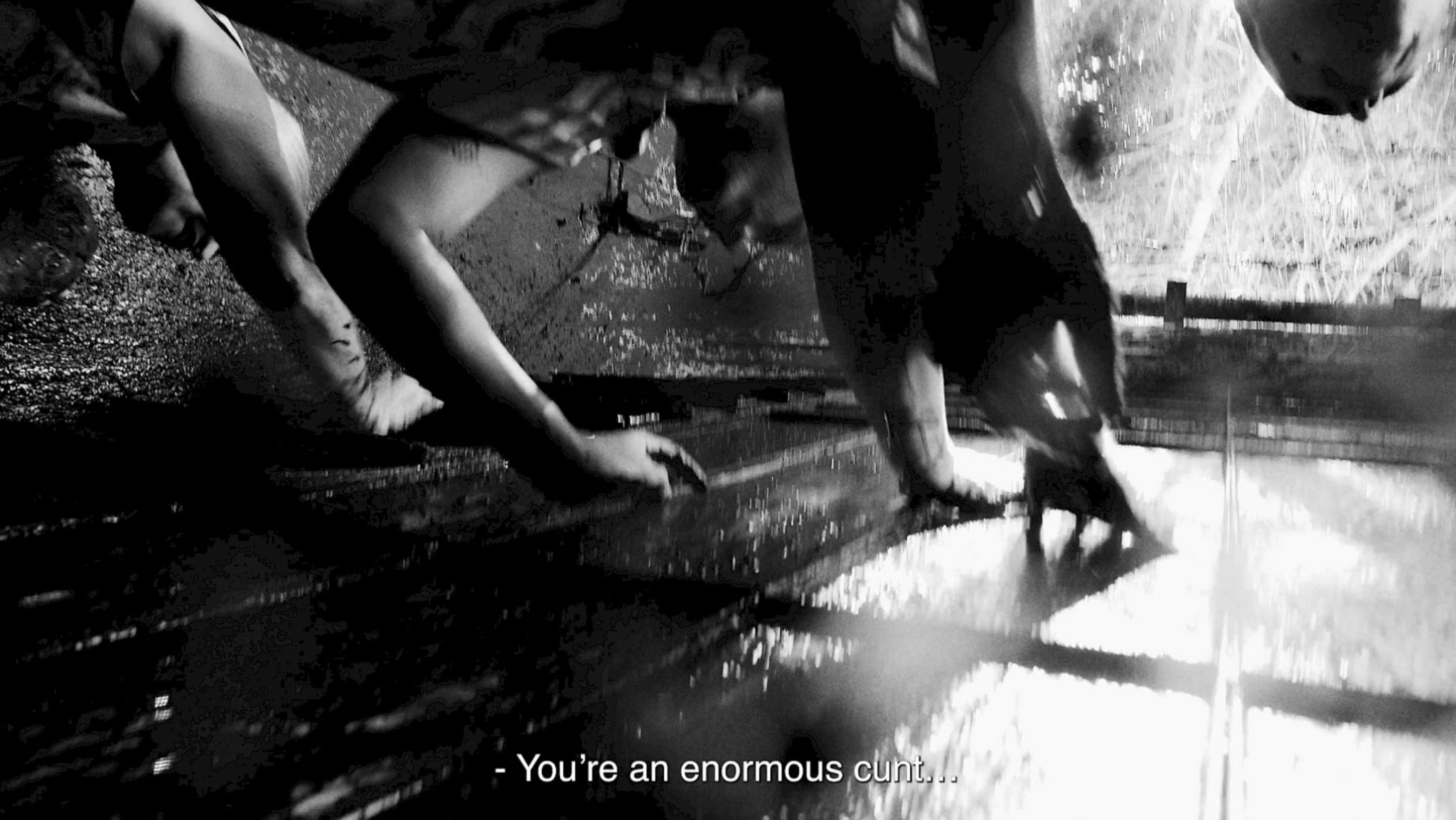
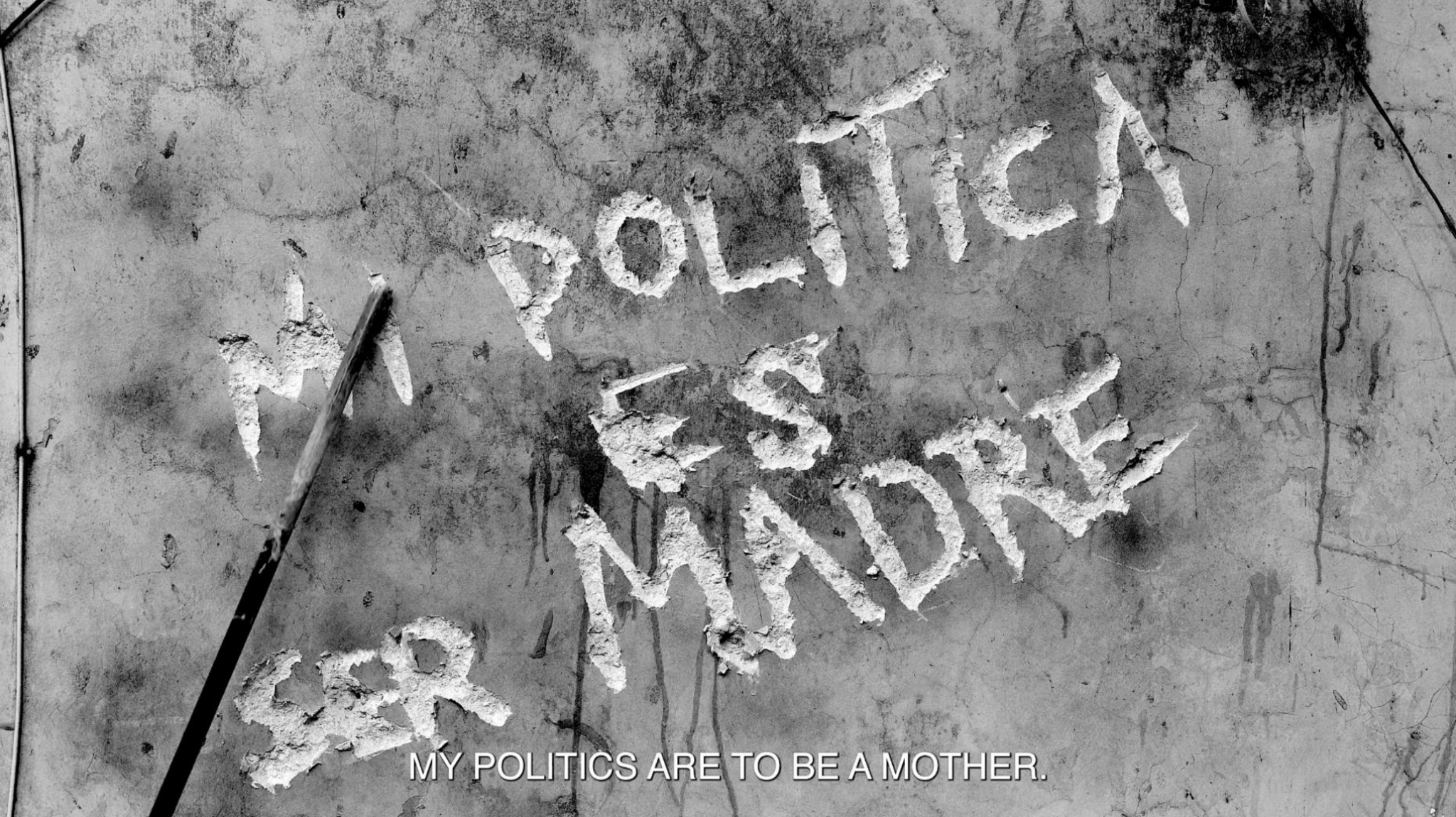
Marco Castillo and his family have lived in exile in Mexico from Cuba since 2019. His new exhibition at KOW turns the spotlight on the censorship and repression regime in Cuba, which has grown more severe in recent years. What sets it apart from the exertion and impact of violence in some other autocracies is its—well, we might say: more participatory nature. It isthe expression of a “good,” left-wing government and its dedicated citizens, whose joint measures of coercive domestic political violence have drawn little international attention.
Casa Negra, 2022
Casa Negra, Castillo’s new film, illustrates a practice of the collective branding of “deviationists”—critical thinkers, dissenters of any kind, those who are enemies of the revolution in the eyes of the regime and some of their fellow … read more
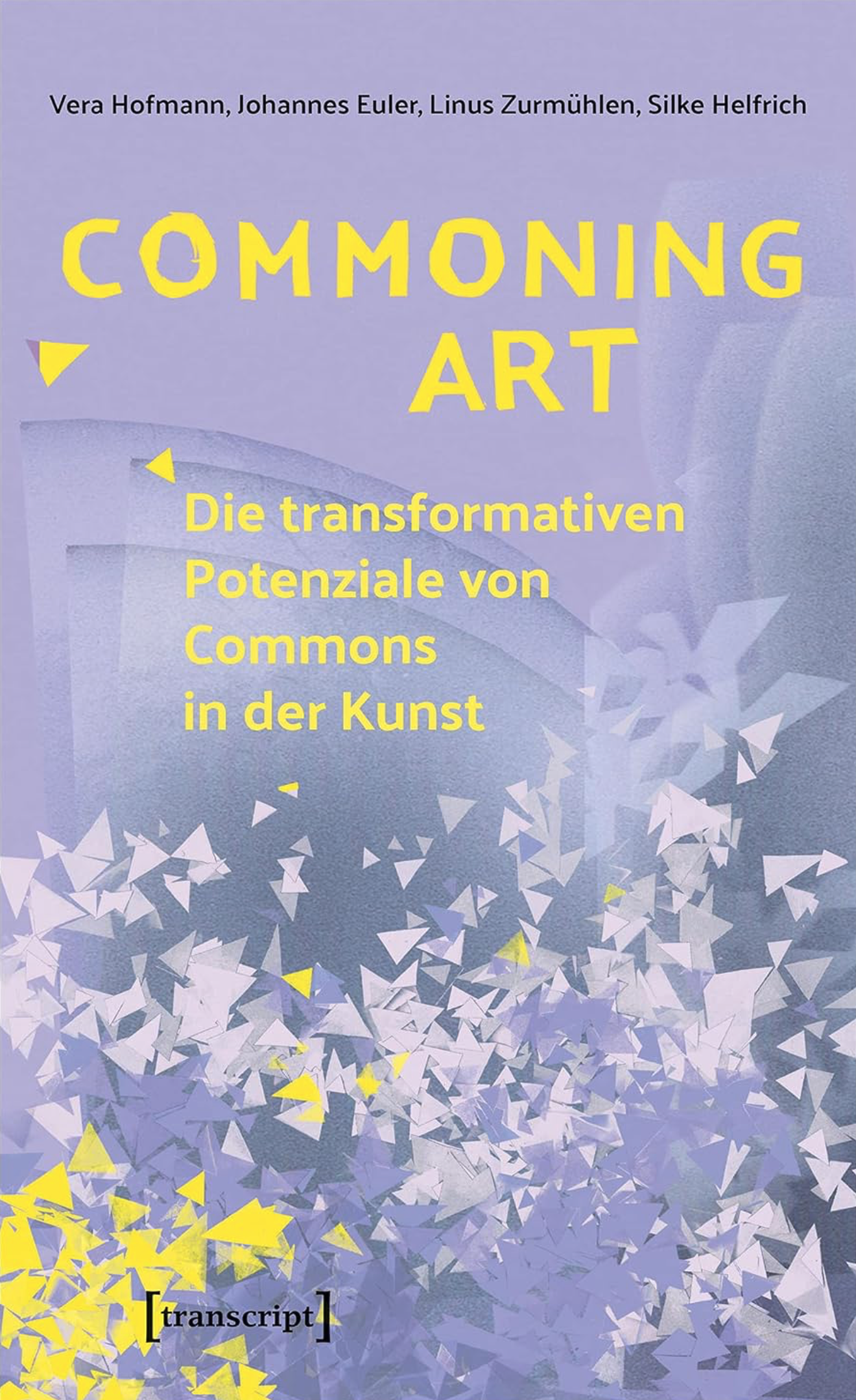
Commoning Art. Die transformativen Potenziale von Commons in der Kunst. Vorwort.
Published in: Vera Hofmann, Johannes Euler, Linus Zurmühlen, Silke Helfrich (Eds.), Commoning Art. Die transformativen Potenziale von Commons in der Kunst, Bielefeld 2022
This publication emerged from our two-year collaboration with the Commons Institute, introducing fundamental aspects of art and commoning. No English translation available.
CATPC and Renzo Martens’s exhibition at KOW marks a new stage in their longstanding collaboration, in which they delve deep into both colonial relations and the mechanics of the art world, in order to understand and alter them. The show features six new documentary films (2022), Martens’s widely discussed film White Cube (2020), and the launch of an NFT as a new instrument of decolonialization in the form of digital restitution (2022).
Since 2014, Lusanga, a palm-oil plantation in the Democratic Republic of the Congo, has been the scene of an emerging new ecosystem. Former wage laborers founded the Congolese Plantation Workers Art League (CATPC) to reclaim their culture, their land, and their self-determination. They have built a sustainable artistic and economic practice that defies colonial expropriation and violence. … read more
Kunst im Bürgerauftrag
Published in: Gesellschaft der Neuen Auftraggeber (Hg.), Kunst im Bürgerauftrag, Leipzig/ Berlin, 2022
No English text available.
1987 entschied die Regierung, dem im bundesdurchschnitt viel zu geringen Bildungsniveau in Bremen mit folgender Maßnahme zu begegnen: Man schickte zwei Drittel der Führungspersönlichkeiten an Schulen und Unis in Frührente und ersetzte sie durch Personal aus dem bildungsstarken Bayern, um bessere Standards einzuführen. Eine Buschzulage, wie man umgangssprachlich sagte, schuf dafür Anreize, denn niemand wäre freiwillig aus Bayern nach Bremen gegangen. Alle fanden diese Maßnahme eine gute Idee.
Undenkbar, nicht wahr? Kein Mensch wäre in der Bundesrepublik jemals auf eine solche Idee gekommen. Und in Bremen hätte man das auch nicht gut gefunden, sondern würde einen Aufschrei durch die Welt geschickt haben, der in Medienmeldungen etwa so gelautet hätte: Deutsche Regierung nimmt Bundesland Souveränität und richtet koloniale Verwaltungsstrukturen ein! … read more
I don’t want to. I can’t. I mustn’t! Not now. Maybe I’ll come back to it tomorrow. We’re perpetually compelled to postpone what we would want, should do, might wish for. Acting hasn’t felt like this in a long time: like an uncertain proposition that’s presumably inappropriate just now and may well be just as inappropriate the day after tomorrow.
Perhaps you’re at home. Perhaps the kids are getting on your nerves. Perhaps you’re sitting all alone in a gallery and have no idea what you should actually make plans for. Perhaps you’re not even getting replies to your emails anymore because people have wandered off somewhere beyond reach. An island life. And inside your head, ideas are starting to hunker down in the same places where they were perched yesterday and you shoo away the cobwebs between them.
KOW presents Sophie Gogl. It’s her first exhibition with … read more
Man kann alles Mögliche trennen. Müll, Ehen, Spreu vom Weizen, mal ist es schwierig, mal ganz leicht, so wie das Blatt Klopapier, dass man von der Rolle reißt. Öl und Wasser trennen sich sogar zuverlässig und ganz reibungslos freiwillig.
Auf Seiten der Erkenntnistheorie (Was kann ich wissen?) formulierte George Spencer-Brown 1969 sein logisches Paradigma: „Draw a distinction!“, mach eine Unterscheidung! Er meinte damit folgendes: Immer dann, wenn wir etwas bezeichnen, entschließen wir uns dazu, dieses eine durch unsere Bezeichnung von allem anderen zu trennen. In der täglichen Praxis geschieht das meist unbewusst. Wer A sagt hat nicht B gesagt, ob aus Gewohnheit oder in voller Absicht. Wer etwas als Kunst bezeichnet, trennt das Bezeichnete von Maschinenbau, Ehe und Klopapier, und was Menschen sonst noch tun und brauchen. Aber – und das ist das Entscheidende – wir trennen nicht Kunst … read more
It’s a hot potato, that restitution business. The formerly colonized demand the return of the cultural assets that were stolen from them during the colonial era or that entered German collections in questionable ways. The Federal Republic, for its part, argues that it isn’t all quite so simple—and actually rebuilds the old palace of the Prussian rulers who helped write a chapter of the history of colonialism. Renamed in honor of Humboldt, the building is destined to become a repository for those same cultural assets.
And now this. In 2013—the ground had just been broken for the reconstruction of the Berlin City Palace—the former lords of the manor, the Prussian princes of the House of Hohenzollern, came out of the woodwork to demand their own restitution: 5,000 pieces from the former crown estate now held by the Prussian Cultural Heritage Foundation, 266 paintings by … read more
Das höchste Gut einer Gesellschaft ist ihre Vorstellungskraft. Denn was sie sich nicht vorstellen kann zu sein, das wird sie auch nicht werden. Was sie nicht für möglich hält, wird nicht geschehen – zumindest solange nicht, bis sich das, was vorstellbar ist, verschiebt. Gesellschaftlicher Wandel ist wesentlich eine Entwicklung der kollektiven Einbildungskraft, eine Aus- und Umgestaltung des sozialen Imaginären.
Dieses Imaginäre ist ohne die Formen und Stimmen der Kunst und Kultur nicht denkbar, mehr noch: was ist die kollektive Einbildungskraft einer Gemeinschaft von Menschen anderes, als ihre Kultur?
Die Neuen Auftraggeber sind ein Weg, am Vorstellbaren zu arbeiten und dessen Grenzen zu erweitern. Indem Bürger*innen in Dörfern und Städten Künstler*innen damit beauftragen, neue Werke zu entwickeln, die unmittelbar ein Stück ihres … read more
Neurologisch betrachtet, lässt sich „Heimat“ als eine physiologische Veränderung im Gehirn beschreiben, die durch wiederholte Reizeinwirkung entsteht. Kurz: Heimat ist neuronale Prägung. Synaptische Loops der eintrainierten Wiederkennung von Bekanntem. Wie alles im Gehirn ist diese Prägung nicht in Stein gemeißelt, sondern bleibt beweglich, dynamisch, gestaltbar. Das allein sollte genügen, um jede inhaltliche Fixierung und Essenzialisierung des Heimatbegriffs zurückzuweisen.
Das gilt auch für den Begriff der Identität. Gleichzeitig zeigt sich, dass Heimaten und die mit ihnen verknüpften Lebenswirklichkeiten aus der Interaktion mit einer Umwelt bestehen, die sich ihrerseits ständig wandelt. So sind Heimaten einerseits immer von Gestern, Spuren der Erinnerung, und andererseits Gegenstand einer fortwährenden Transformation, die in die Zukunft weist. … read more
Dass wir dringend gute Lösungen für plantare Probleme brauchen, weiß heute jeder. Doch dann klingt es immer etwas anrüchig, wenn irgendwer behauptet, er kenne eine wirklich gute Lösung für ein planetares Problem. Man gerät schnell in Verdacht, anmaßend oder, wahrscheinlicher noch, ein Populist zu sein. Deshalb habe ich mich heute morgen gefreut, als ich ein Interview mit Judith Butler im New Yorker las, in dem sie sagt: Sometimes you have to imagine in a radical way that makes you seem a little crazy, that puts you in an embarrassing light, in order to open up a possibility that others have already closed down with their knowing realism. I’m prepared to be mocked and dismissed[1]. Auf geht’s also. Denn ich werde sicherlich etwas lächerlich aussehen, wenn ich sage, dass mir zumindest eine gute Idee für planetare Probleme einfällt. Es ist nicht meine Idee. Aber ich finde sie gut. … read more
Maria Magdalena starb am letzten Tag des Jahres. Wir kannten uns drei Tage und fünf Abende lang, ehe uns eine Welle in den Atlantik riss. Maria ertrank, ich nicht. Das ist jetzt fünf Tage her. Gestern veröffentlichte das Staatstheater Wiesbaden eine Pressemitteilung. Eine der radikalsten Theatermacherinnen und Kuratorinnen des Landes sei viel zu früh verstorben. Heute früh kam eine Nachricht von meiner Mutter. Auch in ihrer Lokalzeitung im Sauerland habe es gestanden. Da habe auch gestanden, ein Mann hätte noch versucht, die Frau zu retten. Ob das stimme, fragte sie. Das stimmt nicht, wie nun auch meine Mutter weiß, nachdem wir telefonierten. Ich habe nicht versucht, Dich zu retten. Dazu war keine Zeit.
Das Wort Radikal sei da übrigens nicht gestanden in dem Artikel, sagte meine Mutter in einem zweiten Telefonat, nachdem … read more
Earthworms are making themselves at home in the White House. They wiggle their way into the Oval Office and the private apartments, dangle from the flagpole on the roof, smear the star-spangled banner with their slime. Yuck. Sweet. Our exhibition opens with the video Casa Blanca, created in 2005. The desecration of a proud symbol? The defilement of an icon? Blasphemy? Whatever was León Ferrari thinking?
Ferrari did what he could. What he couldn’t do he didn’t. That sounds more banal than it is. For what Ferrari did was closely bound up with the political developments since the 1950s, for which he time and again found his own language, with the means at his disposal. A language—several languages—that breached the confines of the private sphere to go public and tell stories of war and tyranny, harassment, and freedom. Ferrari's artistic career began in 1955, the first year of … read more
The New Patrons program has initiated an unprecedented social practice. In the past three decades, this practice has renewed civic collaboration and responsibility throughout Europe and beyond. It has suggested to society a new methodology to respond to the cultural needs of various communities in a wide range of settings and in broadly diverse artistic and scientific formats.
Art and democracy have one thing in common: their modes of action and representation need to be conceived and practiced afresh every day. Nothing about them can be taken for granted, and only society itself can be the legitimate protagonist of this process of continual historic creation. And yet there is a vitally important sector in which society, as a community of individuals, has very limited say: the commissioning of common cultural goods. Thirty years ago, the New … read more
Alice Creischer’s third exhibition at KOW is a snapshot of contemporary German politics, as well as an illustration of political and creative continuity. In the gallery’s downstairs showroom, the works make for a choppy survey of social developments of the past thirty years and more, developments that have been subjected to so much critical analysis that it’s almost impossible today to keep talking about them, to think of new ways to talk about them again and yet again. Meanwhile, seemingly unstoppable shifts of the social climate time and again, and yet again, leave critical thinking at a loss for words. All these things can’t be happening. And yet they are. And they’re plain for all to see.
Creischer’s exhibition conveys her bemusement and bafflement over her own German history and presumably also over the habit of constantly mulling it over. In a war against France … read more
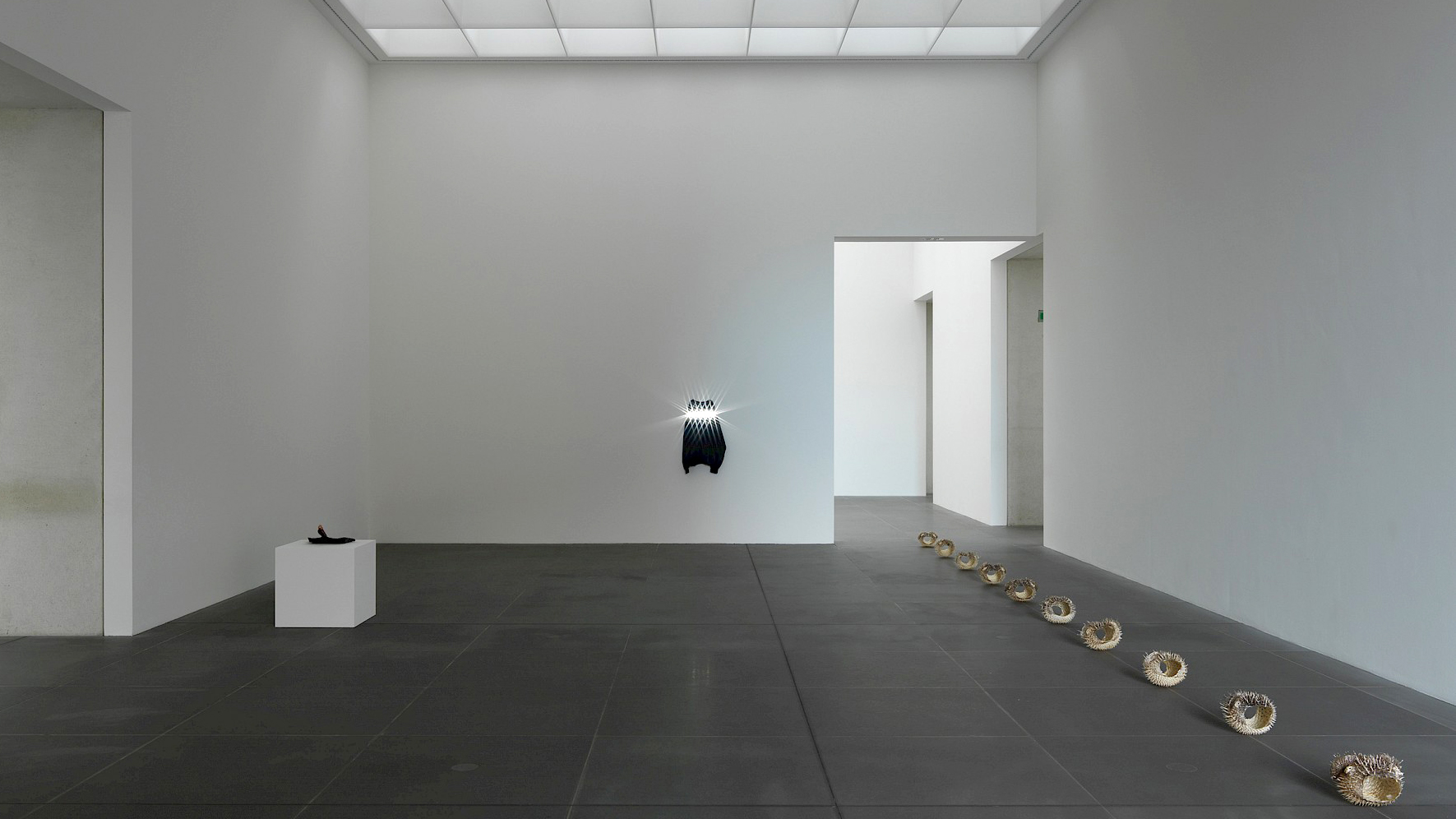
Fünfzehn tote Kugelfische, sechs LED-Leuchten, ein schwarzer Pullover, eine Kehrschaufel und der rote Schnabel eines Storches: Mit diesem Inventar hat Michael E. Smith im Neuen Museum Nürnberg einen Raum eingerichtet. Die Atmosphäre ist schlicht und still, das Licht ist ausgeschaltet. Doch allmählich ordnet sich dieser Raum zu einem erschreckenden Bild, verformt sich zu einem Mahnmal der Gewalt, ja der Verheerungen menschlicher Vernunft.
Panik
Entlang des strengen Rasters der Bodenplatten sind die fünfzehn präparierten Fischkadaver gleichmäßig hintereinander gereiht. Wie an einer Perlenkette, die den Museumssaal durchzieht. Kugelfische gelten als ebenso zierlich wie gefährlich. Aber hier liegen sie als harmlose Präparate am Boden, die zur Selbstverteidigung ein letztes Mal ihre leeren Hüllen zu … read more
Something is clawing away at the foundations. Swarms of thinkers are busy undermining a worldview in which the human being sits at the center. What Sloterdijk once portrayed polemically as the degressive line of development from God to man and from man to Smurf might be described as a series of narcissistic wounds dealt to the Western subject: Copernicus shattered the illusion that the universe revolved around the earth; Kant pulled the plug on the belief that cognition is more than what is going on in our heads; Freud demonstrated that we are not even masters in those same heads; and now we are being told that we have vastly overestimated the difference between human being and coffeemaker. For the longest time, the social world was believed to be populated by subjects, and reality was what these subjects comprehended—language being the paradigmatic instrument of comprehension. But this … read more
More light! Build more lighthouses! Drink phosphorus! As autocrats and neo-feudalists in the United States, Turkey, Poland, Great Britain, and other countries turn off the lights, something must shine the brighter. But what? What should be done? Chto Delat?!
That is the signature question under which this collective of artists, intellectuals, and activists from Moscow and Saint Petersburg have worked together for the past fourteen years. In 2014, however, the group ran out of answers—in an exhibition at KOW, they sealed their hopes that art might offer a critical response to the war in Ukraine and Putin’s neo-nationalism in a time capsule and launched them toward an unknown future. The show was an open admission of their perplexity and marginality. The shock that had agonized the Russian collective has now reached the West. They have worked … read more
When they went on show at the KOW1 in Berlin in May 2016, the sculptures by the Cercle d’Art des Travailleurs de Plantation Congolaise (CATPC) astonished the German and international public. The seven works exhibited by Mathieu Kasiama, Mbuku Kimpala, Thomas Leba, Jérémie Mabiala, Daniel Manenga, Emery Muhumba and Cedrick Tamasala showed formal and narrative qualities whose expressive strength was obvious both to professional critics and ordinary art lovers. At the same time, the technical details of their production – and their economic and conceptual relation to the activities of the IHA and Renzo Martens’ artistic practice – have raised a number of questions, some of which I will answer here.
Adequately describing and understanding these busts and statues cast in chocolate means explaining their origin in the collaborative work of various protagonists at several … read more
It’s all not so simple, unfortunately. Right-wing, centrist, left-wing populism, the post-factual era, disunited and manipulated societies—it feels like an apocalyptic downward spiral, but apocalyptic moods are unhelpful. Disunion is unhelpful. The fact is: What agitates some today fills others with serenity and courage. Where emerging forms of government trigger some people’s flight instincts, others believe they are represented at long last. Where elaborate critique runs out of oxygen, unheard voices swell to a new volume. But it may well be that in the end everyone will feel like they have been taken for a ride. A sharp swing to the right? Leftist resistance? The rationality of the center? Caught up in old political schemata and systems of belief, people across the mental spectrums ignite lines of conflict within the public spirit that awaken demons of antagonism. … read more
Richard Rorty’s book Contingency, Irony and Solidarity, published in 1989, has been the most important source for my thinking on the social function of art for almost twenty years. And for almost twenty years I have been wondering why so few people in the art world have read this book.1 It makes an important contribution towards helping us understand why and how art has a part in shaping social reality. I find myself repeatedly resorting to Rorty in discussions about the political nature of art, its social relevance and its social role. And I do so often shaking my head, because I cannot see why these discussions still revolve around problems that, since Rorty, we no longer need to have and should no longer have. In what follows, I shall recapitulate Rorty’s position in order to suggest that, after him, talking about art means talking about solidarity. … read more
It is a preeminent collection of the art of the twentieth century—perhaps the only one. From Marcel Duchamp to Andreas Baader and Jeff Koons, it covers almost a hundred years of cultural history, an era that has become strange to us. In the collection’s 154 items we espy glimpses of a universe of things and ideas, the forms in which that era expressed its feelings and thinking, its knowledge and visions: they are art objects and visual creations that people collectively beheld, considered, and judged.
Today it takes a keen archaeological intuition to grasp how it was possible that special significance was accorded to selected objects identified as works of art. And so the exhibition at KOW is first and foremost a tribute to the life’s work of Ramon Haze. He compiled the items on display and reconstructed their forgotten meaning. His art collection—“The … read more
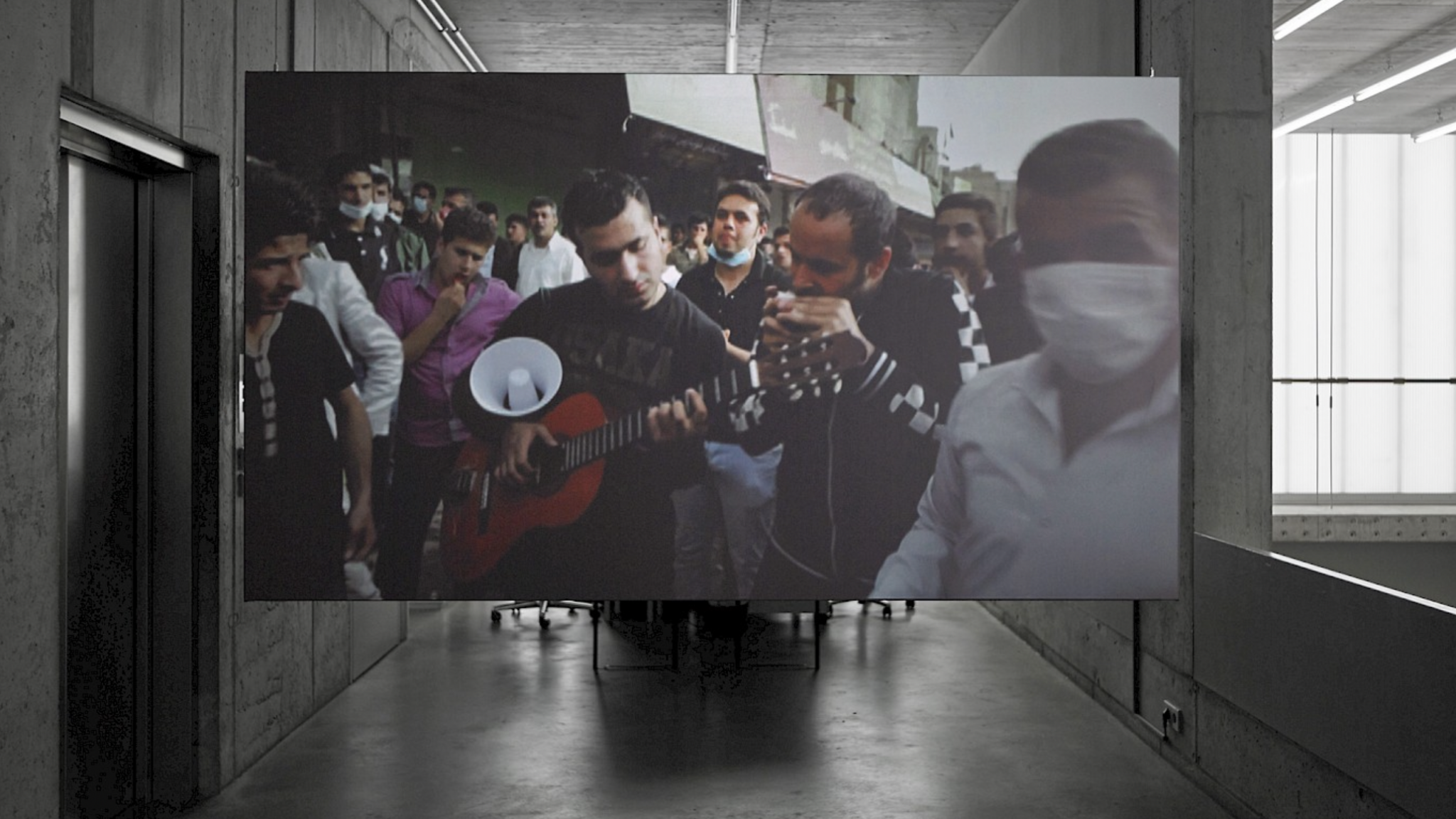
Lemons are being passed around. Their juice relieves the burning in the mouth and nose. It is April 17, 2011, the last day of public revolt before the suppression of the Iraqi Spring, which was barely mentioned in the international media. Amid the protesting crowd, breathing the air laced with tear gas, are two musicians: Hiwa K with his harmonica, Daroon Othman on the guitar.
They play the movie score from "Once Upon a Time in the West", that alarming melody of two dissonant notes, immediately recognizable to everyone in the streets of Sulaimany, Kurdistan. It carries the disappointed hopes of many years out into the street and unites the marchers by spreading a sense of somber determination. As Hiwa K plays the harmonica, the tear gas invades his airways; music and the political situation coincide in the performer’s body. He subsequently … read more
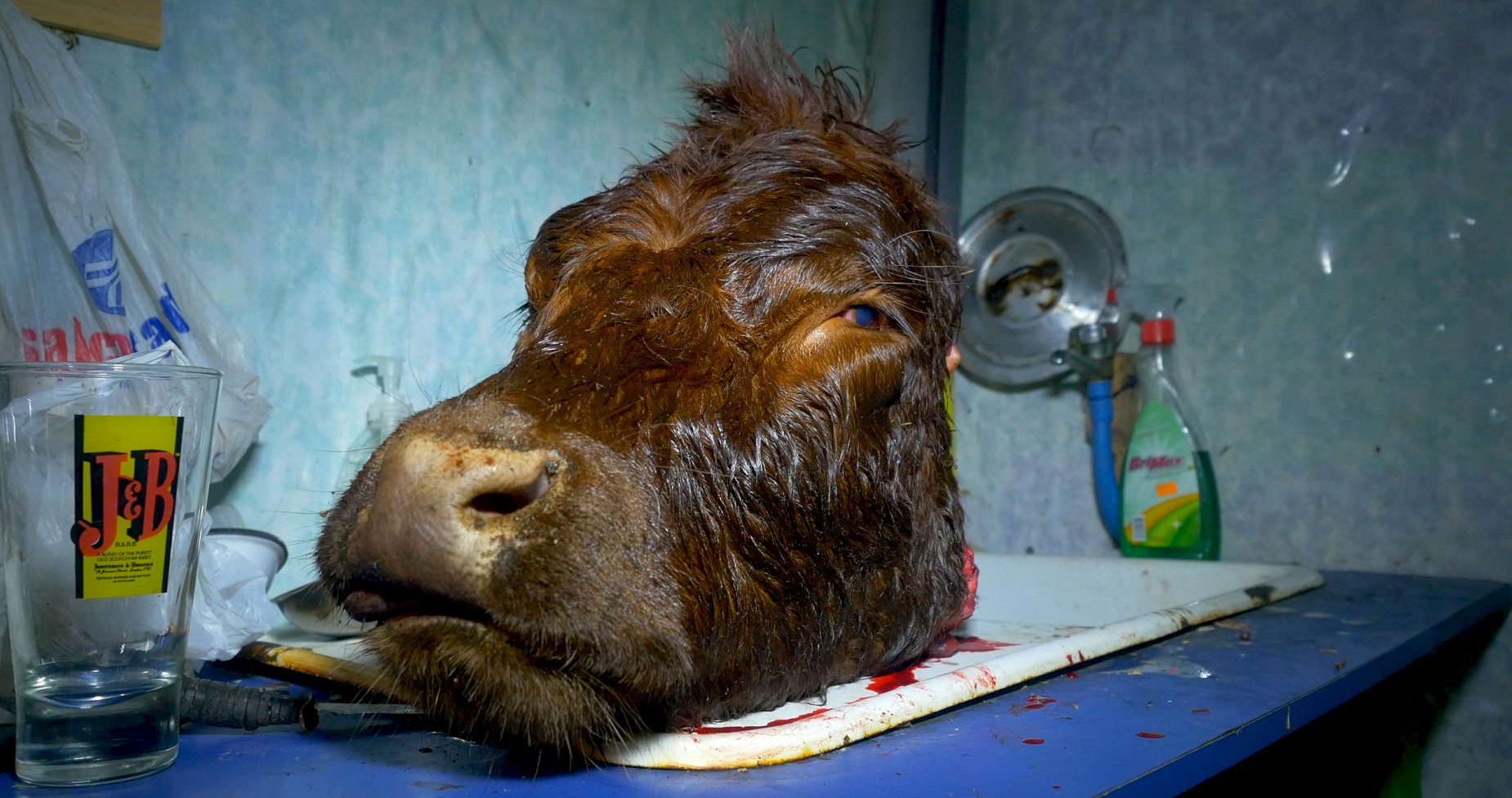
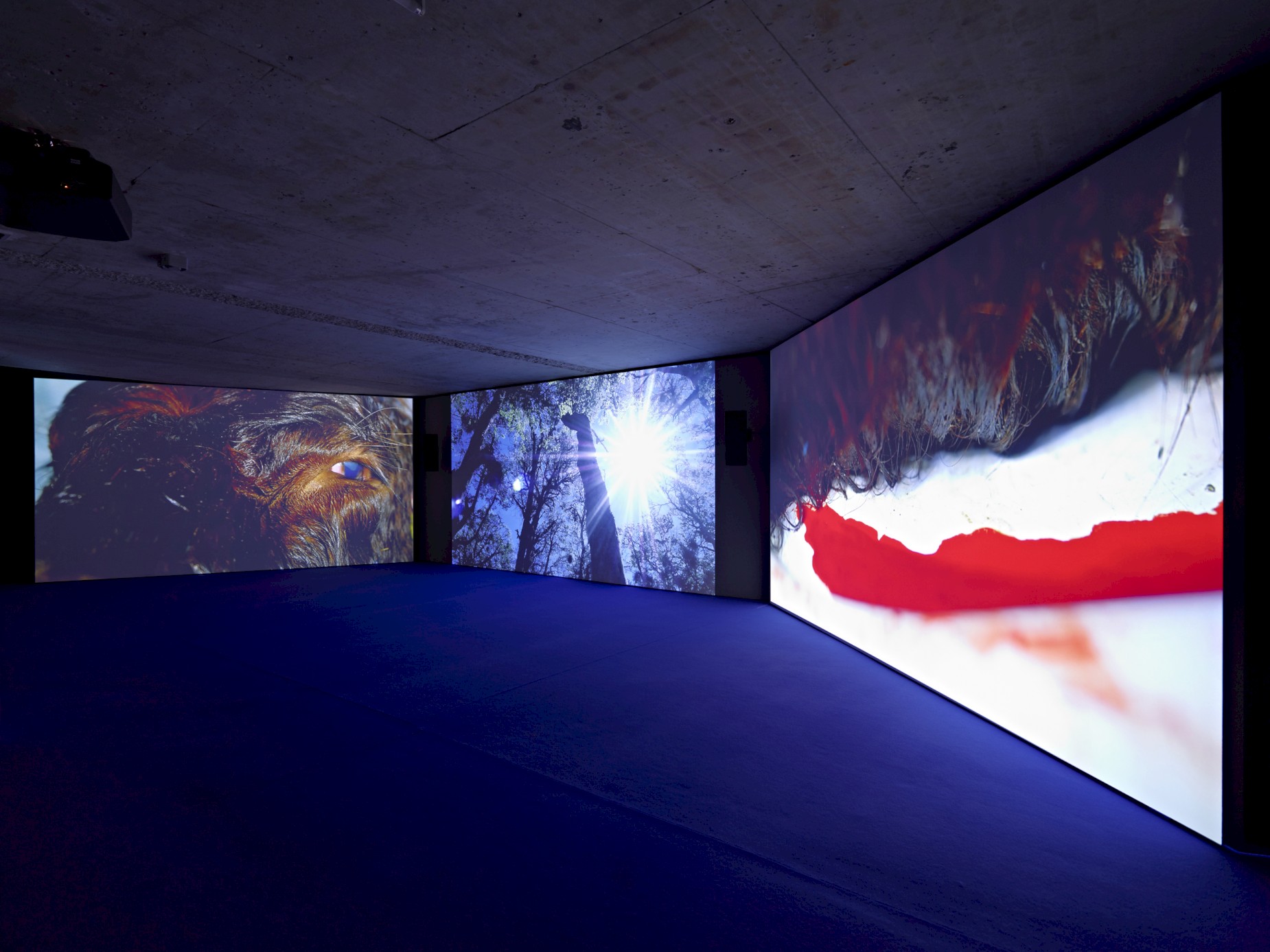
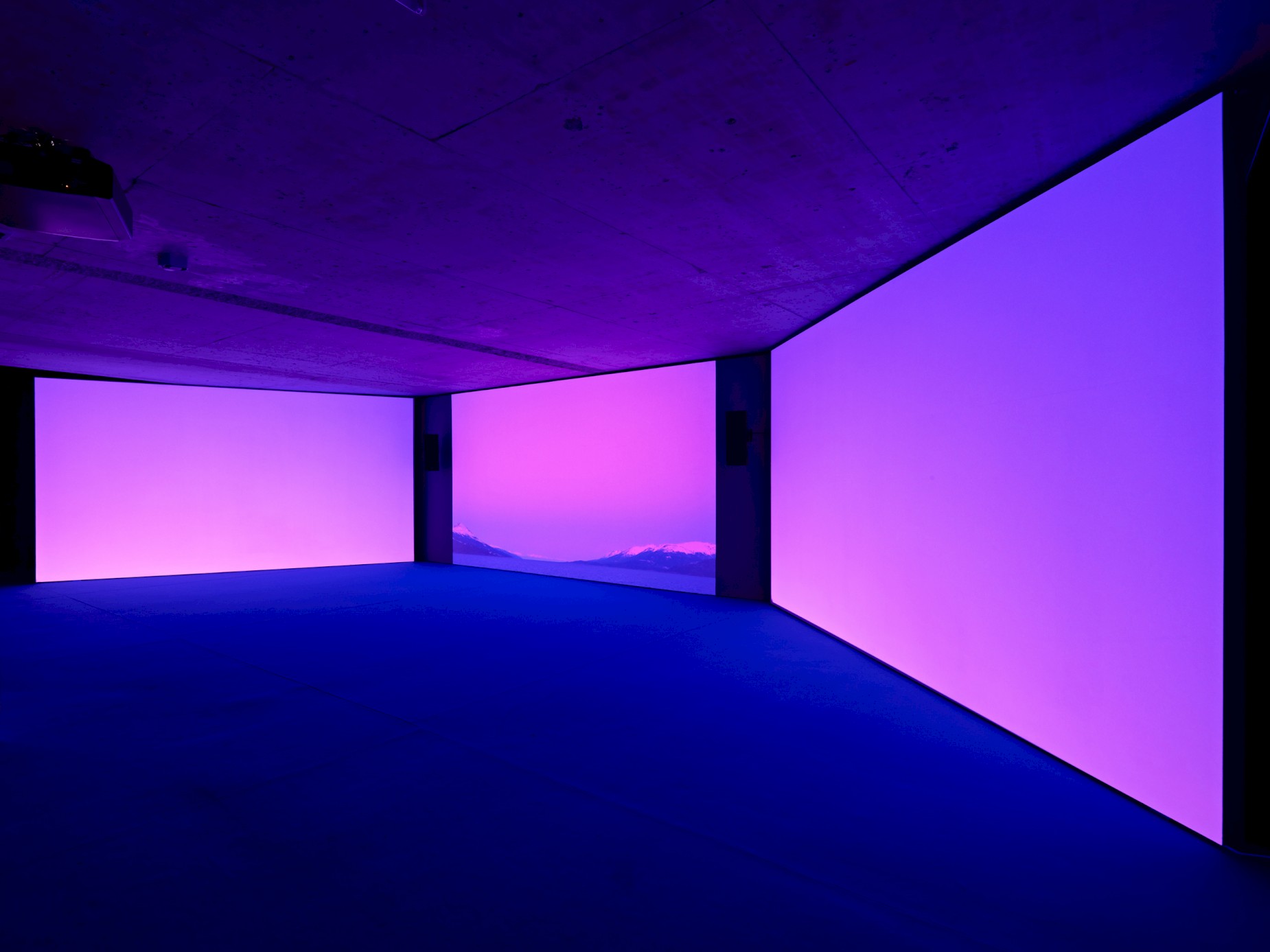
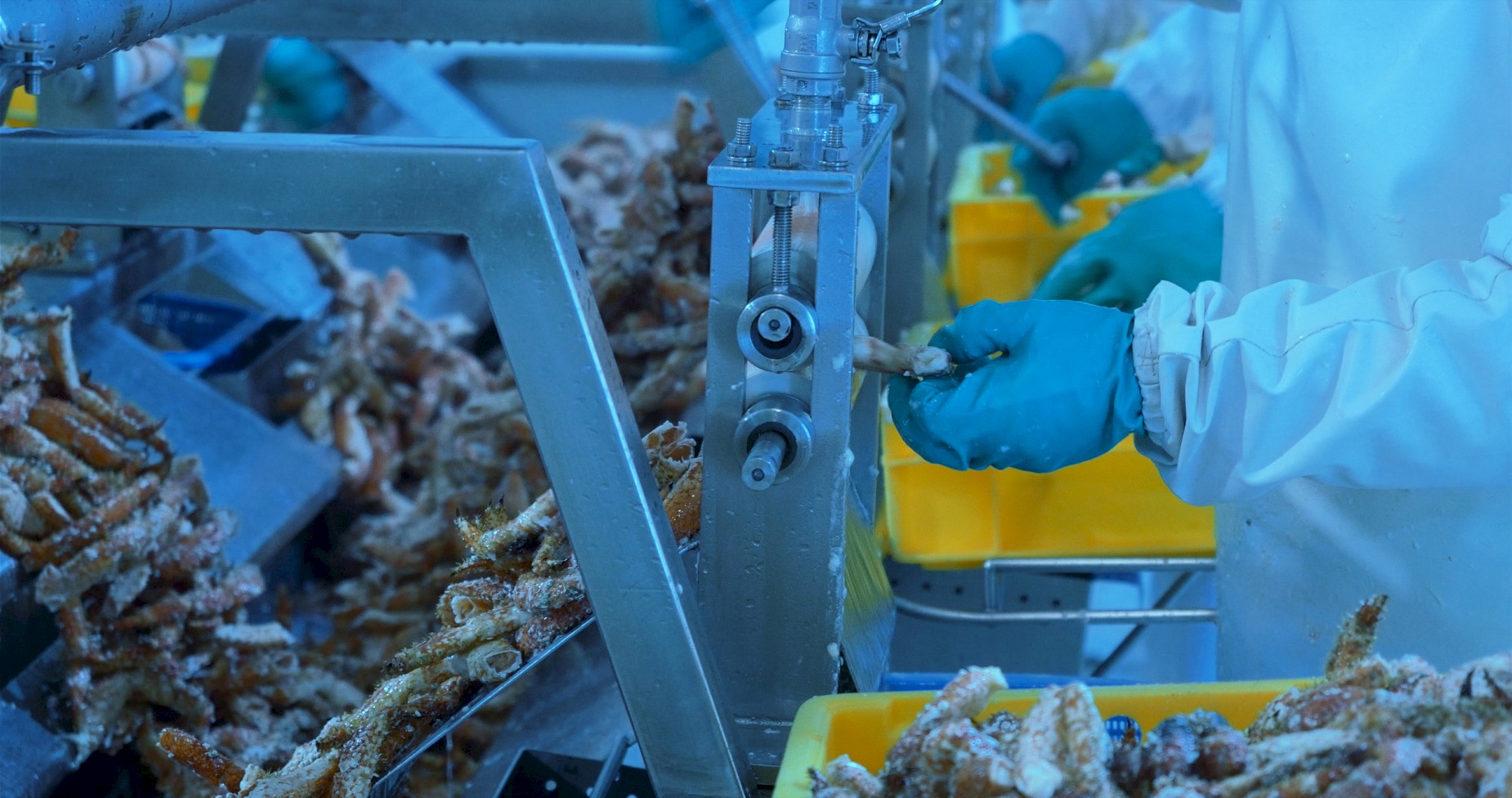
Techno music plays at the far end of the earth. Squid gyrate to a strobe light, the crab industry runs like clockwork, and real men earn their peers’ respect when their fish traps are full. The sunrise is as breathtaking in Patagonia as it is in the Panoramabar in Berlin’s Berghain nightclub.
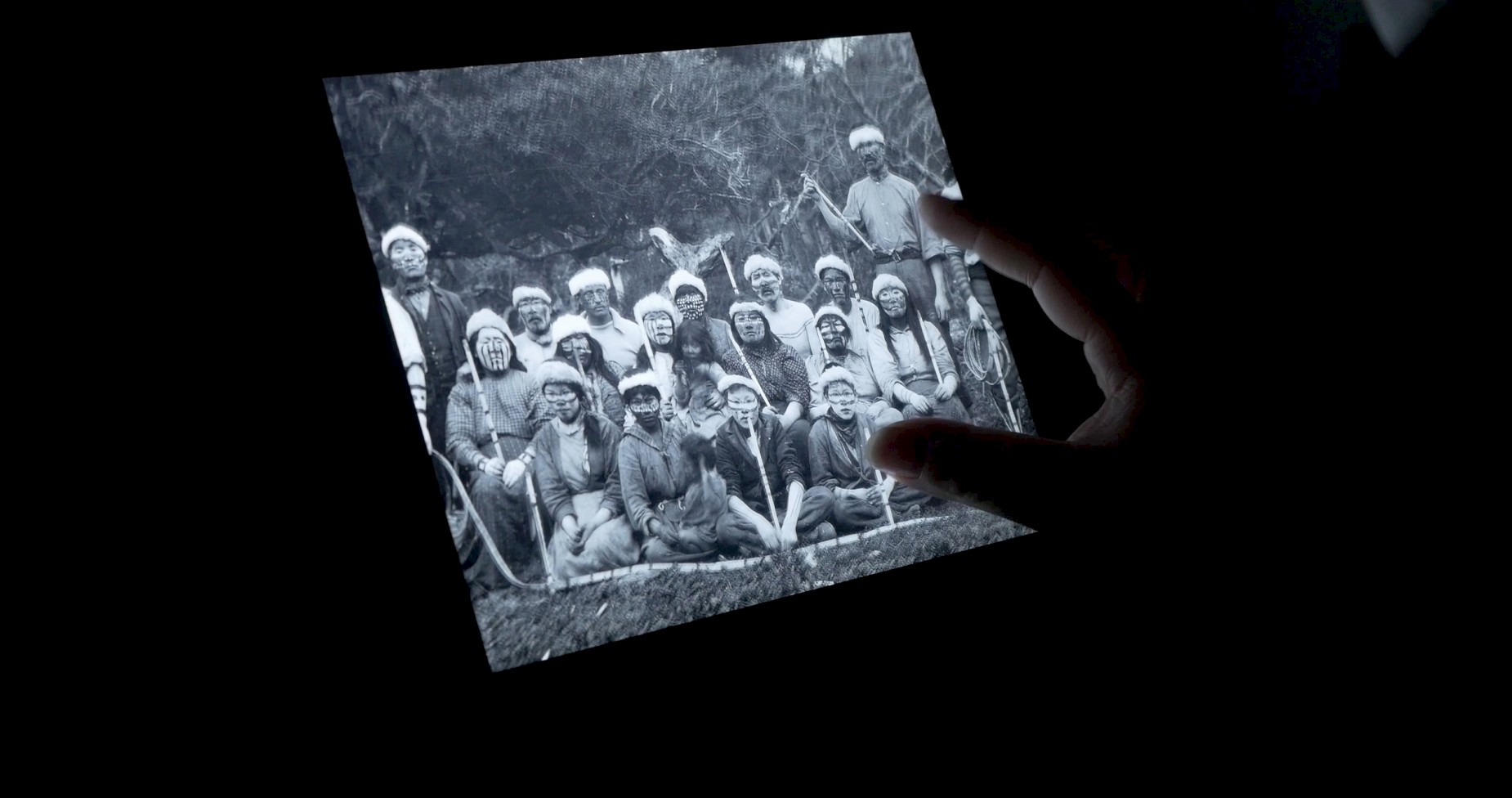
Using luscious colors, rousing rhythms, and meticulously paced cuts and transitions, Mario Pfeifer’s "Approximation", a three-channel video installation, caters to contemporary aesthetic preferences with brilliant images shot using high-resolution 4K technology. The footage was captured at the outer margin of the inhabited earth, a place where people sometimes fall over the edge and disappear. This time it is Tierra del Fuego’s natives who may or may not still exist. Pfeifer captured them on camera – or did he? What the three projections in KOW’s basement gallery show is not a documentary … read more
“Alec, you’re famous! People will listen to you,” says Alec Baldwin to himself, a few moments before sharing the details of his arrest in Cairo, his journey to Italy on a desperately overcrowded fishing boat, and his eventual arrival in the unfamiliar city of Berlin on a rainy day in September 2015. Cut. Julianne Moore briefly fixes her hair. And then recounts the brutal attack that she and her children survived back home, shattering what had been a comfortable life in the Democratic Republic of the Congo, and leaving her with no choice but to smuggle herself and her children – via an endless journey in the back of a windowless truck – towards an uncertain future in an unknown country. In our first encounter with Love Story, Moore and Baldwin address us via a large projection, to speak of past anguish and hope for the future, of forced migration and loss, but also of the comfort of … read more
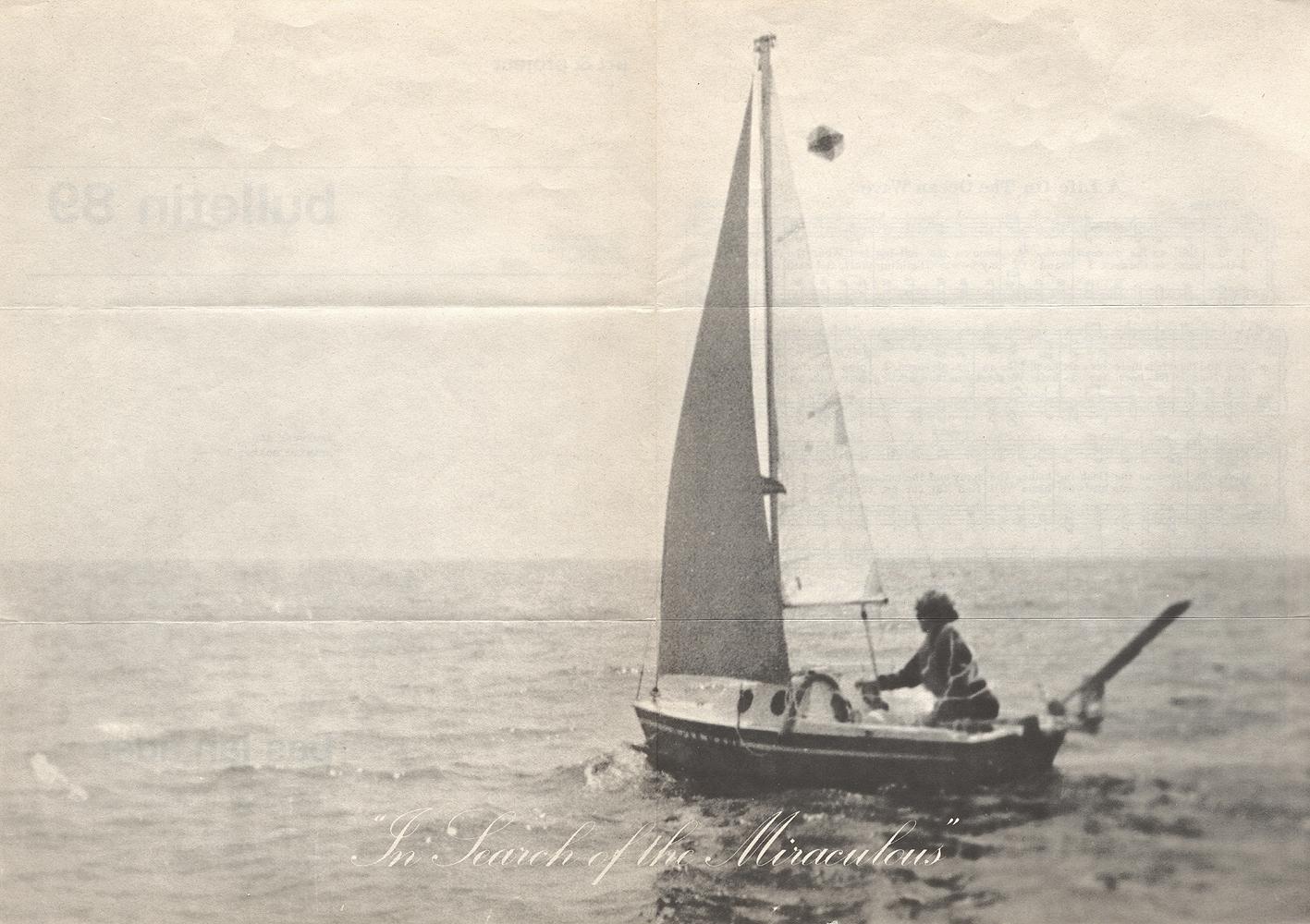
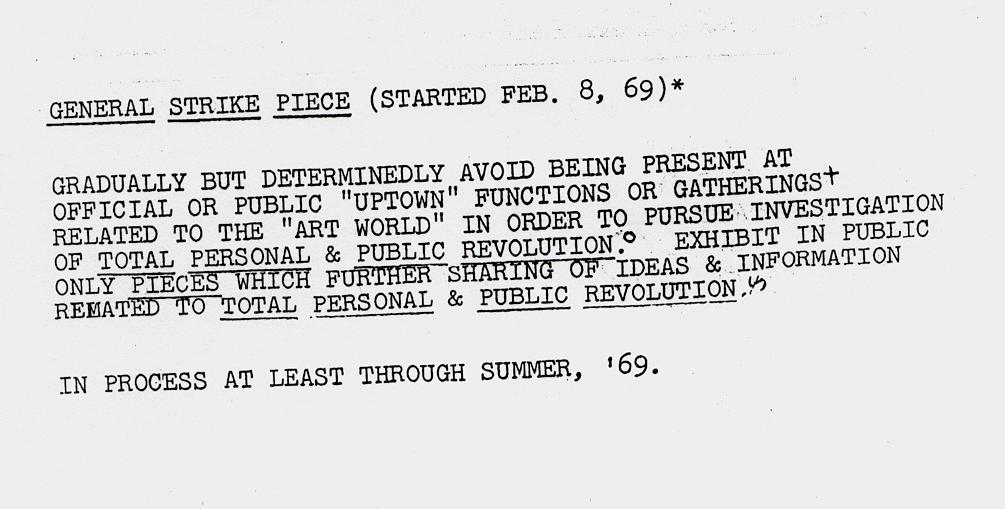
A broken love means most to the one who walks away from it – because the leaver is so profoundly invested in the connection that he or she tries to influence and mold it until the very end. Severing the ties to another human being gives that bond a final form. Breaking up as the last gesture of a love? I’m not sure how much there is to this logic. But it rings true of many artists who broke up with art. Only an artist who is deeply in love with her art can be wracked by such passionate doubts about it even to the point of despair that she finds serious motives to leave it behind or at least put her reservations into practice. This was the point of departure for Gestures of Disappearance.
To contemporary readers, “in love with art” may sound like a romantic cliché, but what the four artists in this exhibition have in common is a core drive that is quintessentially … read more
Hito Steyerl’s first gallery show in Germany—on view are five video installations from 2012 to 2015—is infused with the Bruce Lee quotation “Be water, my friend!” In A Warrior's Journey the kung fu master advises a companion going to war to be as formless as water, which swiftly adapts to new situations and can take on any form. “Be formless, shapeless, like water!”
It is a formula for survival in the face of a superior power. A solution that might appear in the handbook of a guerrilla, hacker, or activist movement—but also in those for wiretapping software, financial products, and hybrid warfare; wherever it is an advantage to quickly shift your position. Bruce Lee’s exhortation to melt down all vulnerable attributes finds its universal echo today in an era of liquidity.
In this context, Steyerl’s practice appears to be in sync … read more
Over the past weeks, we received almost fifty letters from Santiago de Chile. Their content: around 1,600 square feet of fabric, folded up and squeezed into mailing envelopes—the pieces of twelve works Eugenio Dittborn created between 1986 and 2014. Pinturas Aeropostales: Airmail Paintings.
Pictures made to travel the world by airmail from Chile that have now arrived for a stopover in Berlin. Paintings, silkscreen prints, and textile collages, each on a 32-square-foot panel of cotton, felt, or sometimes paper, that we pull from the envelopes, unfold, and assemble on our walls. The monographic survey of the oeuvre of the Chilean artist, who was born in 1943, will be his first solo show at a gallery in Europe.
At any given moment, innumerable pictures are on their way around the globe, in analogue or digital formats, and many … read more
For a long time, the history of abstraction in art was primarily a history of aesthetic essentialism: of the belief that a certain systematic order of forms would necessarily be capable of capturing the very essence of things and theirmanifestations and to organize them in the creative process such that something universal, something true, something definite could be said about them. Something that would rise above the here and now of the concrete environments of life.
With regard to the use of linguistic signs, the American pragmatist Richard Rorty has described this belief as the quest of (especially Western) thought for “final vocabularies,” his label for the longing for timeless formulas of knowledge and the hope for ultimate certitude (1). WhatSantiago Sierra and Richard Rorty have in common is that they abandoned this hope, this need to control the world by conceiving it as … read more
A virtually bare exhibition space without its own lighting and without a discernable function. Hard to say that something is actually being »presented» there. We briefly notice two illuminated plastic tubs and move on to the next room. A second later my colleague Nikolaus says: »Something didn’t feel right in there.« So we go back. The feeling Nikolaus mentioned came from an atmospheric ground zero, as if someone had pulled the plug and shut down all the vital functions of the place. And the few things we could make out seemed to have scampered off into the margins of the space, keeping all to themselves. After looking at them more closely for awhile, a thought came to us that still stays with us today: »Here someone is presenting America’s wounded soul at the beginning of the twenty-first century«—the pain and the broken pride of a society that so fervently suppresses its own … read more
Dabei ziehen, verschieben und schleifen sie Grenzen zwischen einander und bringen so hervor, was Pierre Bourdieu soziale Felder nannte: Austragungsorte von Kämpfen, in denen um Einfluß auf gesellschaftliche Interessensobjekte gerungen wird. Von Arena zu Arena, von Feld zu Feld, sind die Spielregeln der Auseinandersetzung verschieden, ebenso der Glaube der Beteiligten an den Wert der Objekte, um die sie konkurrieren, und der Kapitalien, die sie dabei gegeneinander ausspielen. Neue soziale Felder entstehen durch Spezialisierung und Arbeitsteilung der Akteure eines bereits bestehenden Feldes, durch Diversifizierung von Interessensgegenständen oder durch Verschiebungen in der Kapitalstruktur. Sie begründen neue Spiele, neue Wertsphären, neue Konkurrentenkonstellationen. Haben die innere Ökonomie eines Feldes, seine Funktionsweise und die gemeinsamen Glaubensgrundsätze seiner Akteure eine … read more
Die Besten sind vielleicht schon weg. Ich meine: gegangen. Vielleicht stehen die, die gar keine Kompromisse machen wollten zwischen dem gesellschaftlichen Anspruch ihrer Kunst und der Notwendigkeit, diesen Anspruch dann auch zu Markte tragen zu müssen, überhaupt nicht mehr auf der Bühne: stellen nicht mehr aus, produzieren nicht, verkaufen nicht – sind raus. Betraten einige der besten Künstlerinnen und Künstler unserer Epoche womöglich das große Kunstparkett gar nicht erst, weil sie mit einem institutionellen und wirtschaftlichen Betrieb, an dem sie ihre Zweifel hatten, nicht kooperieren wollten? Ziemlich sicher hätten wir dann nie von ihnen gehört – und wahrscheinlich ein Stück vom Besten verpasst.
Tatsächlich gibt es solche Aussteigerinnen und Aussteiger aus der Kunst reichlich. Ich habe einige Jahre ihre Biografien und Motive studiert1, dabei zeigt sich vor allem eines … read more
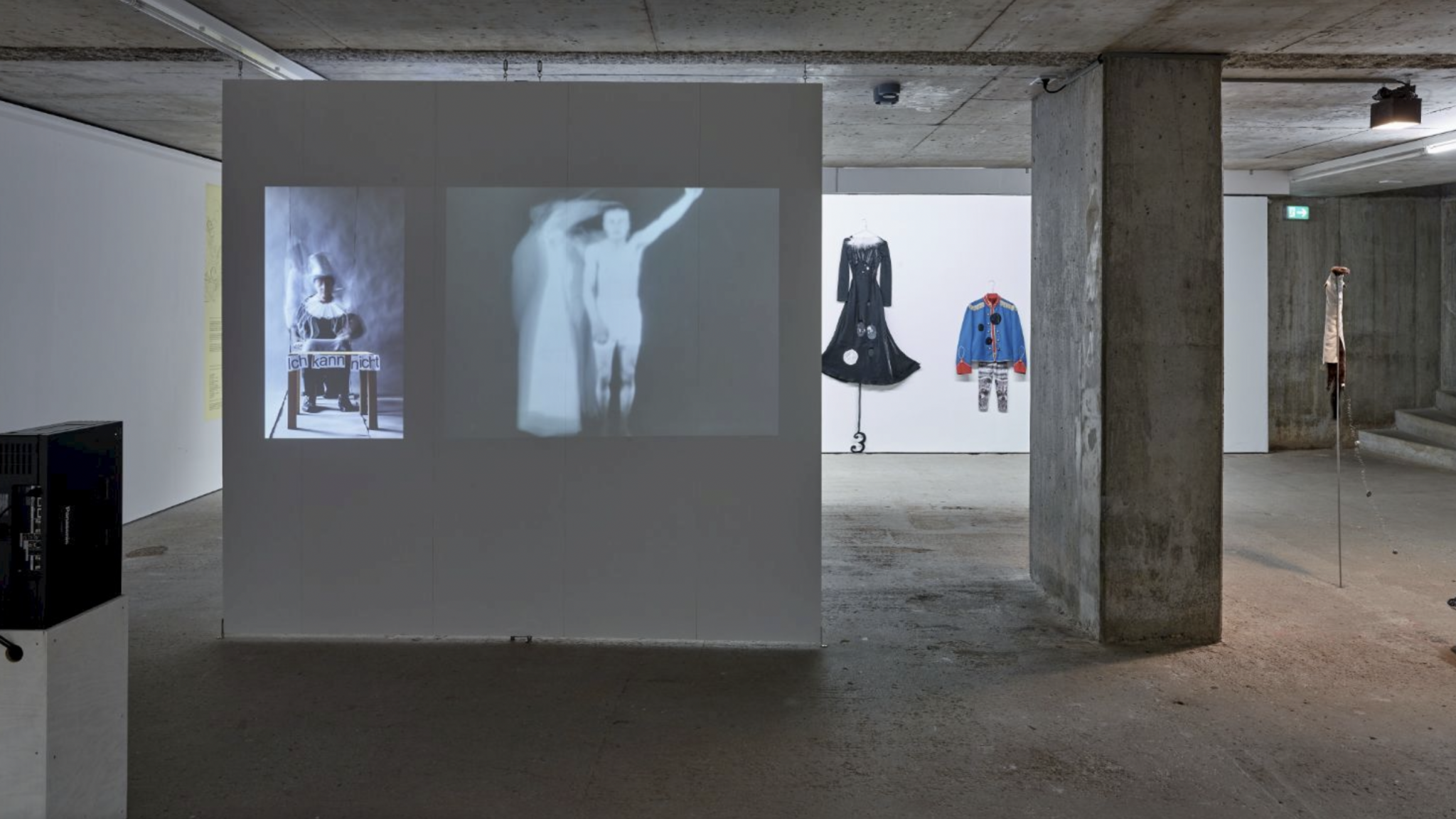
Das Lebenswerk der 1939 in Hollywood geborenen Experimentalfilmerin, Dokumentaristin und bildenden Künstlerin Barbara Hammer hat die Geschichte des Queer Cinema mitgeschrieben. Seit 1968 hat die erste lesbische Filmaktivistin über 80 Produktionen mit dezidiert feministischer Perspektive vorgelegt.
Zeigte unsere erste Ausstellung von Barbara Hammer 2011 vor allem ihren Beitrag zur (Selbst-)Repräsentation lesbischer Liebe und Sexualität in den Siebzigerjahren, konzentrieren wir uns nun auf einen Parallelstrang ihres Schaffens seit Mitte der Achtzigerjahre: Die Auseinandersetzung mit Alter, Krankheit und Tod.
Im Zentrum der gemeinsam mit der Künstlerin entwickelten Ausstellung steht „Sanctus“ (1990). Hammer verwendet Röntgenfilmaufnahmen, die Dr. James Sibley Watson in den Fünfzigerjahren herstellte, indem er Körper in Bewegungen … read more
Between 1874 and 1996, the Canadian authorities, in concert with various churches, operated so-called Residential Schools—boarding schools designed to reeducate Canada’s aboriginals. During this time, around 250,000 children were forcibly separated from their families, isolated from the indigenous cultures, and remade into “good Christians.”
They were forbidden to speak their native languages; sexual abuse and forced sterilizations were widespread; more than 50,000 children died. Recent discoveries of children’s mass graves have been ignored, or investigations were halting. Although the Canadian government apologized for the reeducation program in 2008—the Vatican followed suit in 2009—they deny that a systematic genocide of the indigenous population, through lethal vaccination programs and other means, took place. … read more
Painting and Buddhism are good pals. While wandering together through New York’s galleries and bars, Painting regularly ponders the difference between good and bad pictures – and Buddhism counters with old Tibetan words of wisdom on which Painting’s ambitions roll off like rain from the oil stains on the asphalt. When Chris Martin dispatches Painting and Buddhism through the streets of Chelsea, dirt crunches under their shoes. And while whimsically arguing about the essence of painting in Martin’s article »Buddhism, Landscape and the Absolute Truth about Abstract Painting« for The Brooklyn Rail, the smell of alcohol on their breath combines with the putrid sweet smell of nocturnal Manhattan.
Painting and Buddhism – just as abstraction and spirituality – appear in Martin’s article in addition to his work like two old friends who, unshaven and somewhat dishevelled, flee … read more
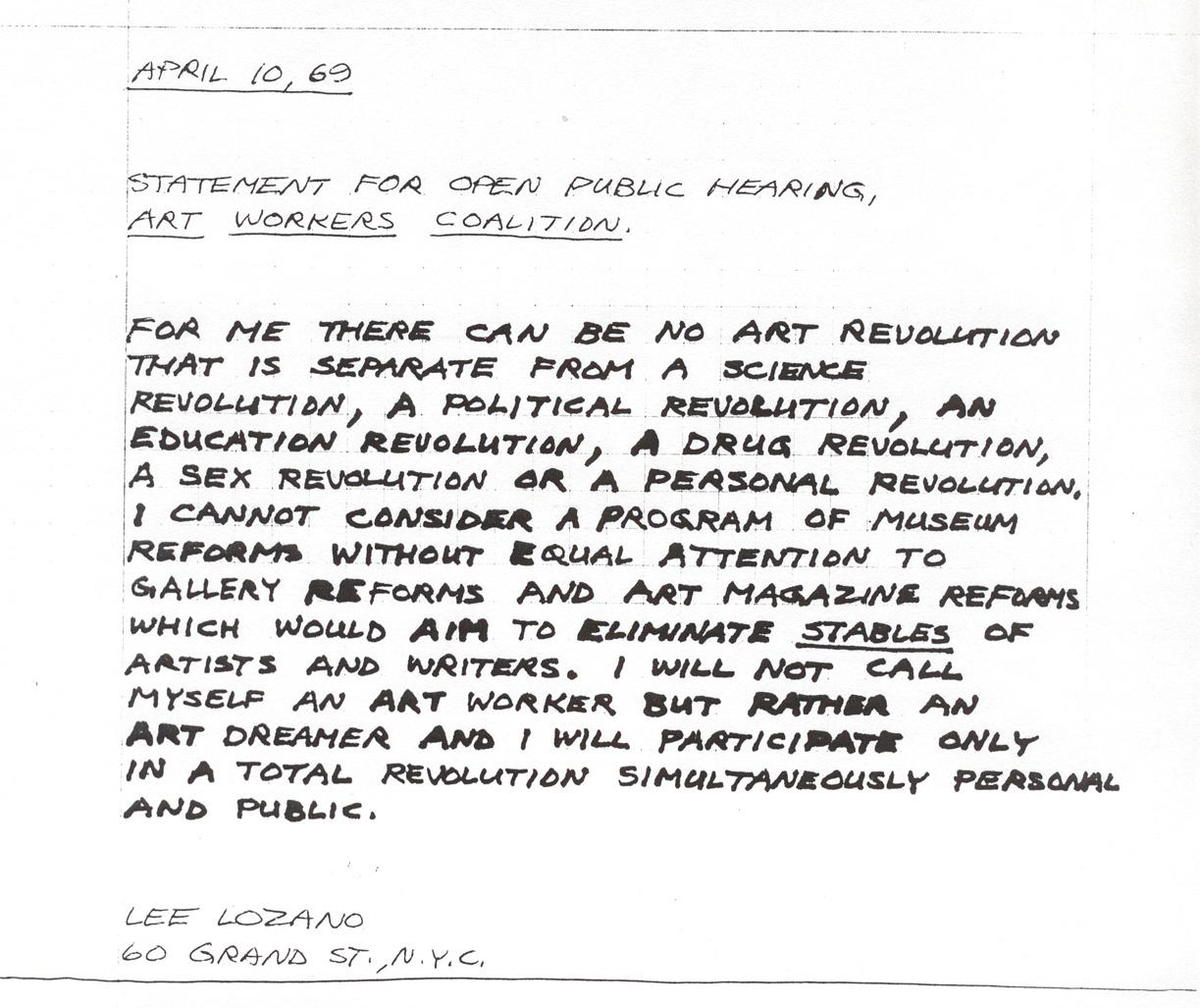
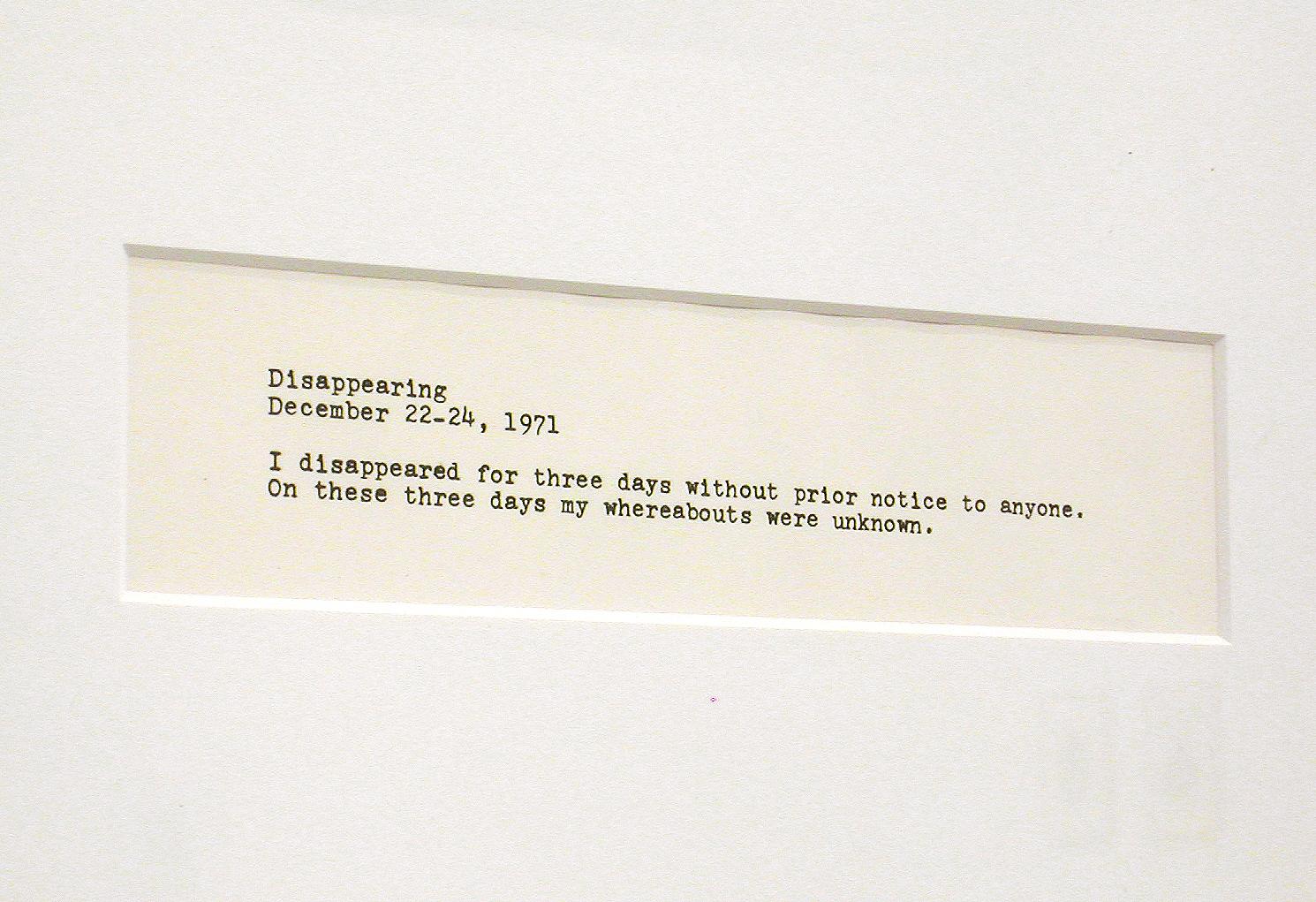
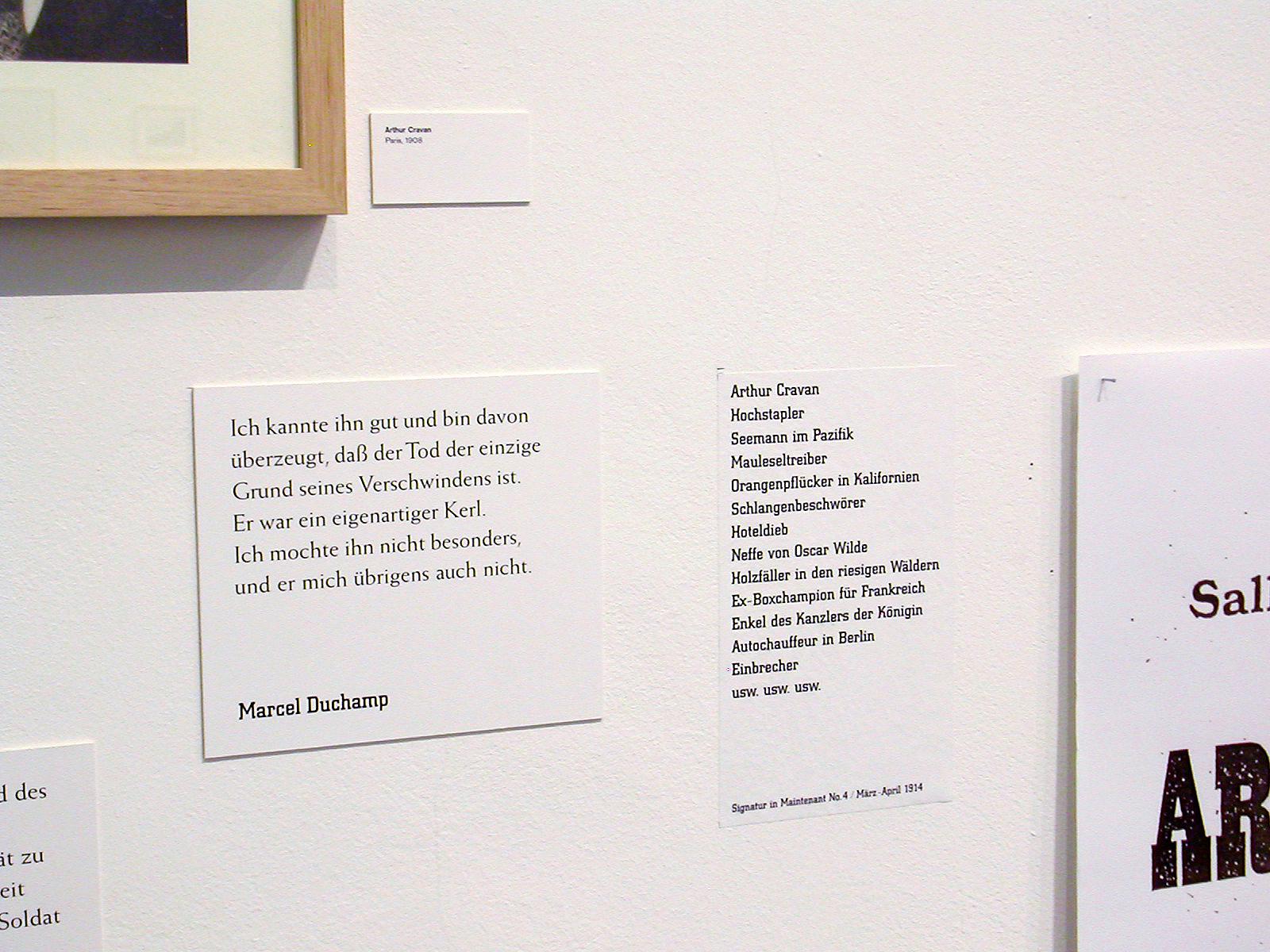
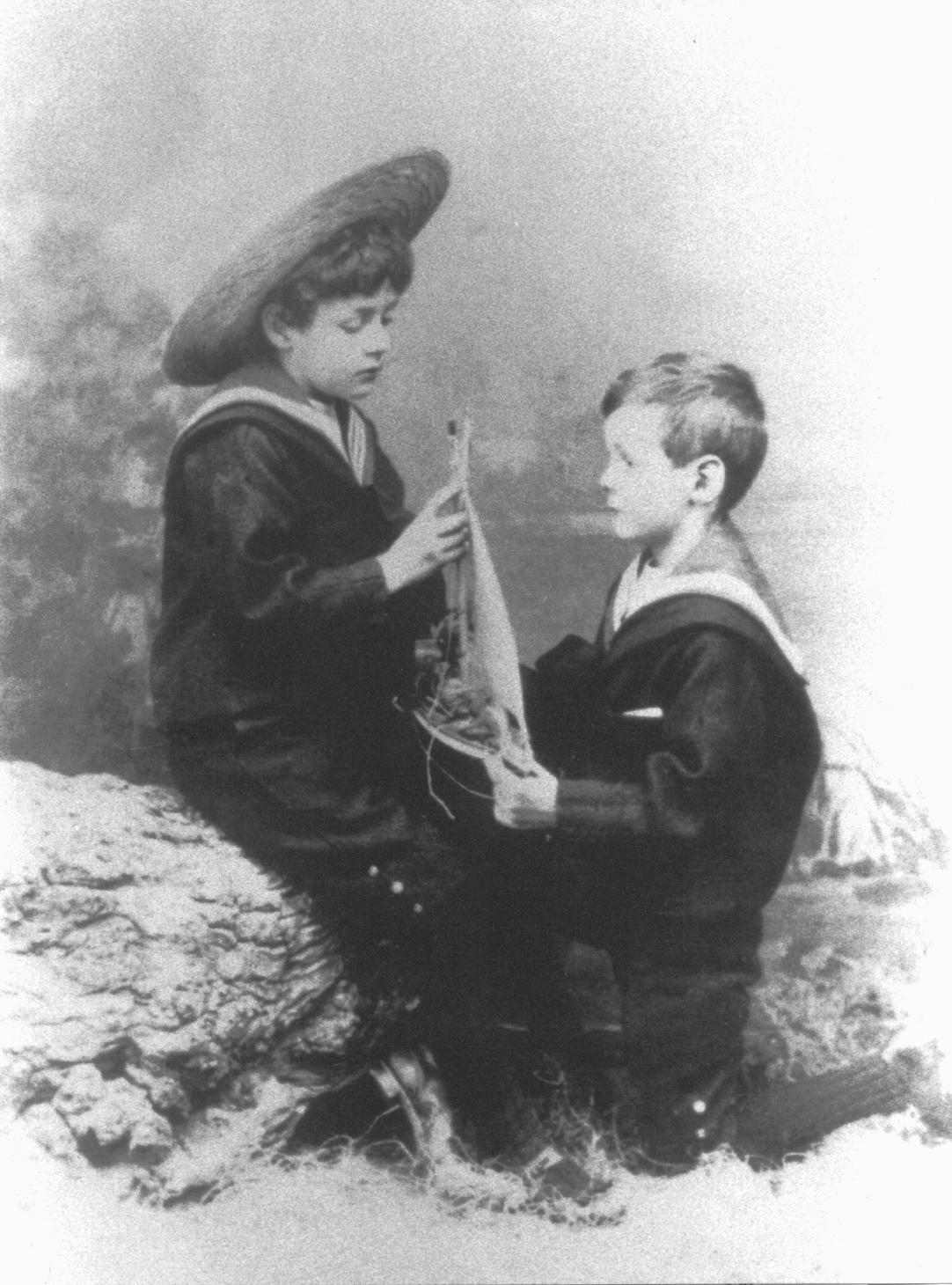
Das Interesse an Künstlerinnen und Künstlern, die sich von der Kunst abwandten und ihre Praxis aufgaben, ist relativ neu. Als ich 2002 eine Ausstellung zu Gesten des Verschwindens konzipierte (1), die u.a. Lee Lozano und Arthur Cravan zeigte, stießen die meisten meiner theoretischen und historischen Recherchen ins Leere. Zwar fanden sich biografische Einzeltexte zu Künstlern, systematischere Darstellungen zu künstlerischen Rückzugsbewegungen aber nicht. Sie waren, wie es schien, ein ungeschriebenes Kapitel der Kunstgeschichte. So wurde es notwendig, den Topos des Ausstiegs aus der Kunst theoretisch und historiografisch erst einmal zu begründen. Im Folgenden führe ich die Argumente verschiedener, zwischen 2005 und 2008 von mir verfasster und veröffentlichter Texte (2) zusammen, um eine Begriffsbestimmung vorzunehmen und Konsequenzen daraus abzuleiten. Diese Bestimmung hat den Anspruch … read more
Im politischen Selbstverständnis Europas und insbesondere Deutschlands ist Kultur als Leitmedium gesellschaftlicher Selbstbestimmung historisch verankert. Heute, in unseren neoliberal gewendeten Demokratien, lässt sich indes der emanzipatorische Charakter kultureller Produktion für die Selbstbestimmung demokratischer Gemeinwesen immer schwerer erkennen.
Währenddessen verhalten wir KulturproduzentInnen uns gegenüber der Kulturpolitik nur reaktiv. Die politische Administration setzt die Parameter – wir kritisieren sie. Wir müssen uns fragen, ob das die richtige Haltung für eine Teilnahme an der kulturpolitischen Diskussion ist.
Wir gehen noch immer vom Paradigma repräsentativer Politik aus. Politischen Institutionen wird dabei die Legitimation zugesprochen, bestimmte Anordnungen unserer eigenen Praxen im sozialen Raum öffentlich zu vertreten und über deren … read more
Manchmal ist ein Leerraum beredter als seine Umhüllung, zeugt eine bauliche von einer systemischen Lücke. Im Umkreis weniger hundert Meter rings um sein Architekturbüro in der Brunnenstrasse 9 in Berlin Mitte registrierte Arno Brandlhuber jüngst 58 Hohlräume zwischen Gebäuden, 7.635 m3 Volumen auf zusammen 404 m2 Grundfläche. 58 schmale, oft keilförmig zulaufenden Stücke unbebautes Land mit durchschnittlichen Längen um die zehn und Breiten zwischen 0,4 und 2,5 Metern, nicht unähnlich den „Fake Estates“ von Gordon Matta-Clark. Der amerikanische Künstler ersteigerte 1973/74 fünfzehn meist kaum einen Meter breite Grundstückstreifen in New York City, die durch Ungenauigkeiten bei der Landvermessung und Stadtplanung entstanden waren. Der Form nach vergleichbar, verdanken sich die Berliner „Fake Estates“ indes Erich Honecker.
1980 verordnete die Staatsführung der DDR ihren … read more
From 1963 till 1969, Franz Erhard Walther designed the 58 objects of his »1. Workset«, which would become a classic in German postwar art. It fit in the »Bonner Republik«. Hardly 20 years after fascism had ended, there was a longing for new, progressive and unostentatious symbols of understanding and public spirit. Symbols which the »1. Workset« offered. Simultaneously, he found recognition among the international avant-gardes. Already in 1969, his work was exhibited in the Museum of Modern Art and in Szeemann’s Documenta in 1972. Walther’s 1. Workset became one of the artistic emblems for a new democratic German self image, a country open to the world.
In this respect, Walther’s role bore resemblance to Beuys’s. Beuys, however, belonged to another generation. Based on old, heroic artist images and a profoundly allegoric notion … read more
2008
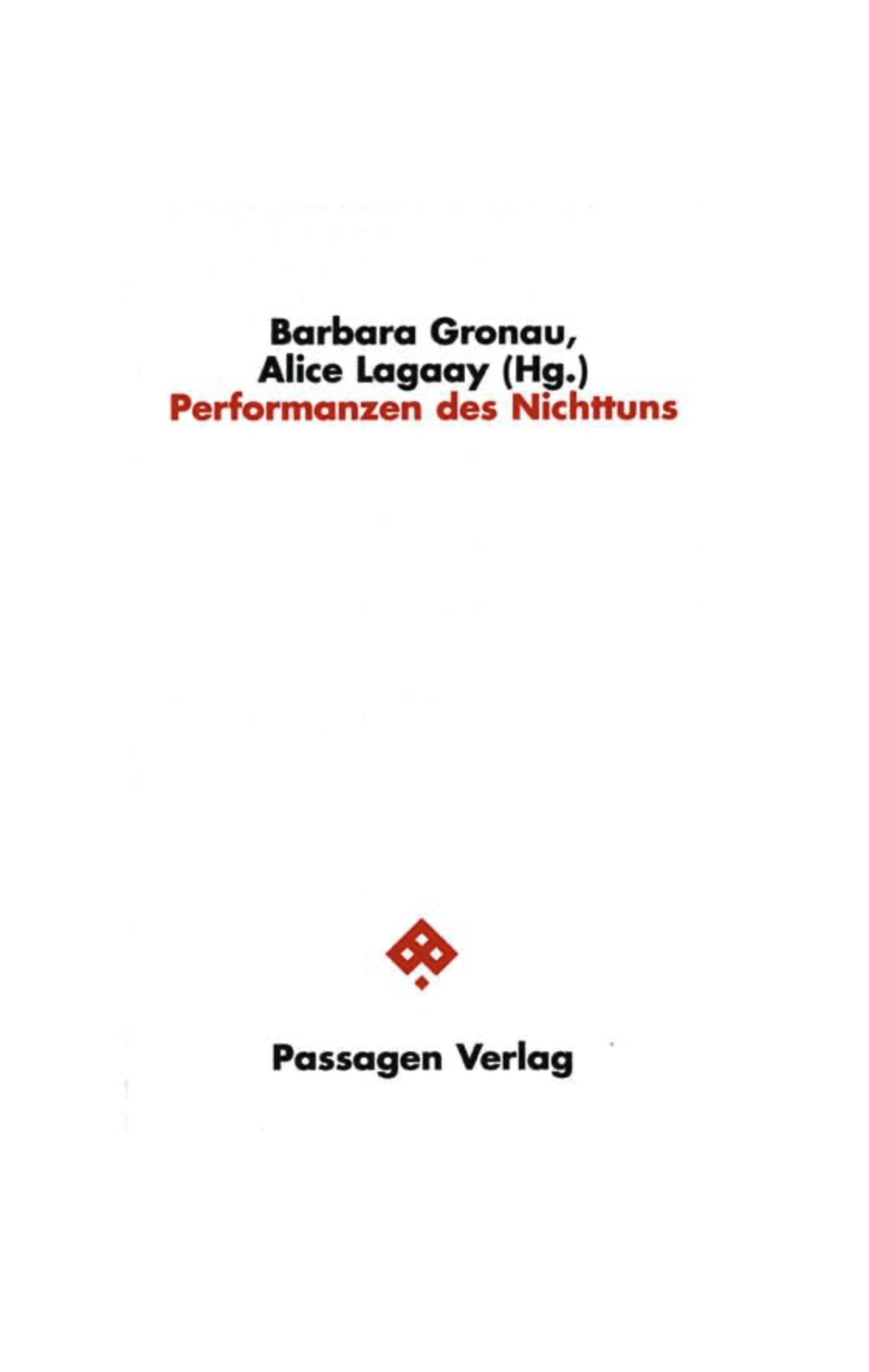
Unterlassenkreativität oder Was tut das künstlerische Nichttun, was das künstlerische Tun nicht tut?
Erschienen in:
Barbara Gronau, Alice Lagaay (Hgg.):
Performanzen des Nichttuns, Passagen Verlag, Wien 2008
Diesen für mich wichtigen Text habe ich nicht mehr vorliegen.
Je me propose ici de répondre à cette question en trois temps. Le texte qui suit comporte donc trois parties, la première étant plus personnelle, la seconde plus systématique, au cours de laquelle je proposerai une terminologie constitutive du Kunstausstieg, qui signifie le retrait de l’art. Dans la troisième partie, je présenterai quelques contradictions que je vois poindre dès lors qu’on aborde la question de savoir comment nous pourrions appréhender un phénomène obscurci par le fait même des disparitions. Laissez-moid’abord proposer une introduction personnelle sur mon travail au sujet de ce que j’appelle le Kunstausstieg. Kunstausstieg — mot que la langue allemande permet d’inventer — signifie quitter l’art/ se retirer de l’art/sortir de ou abandonner l’art. Et j’appelle la personne qui agit ainsi le Kunstaussteiger. Nous reviendrons plus tard sur cette terminologie. … read more
Mit dem Fall der Mauer begann der Umbau des Kunstfeldes im Osten Deutschlands. Ikonographische, formalästhetische, wie auch soziale, ökonomische und institutionelle Regelwerke, die sich nach 1945 unter den Rahmenbedingungen einer sozialistischen Kulturagenda herausgebildet und die Kunstproduktion bis ans Ende der 80er Jahre mitgetragen hatten, waren perdu.
Von internationalen Entwicklungen weitgehend abgeschirmt und ohne Teilnahme an den intellektuellen Debatten des Feldes, hatte sich zwischen „Lust und Last"[1] eine eher introvertierte kulturelle Binnenlandschaft mit einem der älteren Moderne verpflichteten – somit vor staatssozialistischen Anfeindungen gefeiten – Traditionsgerüst entwickelt.
Anfang der 90er Jahre sollte sich zügig der Abgleich zwischen dem je lokalen Status quo und den internationalen, westlichen Standards des Kunstmarktes, des Ausstellungswesens, der … read more
1 / 3
Oops! We are Olympia? Artistic Strategy in Curatorial Practice or Why We Have No Exhibition Terms
Stef Burghards künstlerische Haltung korrespondiert – wie bei vielen Kolleginnen und Kollegen, deren Praxis sich ab Mitte der 90er zu formulieren begann – mit einem Denken, das der Analyse der ökonomischen und institutionellen Parameter künstlerischen Arbeitens verpflichtet ist. Eine Haltung, die es gelernt hat, auch die eigene Künstlerrolle in diesem Zusammenhang zumindest von einer theoretischen Warte aus erneut mit Skepsis zu betrachten und ihre aktuellen Implikationen zu überprüfen. Nicht selten stellte sich heraus, dass der dabei formulierte Anspruch, System- und Selbstkritik zu den Grundlagen des eigenen Handelns zu machen, und das Verlangen, Kunst dennoch als eine persönliche Handlungsperspektive weiterhin zu bejahen, soweit auseinander brachen, dass der verbleibende Spielraum im zeitgenössischen Diskursklima eng wurde.
So zog Burghard es bisweilen vor, auf den eigenen … read more