

English EN Deutsch DE

Alexander Koch

Public Projects

Public Projects
Public Projects
Public Projects
Public Projects
Public Projects
Public Projects
Public Projects
Public Projects
Public Projects
Public Projects

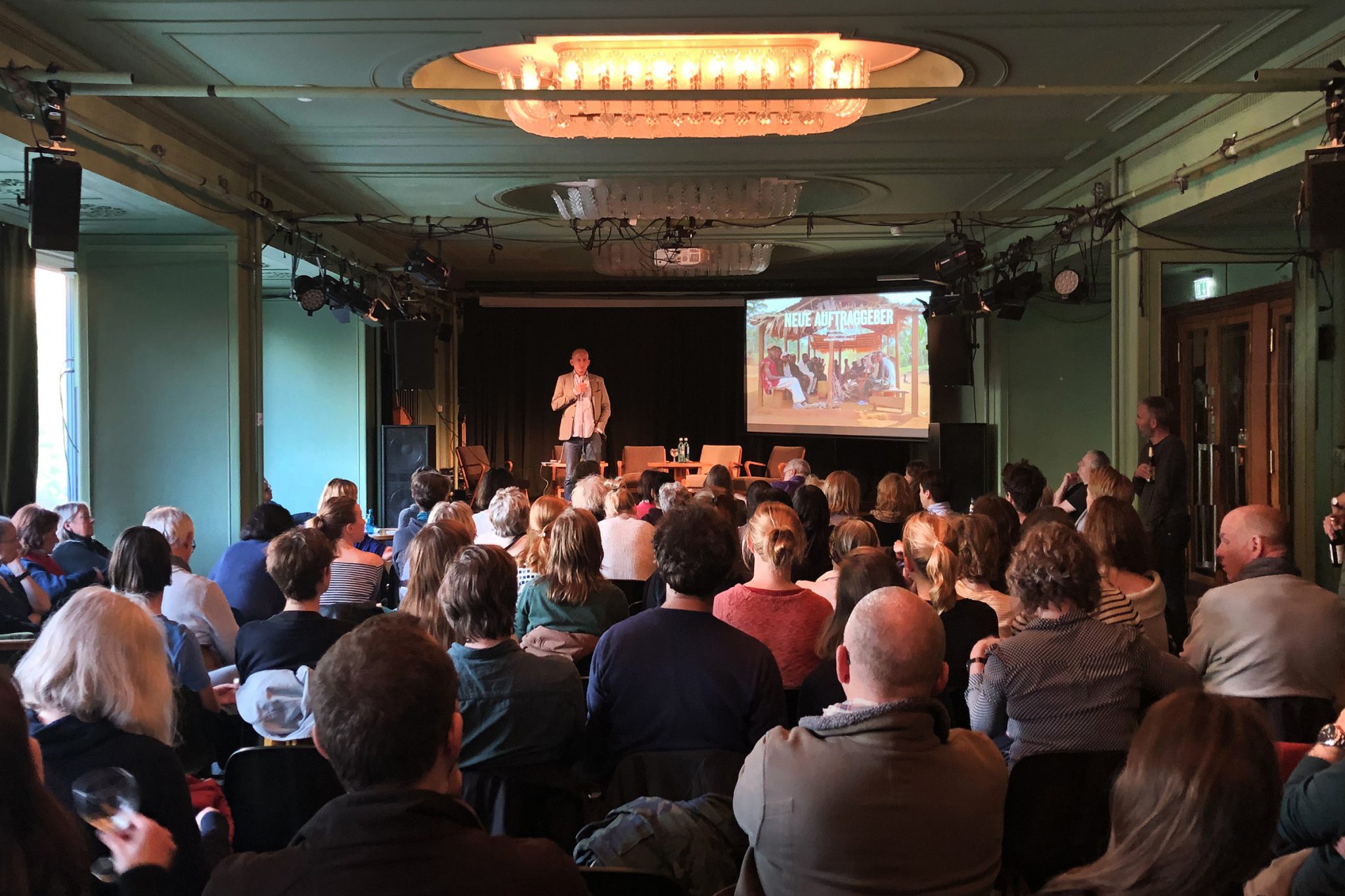
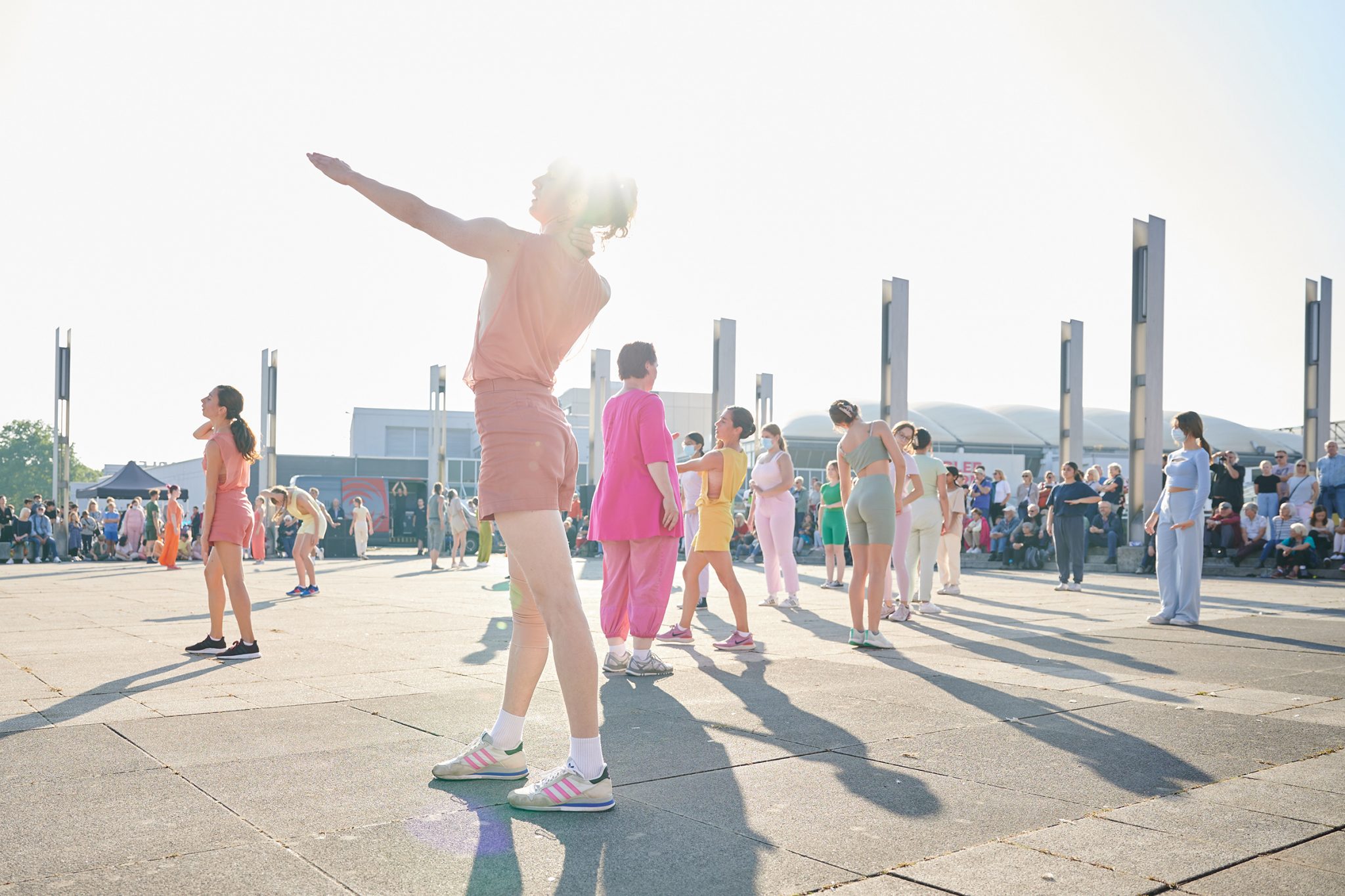
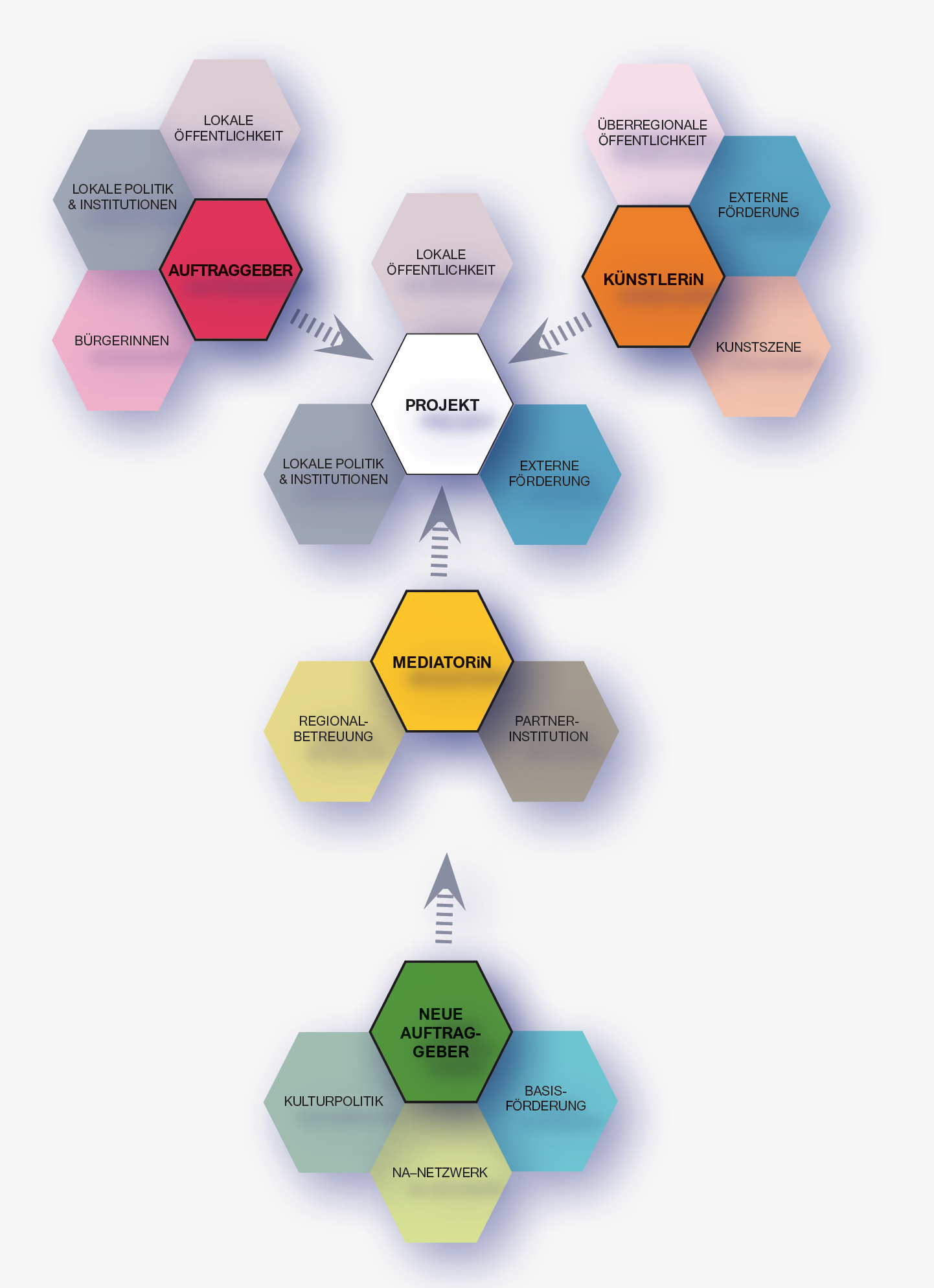
Some of the projects I am involved in are more “public” than others, or are directly concerned with the production of the public sphere. First and foremost is the program of art commissioned by citizens called Neue Auftraggeber. This program, for which I have been co-responsible in Germany since 2007 and which has so far produced around two dozen art projects in public spaces, is part of a European network of sister programs that together have produced 500 public projects to date. As founder and director of the non-profit organization Gesellschaft der Neuen Auftraggeber, I have a more cultural-political role and a mandate to publicly represent civic interests. At the same time, I help raise the money so that sometimes fewer, sometimes more, sometimes many people can be active. In addition, there are other projects in and for public space that I have organized or participated in. My first major project in Leipzig in 1998, the symposium on intercontextual artistic competence, left its mark on me. The socio-political approach of that time has remained a program for me ever since.

Neue Auftraggeber/ New Patrons – Citizen-Commissioned Art

2007–today

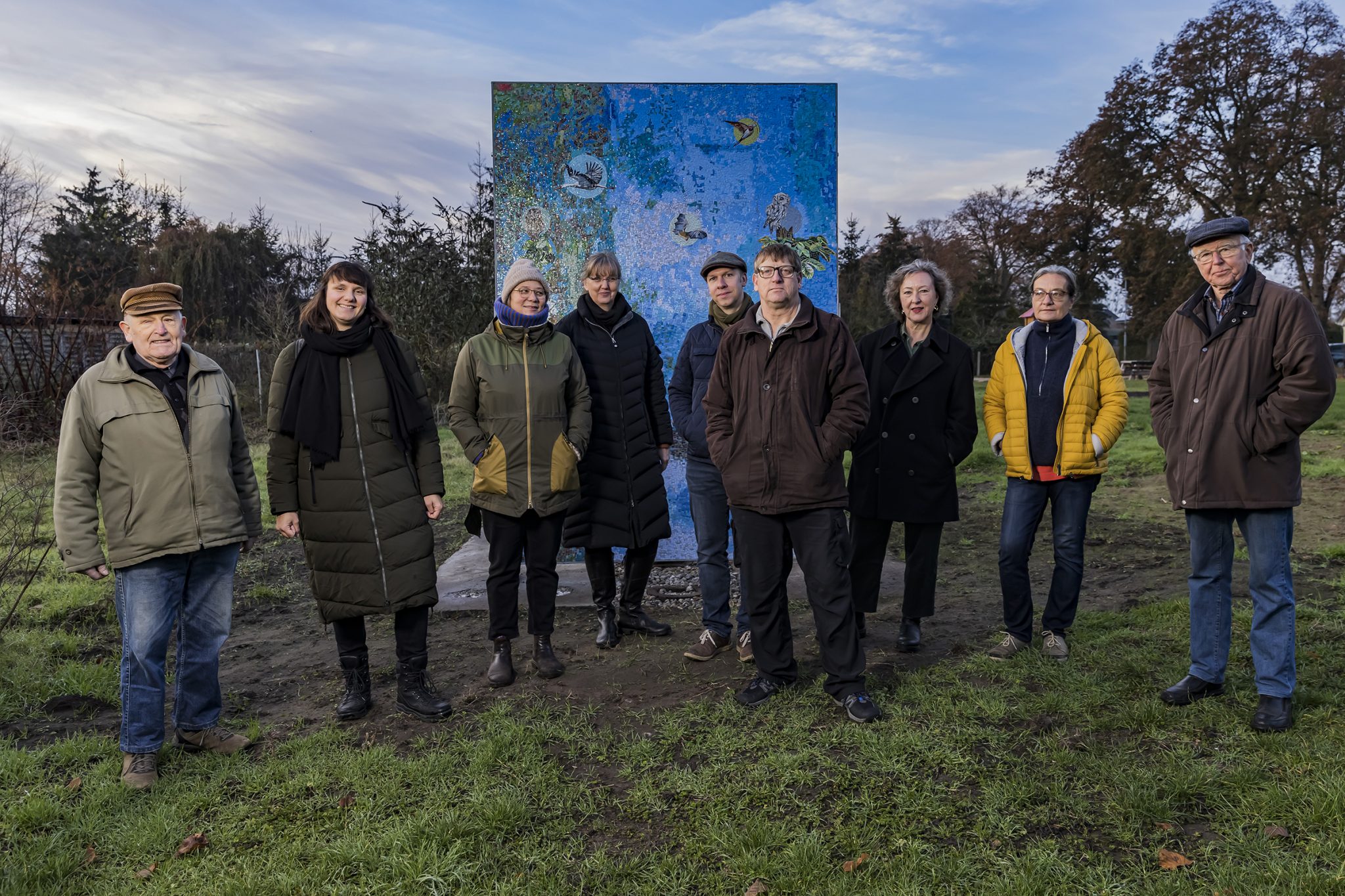
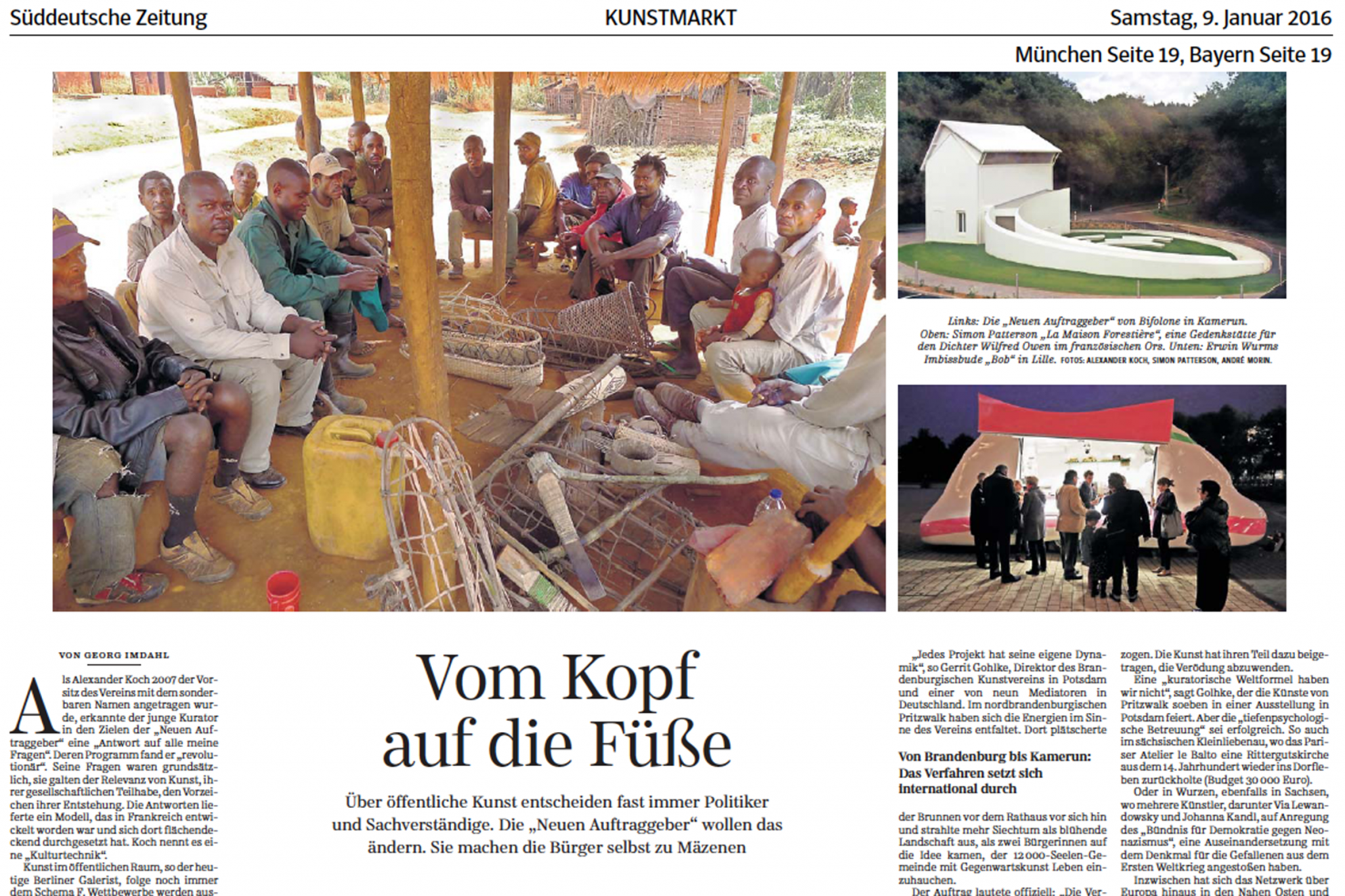
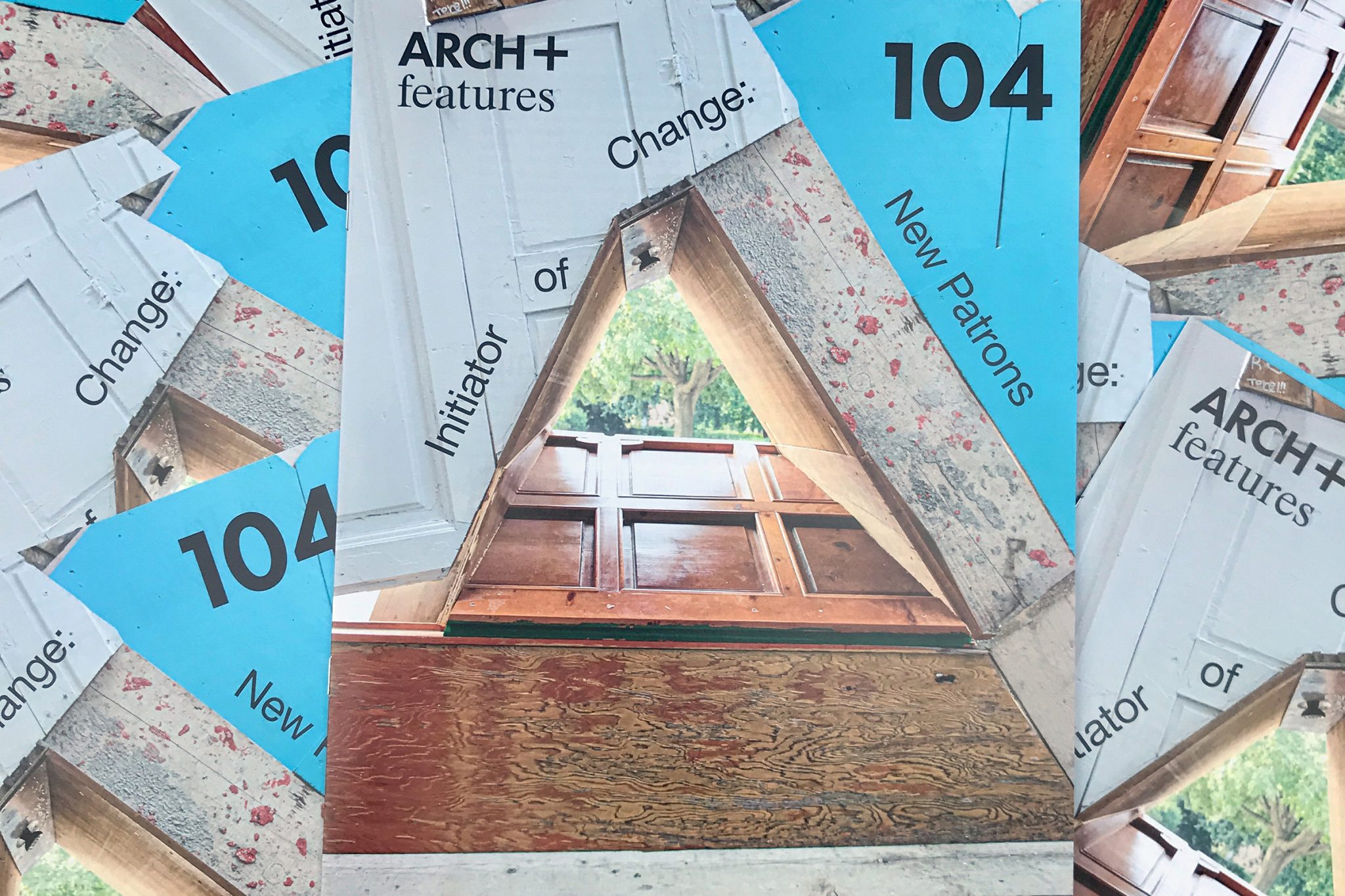
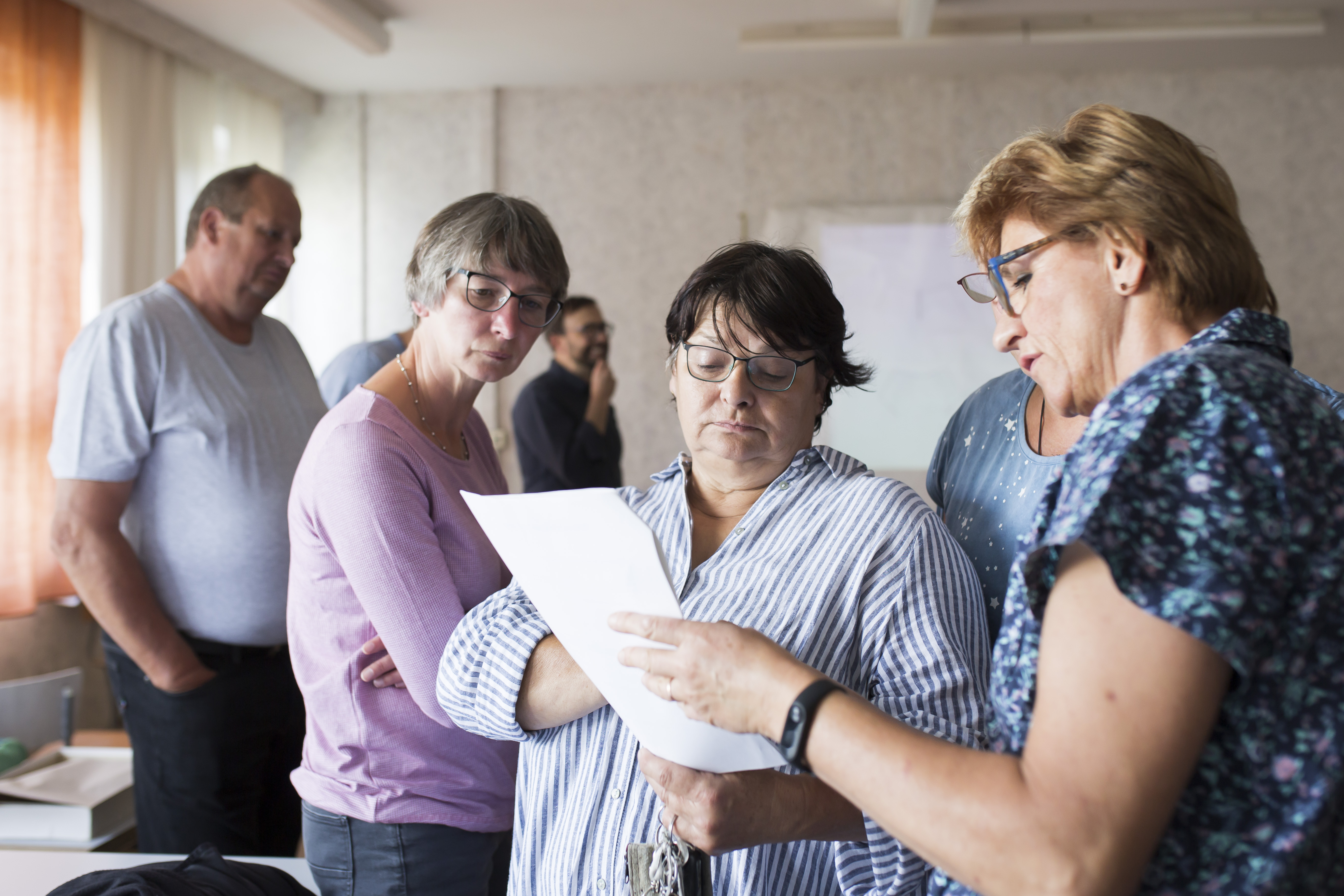
Art on Commission by Citizens – the ‘New Patrons’ – is a large-scale cultural-political project. It started in France as ‘Nouveaux Commanditaires’ and has spread across Europe with over 500 projects since 1991. In 2007, I co-founded an association in Berlin, which I chaired, and we brought the concept of the New Patrons to Germany. Since then, the initiative has grown into a nationally recognized and increasingly practiced method, for which I stand as the director of the Gesellschaft der Neuen Auftraggeber, a non-profit GmbH that I founded in 2017. To date, we have funded and carried out over 30 projects with international artists across Germany, bringing together thousands of people. In 2021, we received the Zukunftspreis (Future Prize) from the German Cultural Politics Society for our efforts.

Between 2013 and 2016, I primarily sought out individuals … read more

Educational Roles at Universities and Academies

Educational Roles at Universities and Academies

since 2010

Sommerakademie Salzburg, ETH Zurich, Hoschschule Luzern, École Superieure de Beaux Art Paris, NYU New York, Goldsmith College London, HKM Cologne, Bauhaus Universität Weimar, HfbK Dresden, Kunstakademie Düsseldorf, Kunstakademie Weissensee, UDK Berlin, Universität Lüneburg, HfbK Hamburg

KOW
KOW
KOW
KOW
KOW
KOW
KOW
KOW
KOW
KOW
KOW
KOW
KOW
KOW
KOW
KOW
KOW
KOW
KOW
KOW

KOW

2009–today

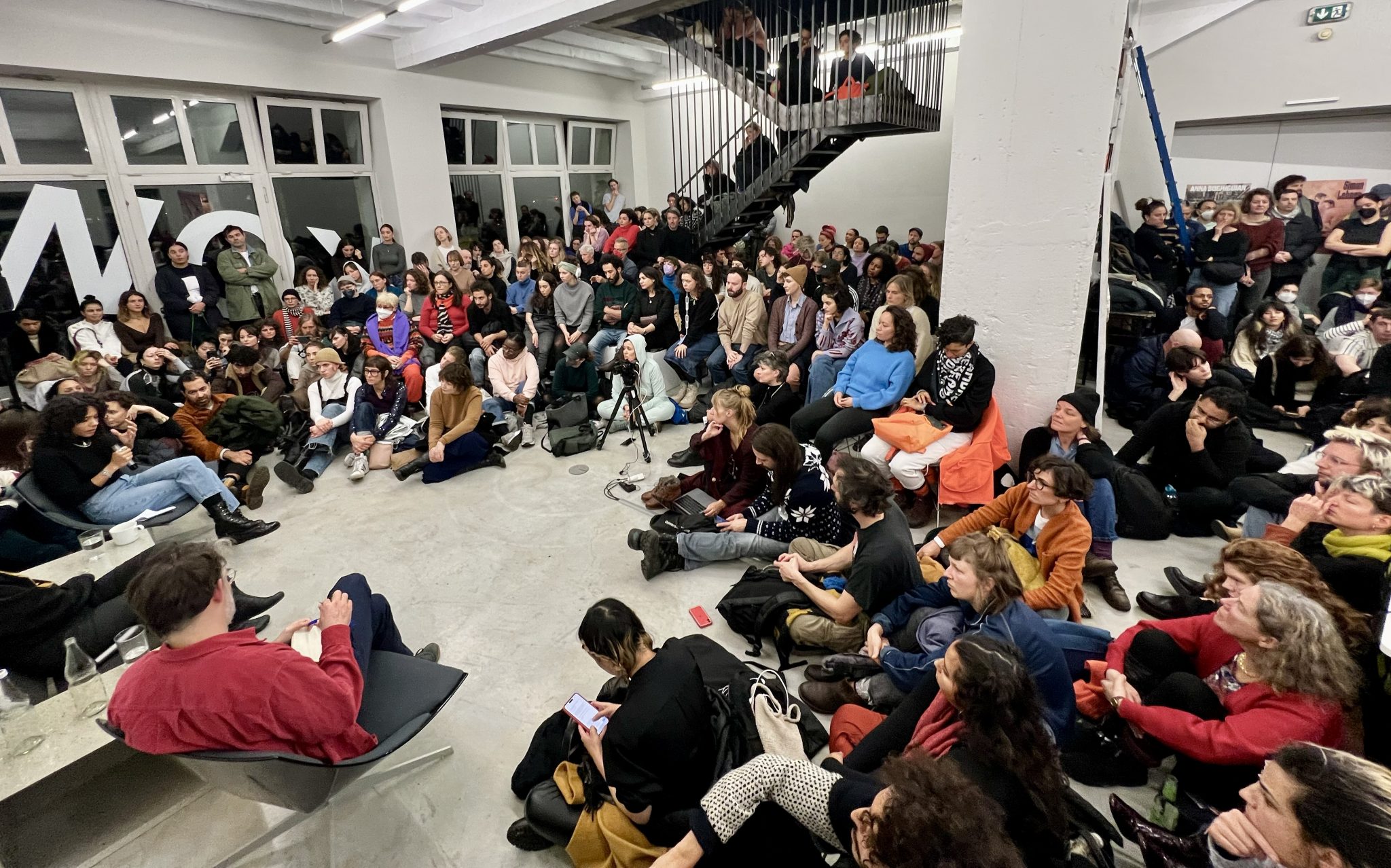
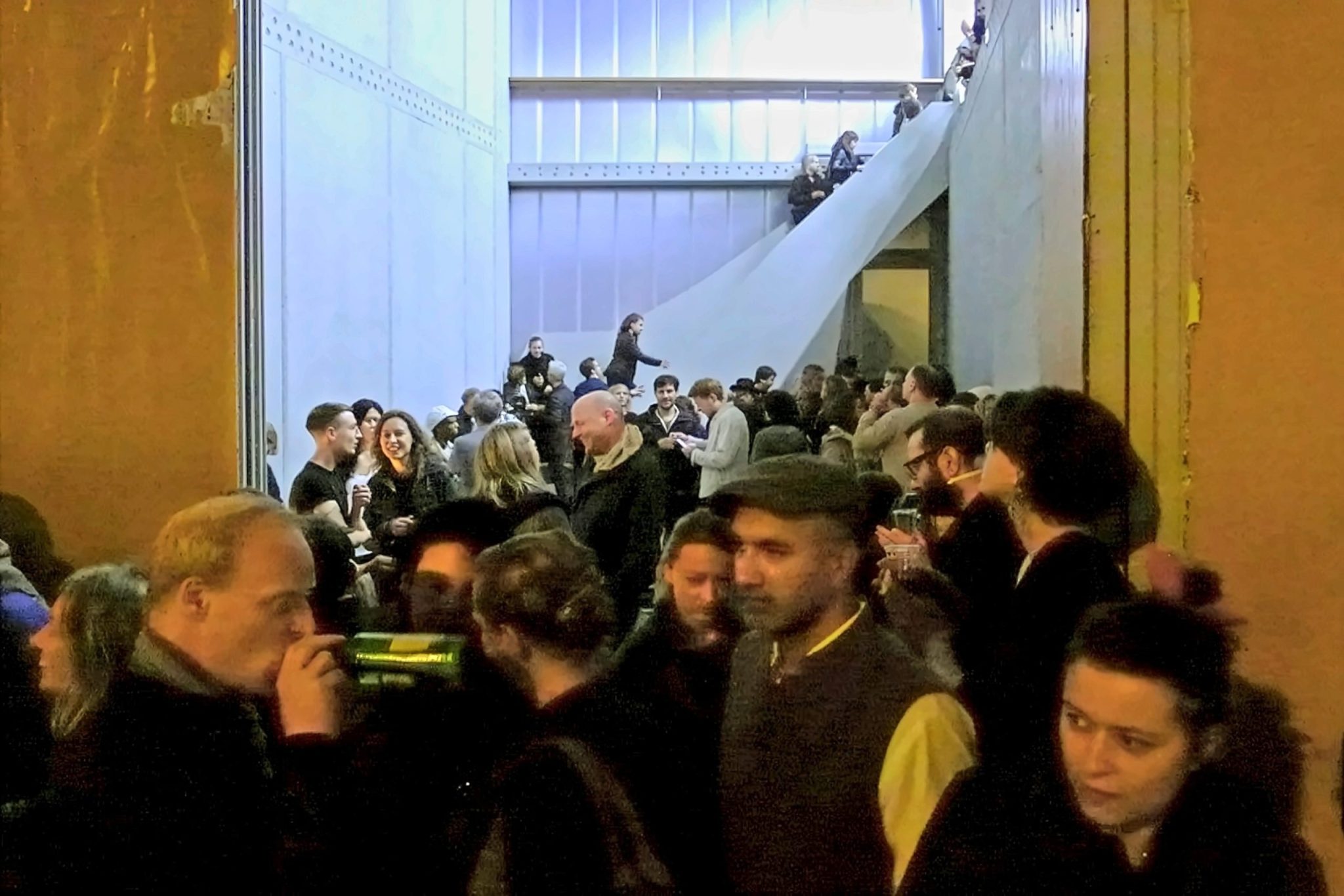
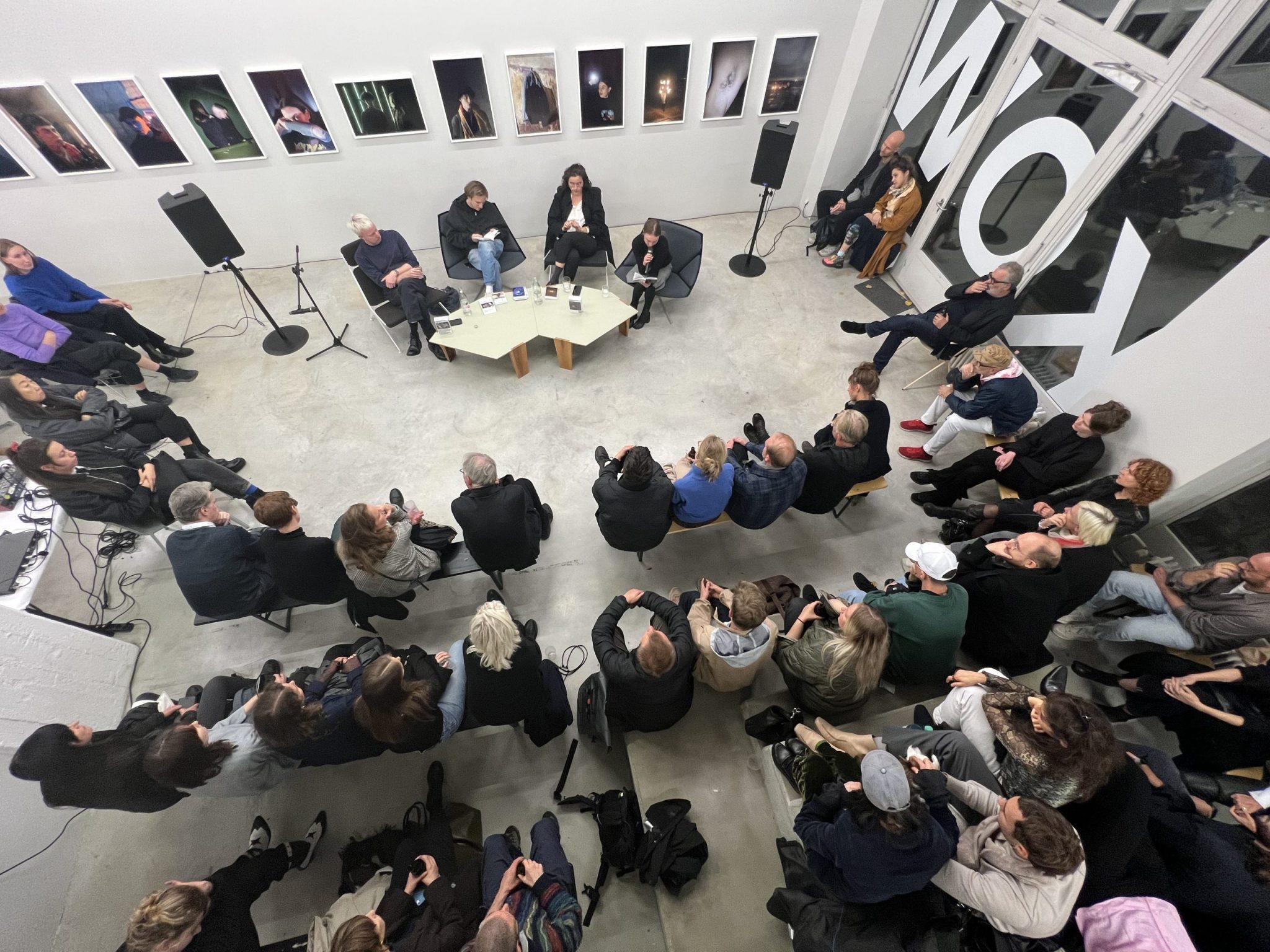
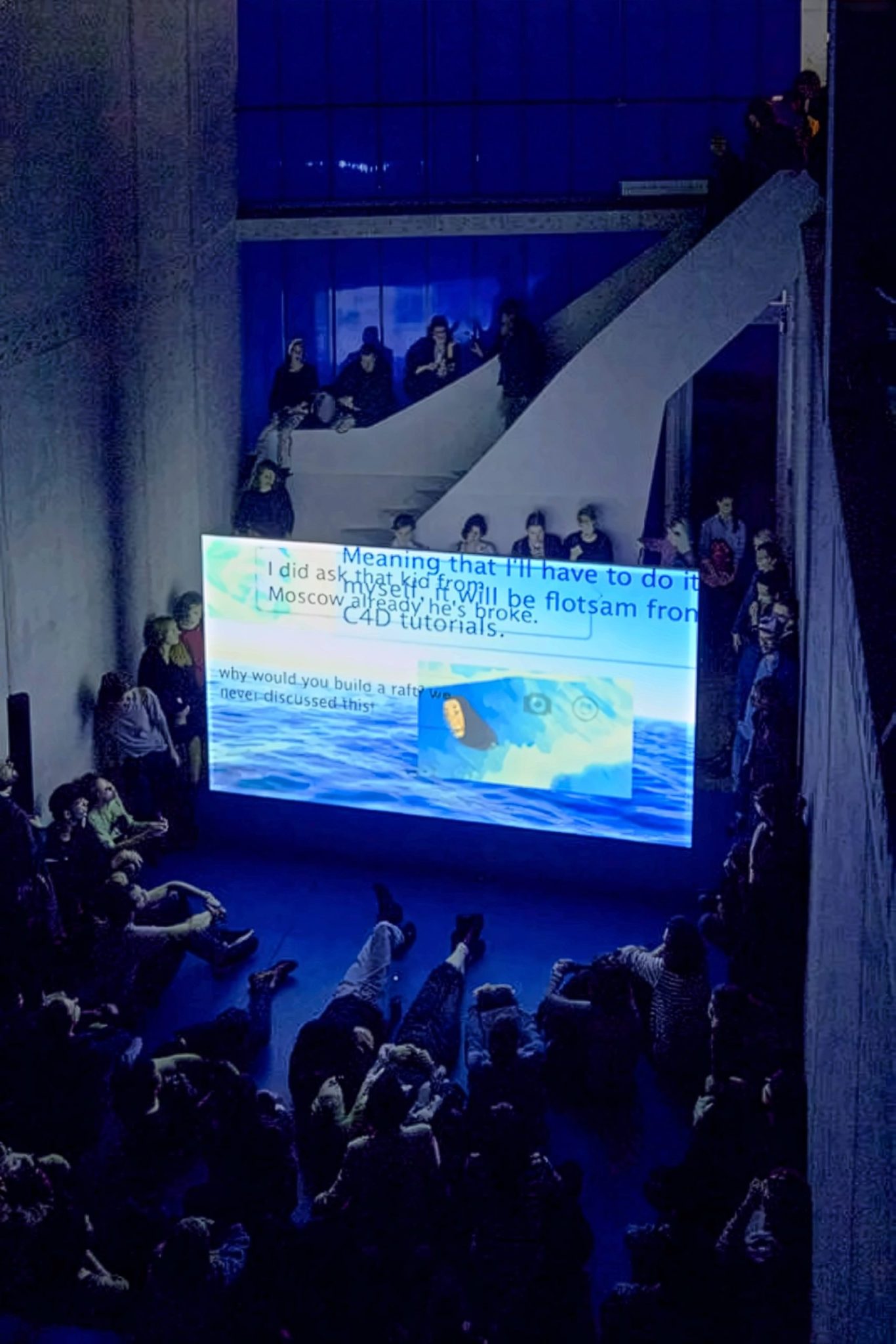
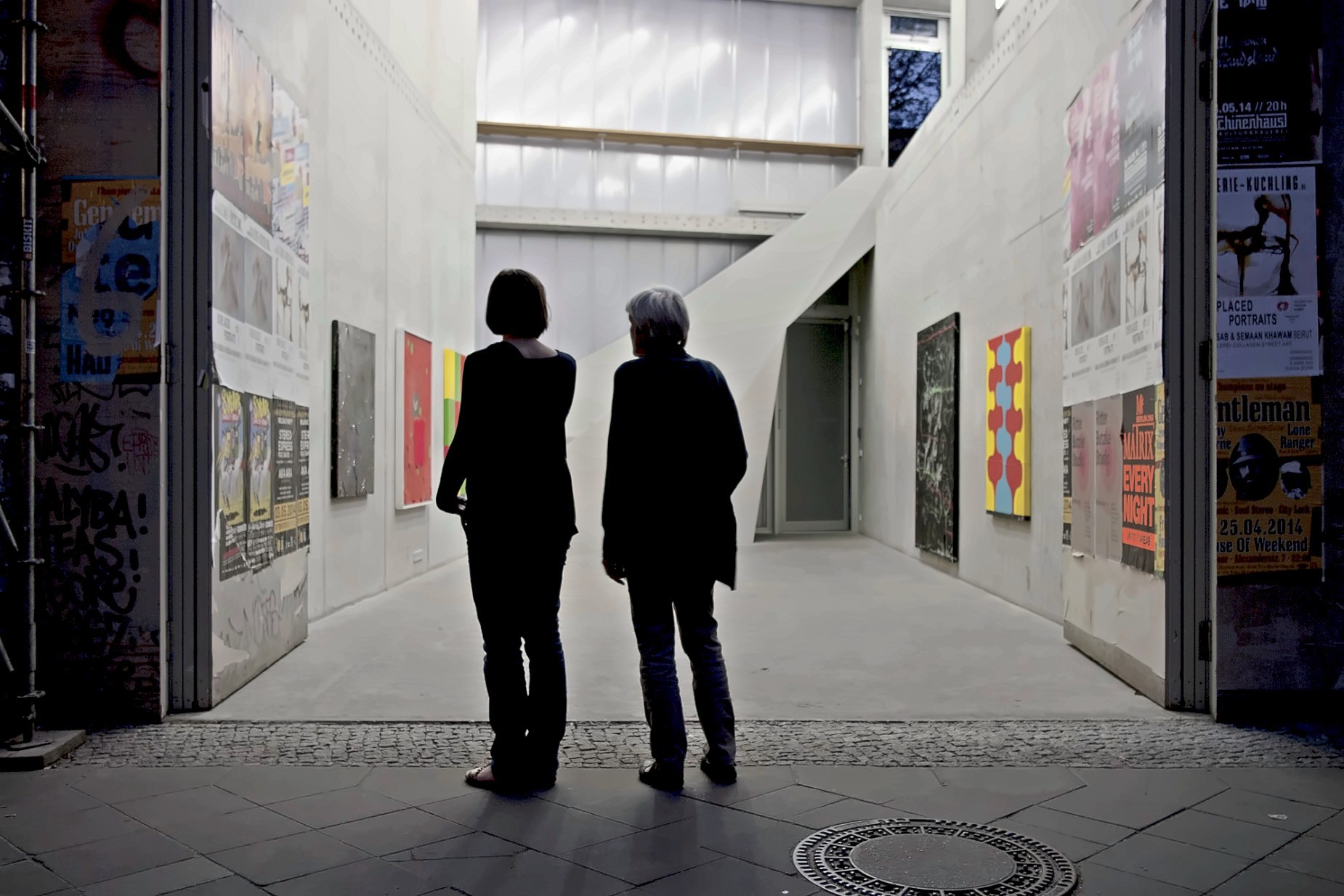
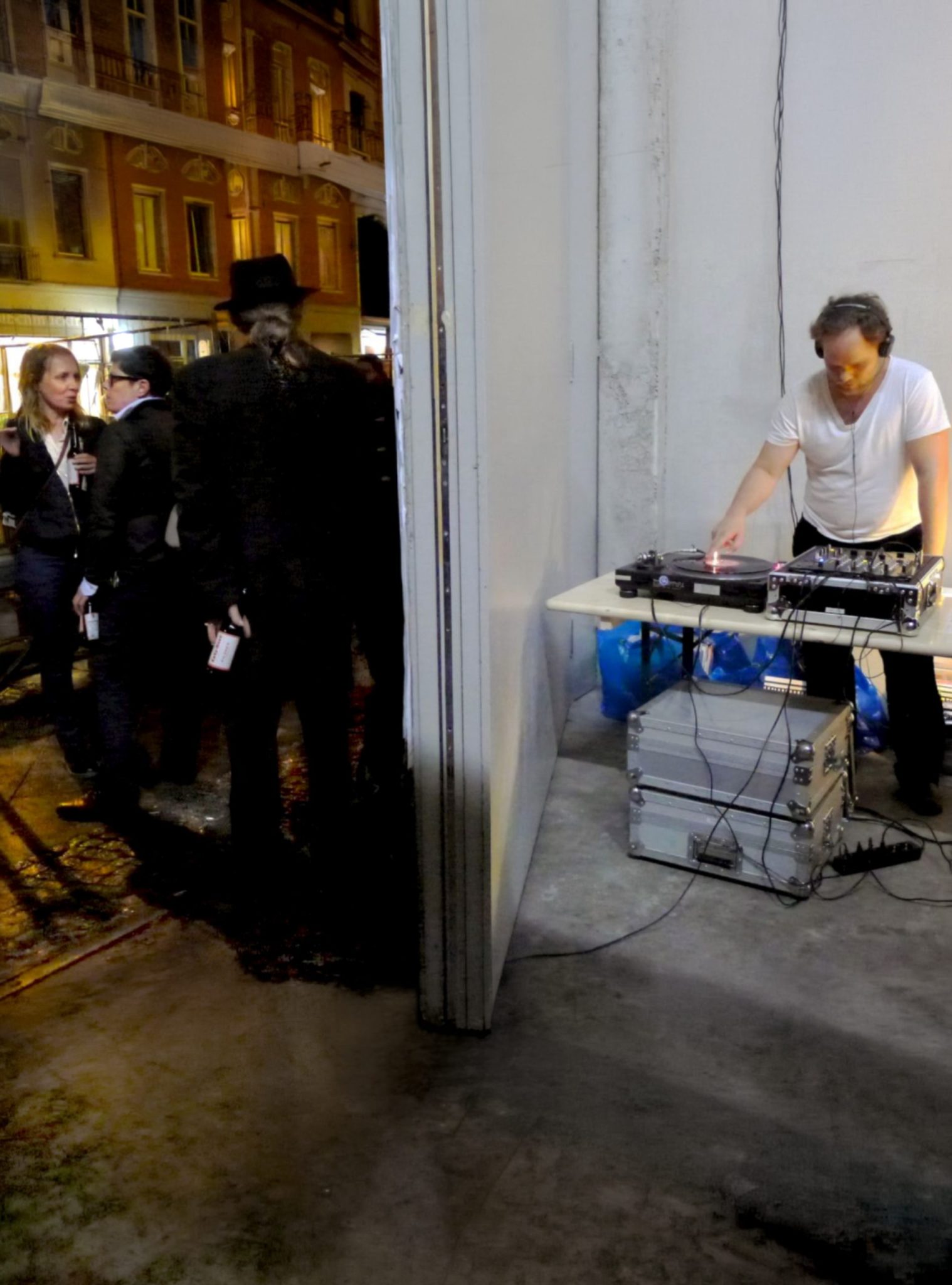
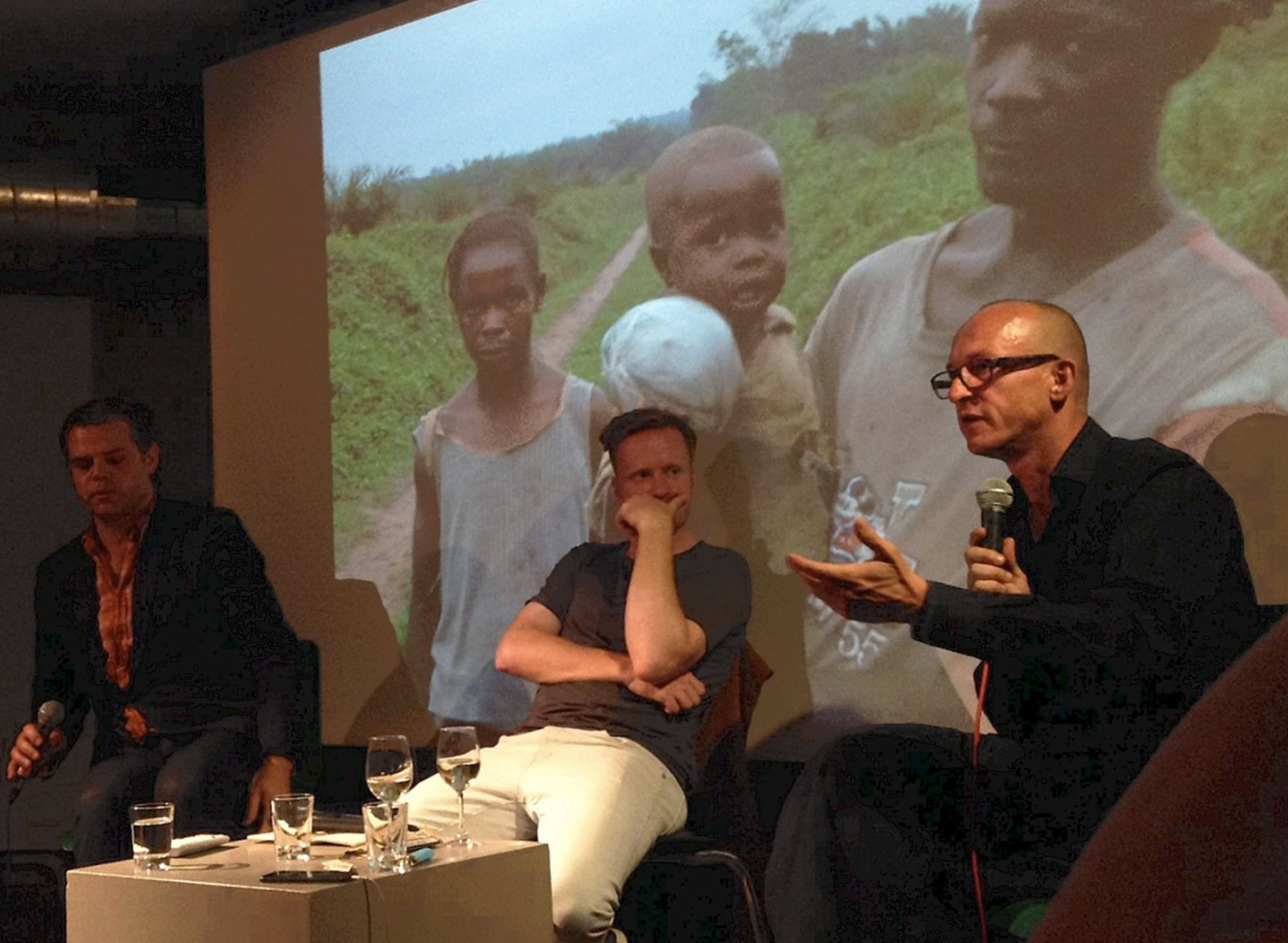
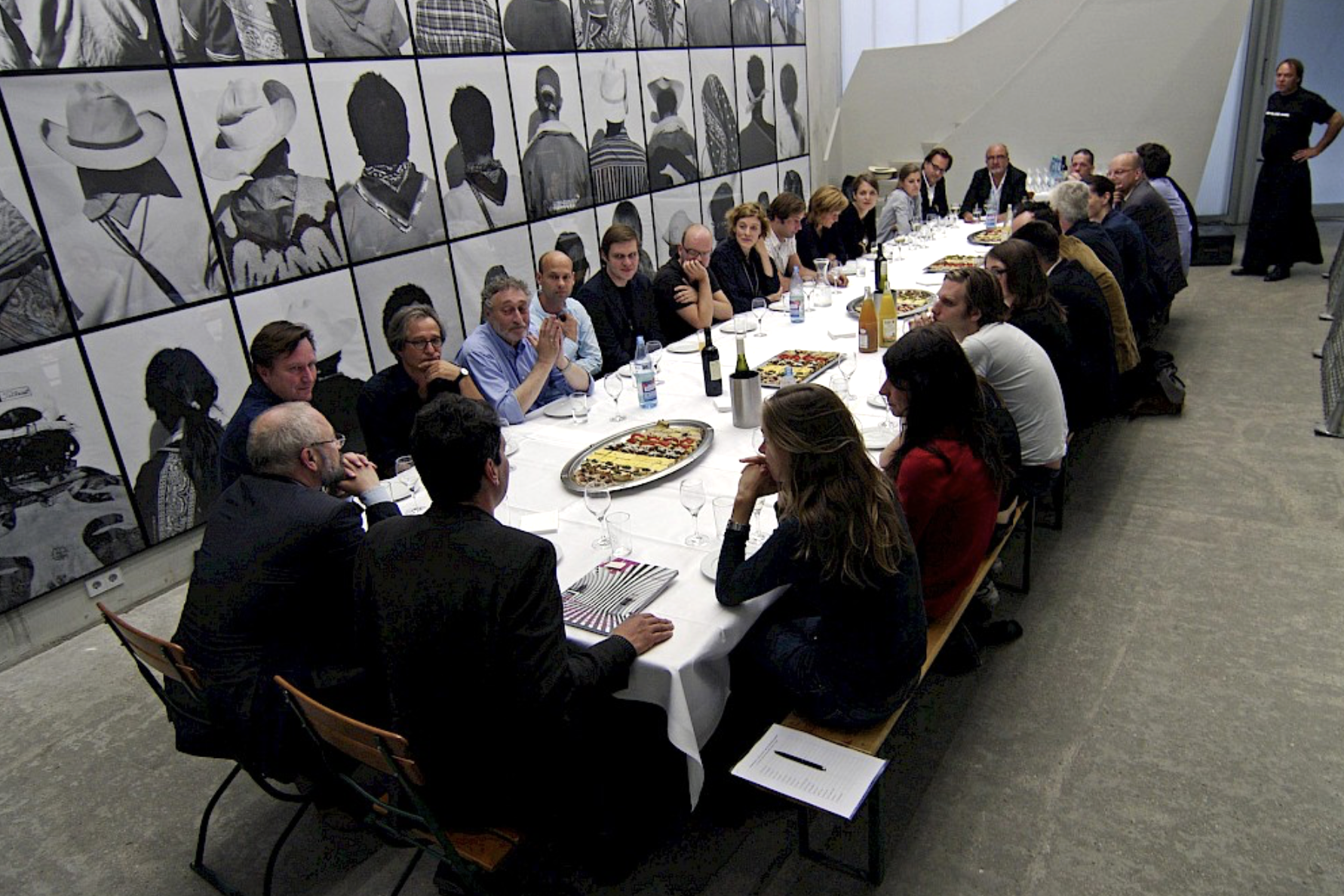
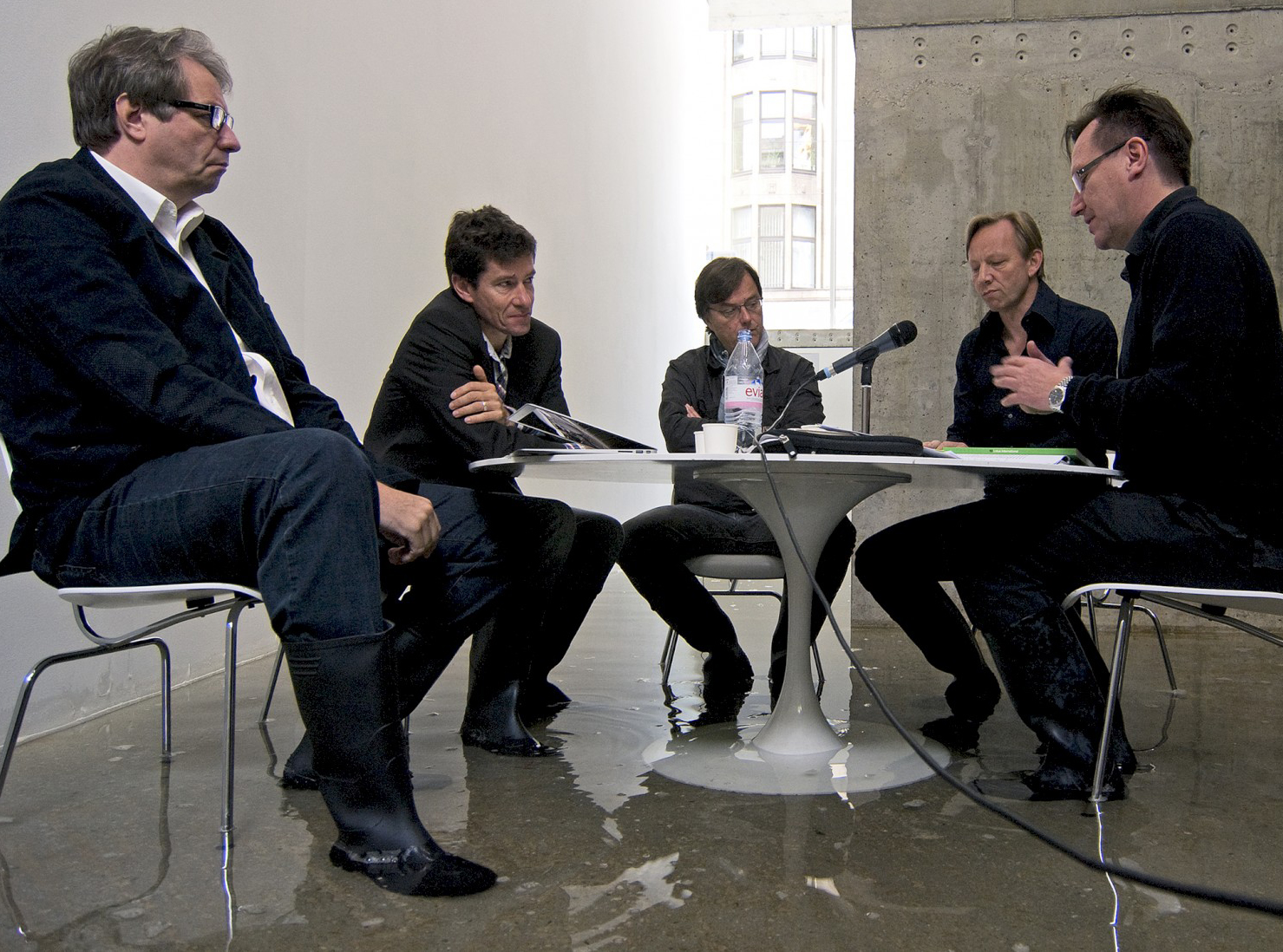
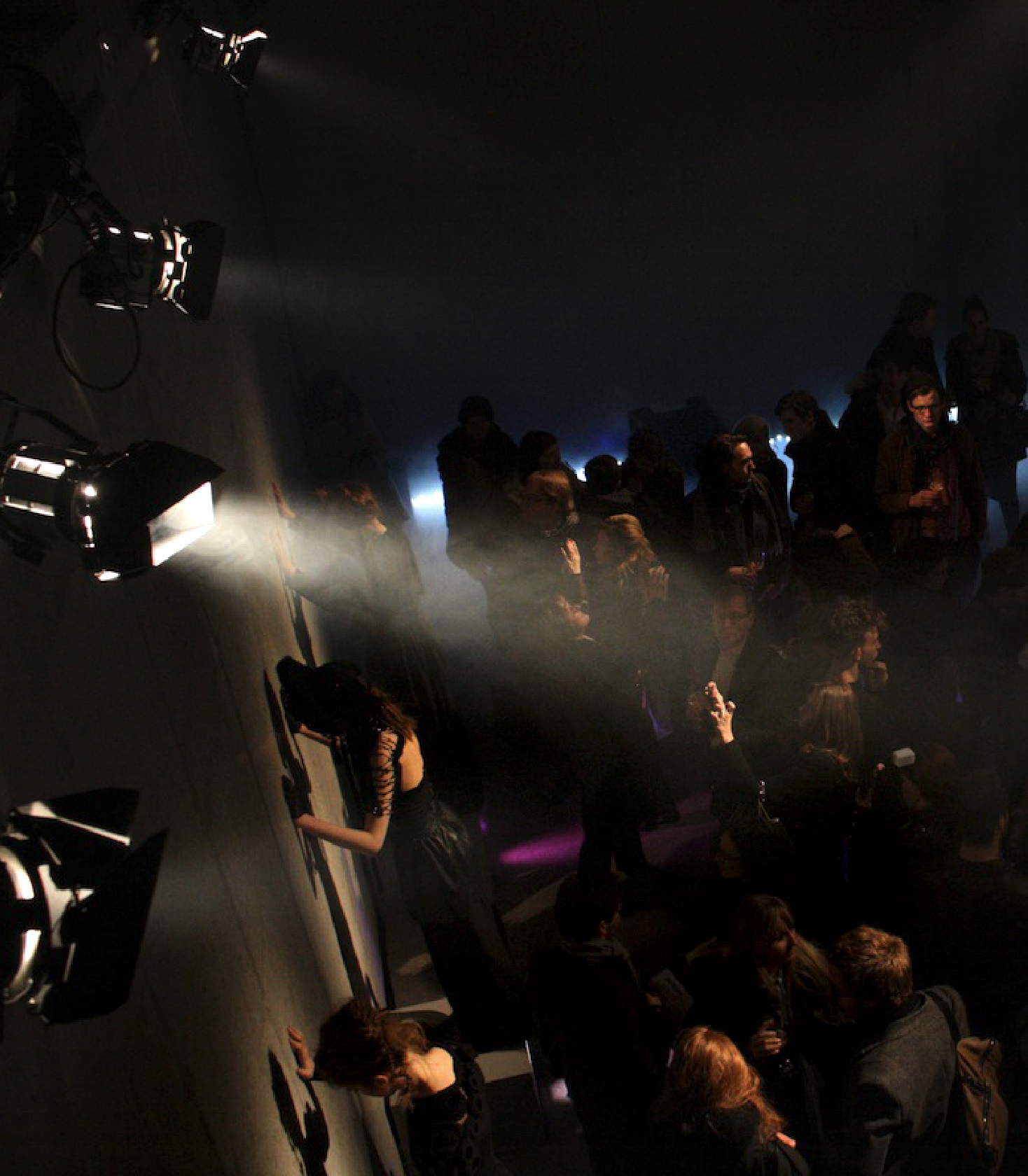
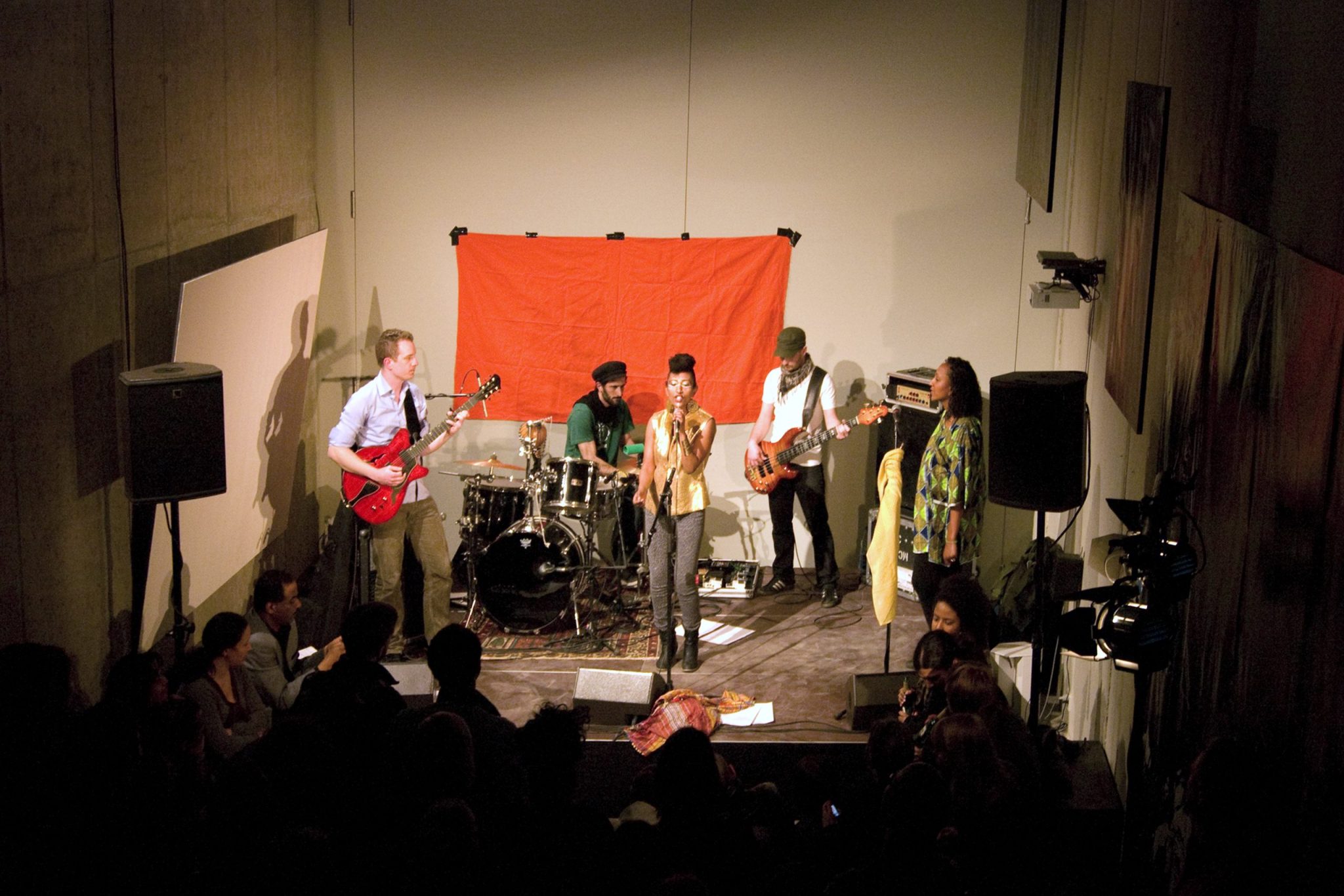
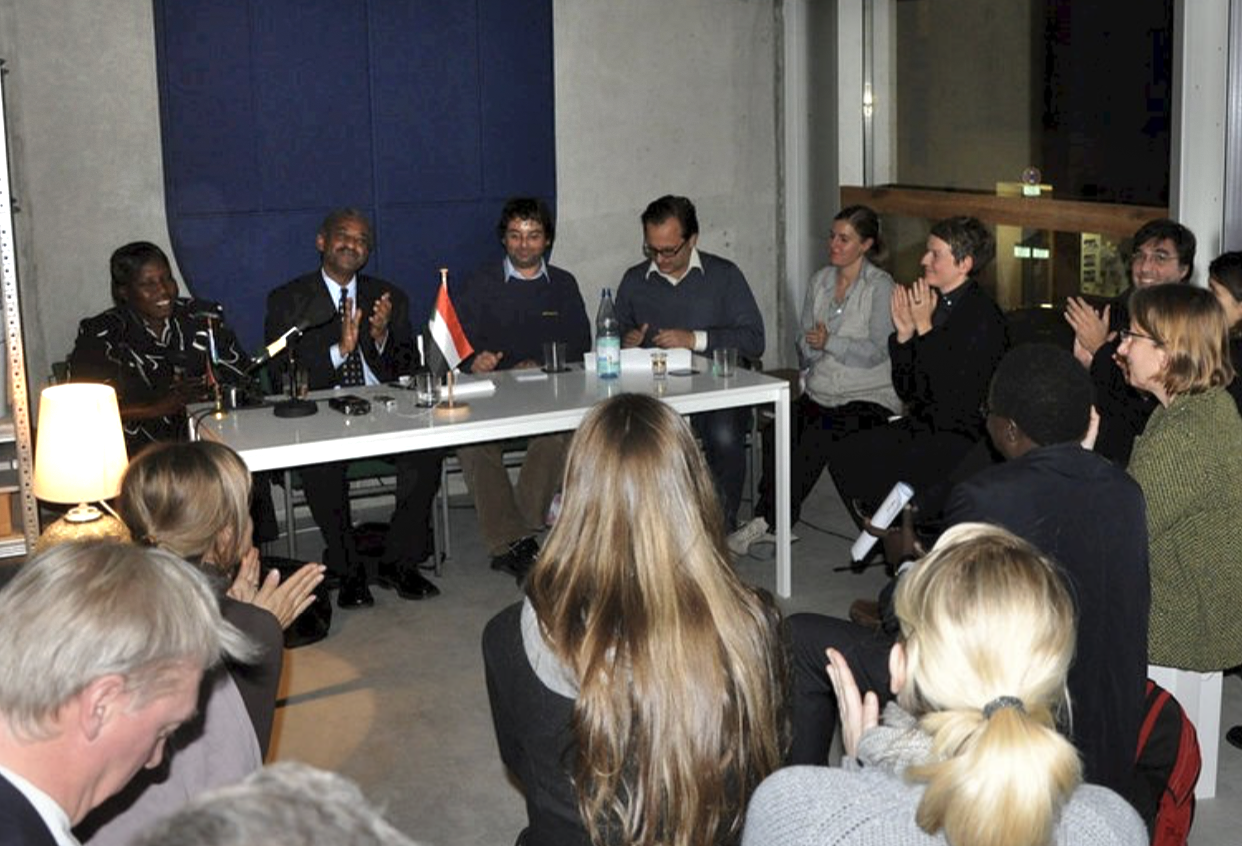
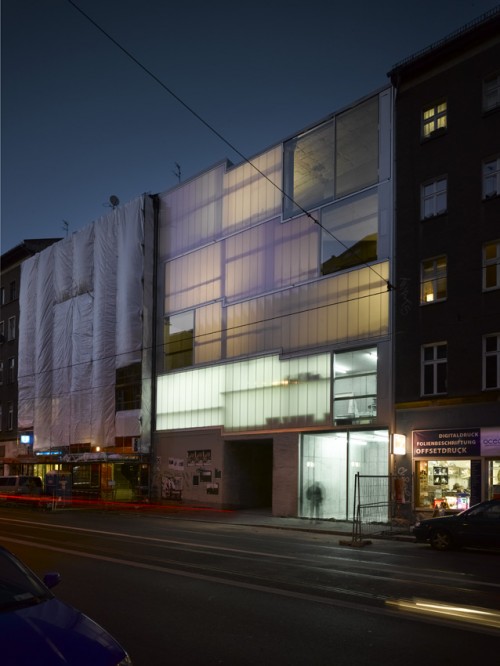
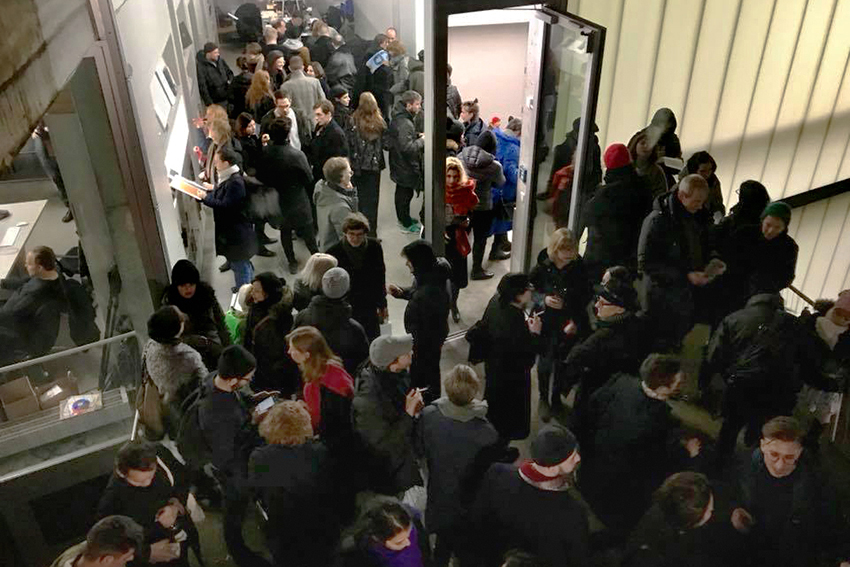
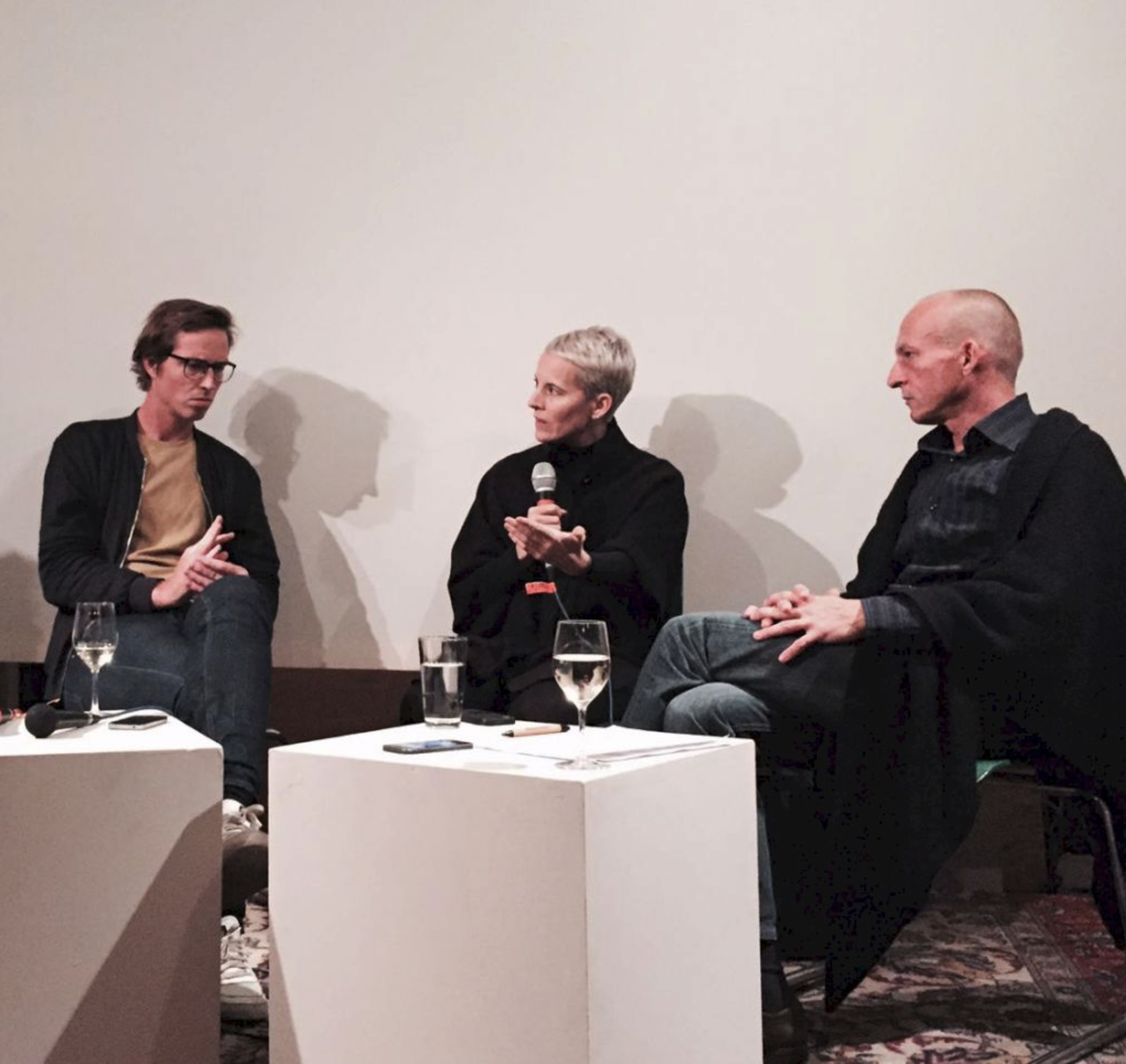
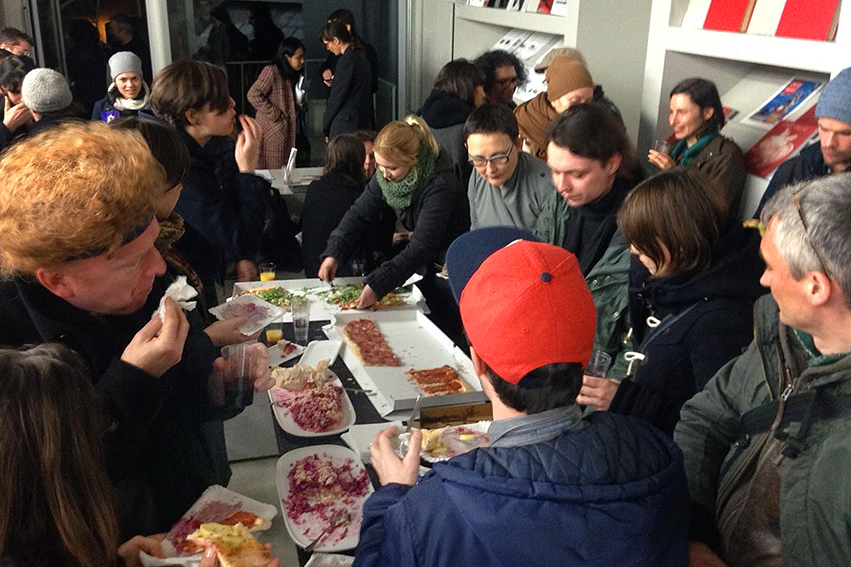
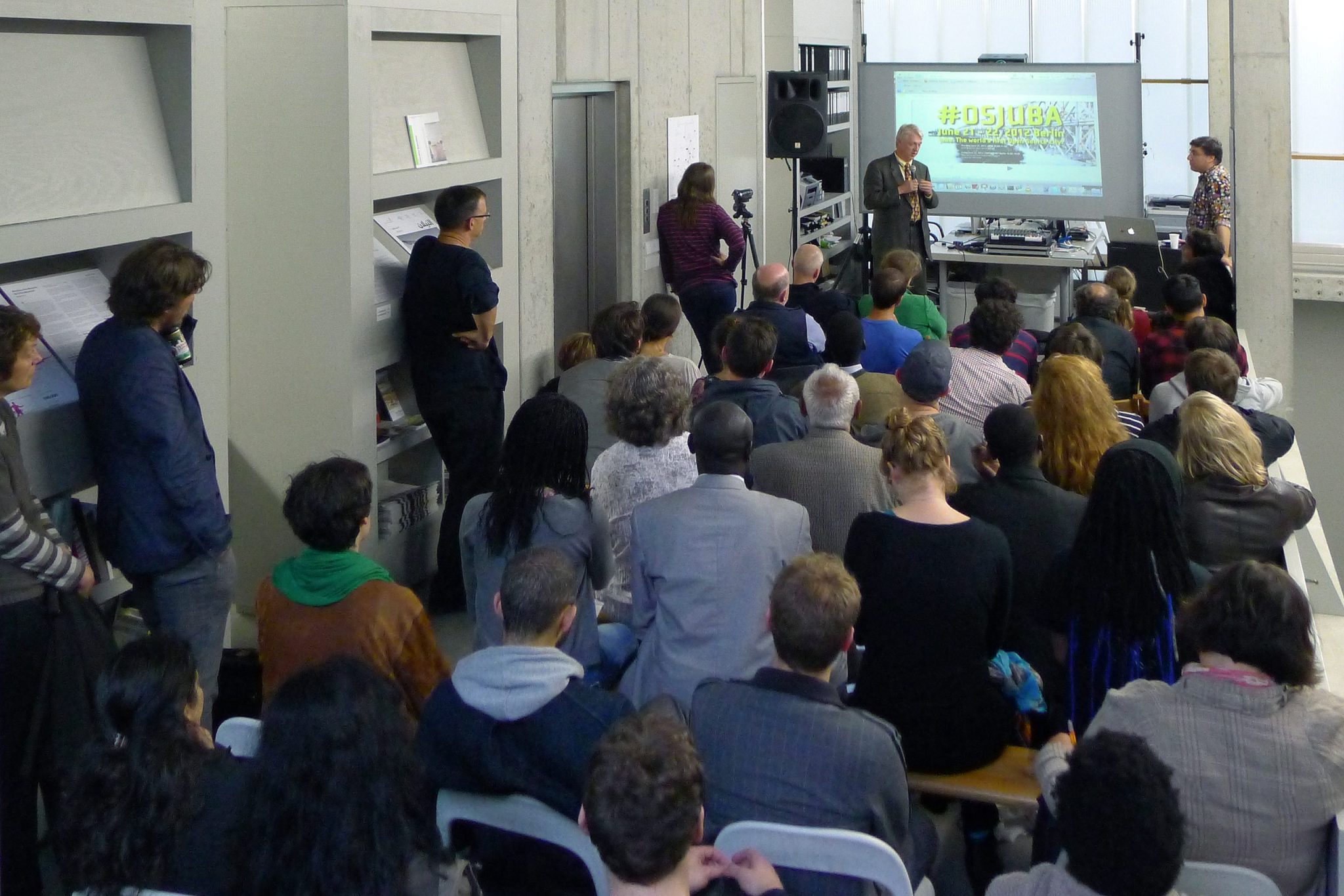
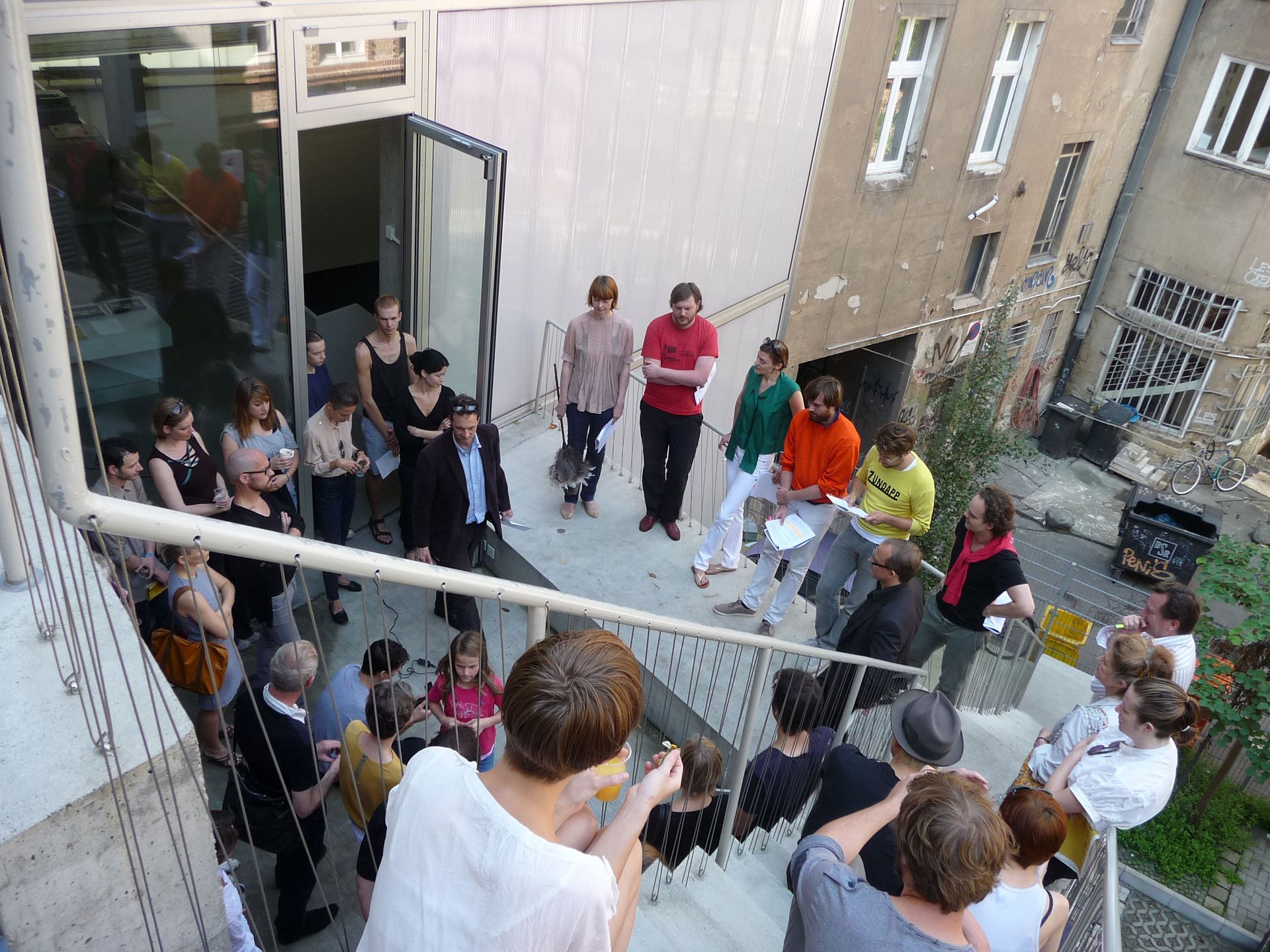
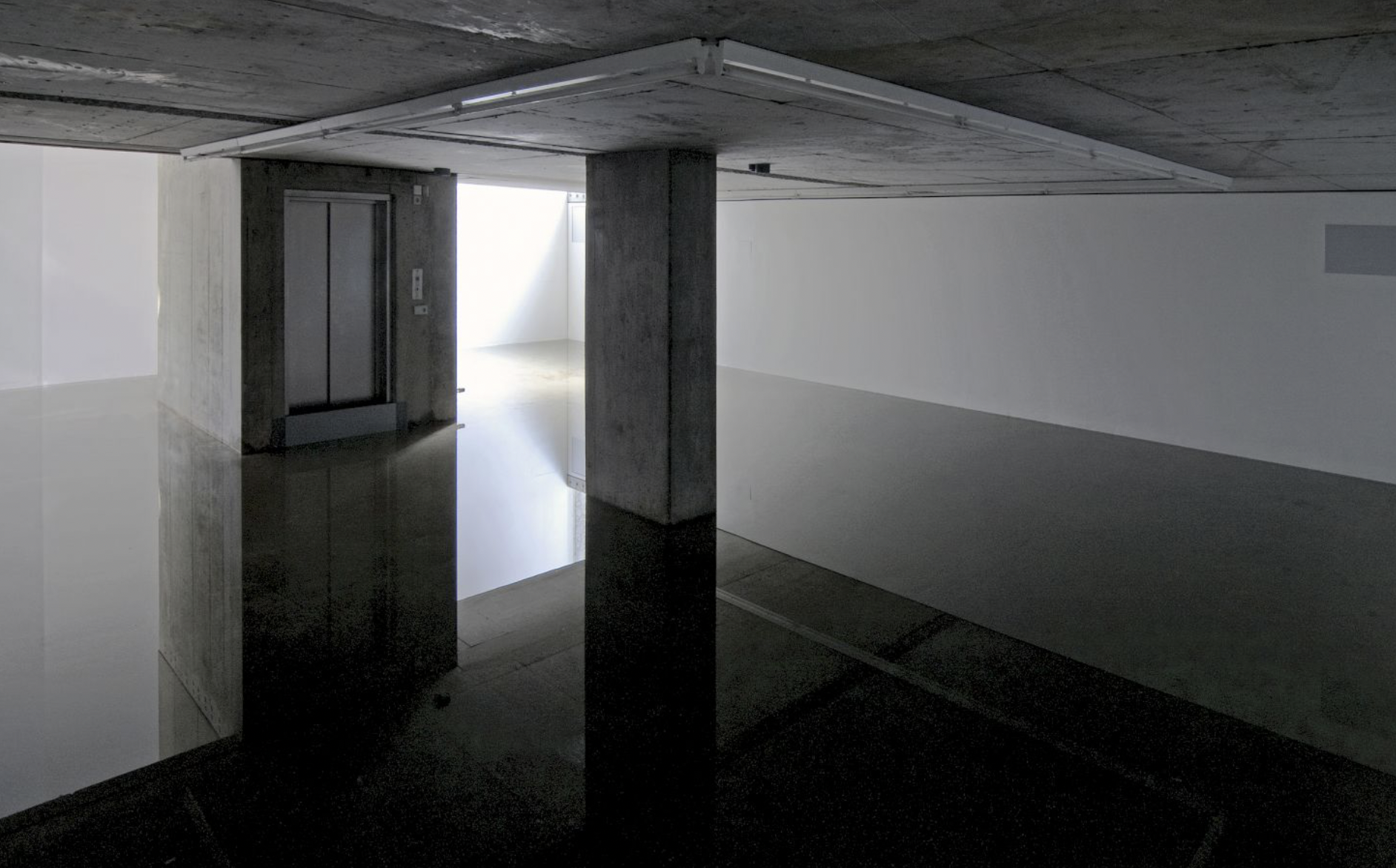
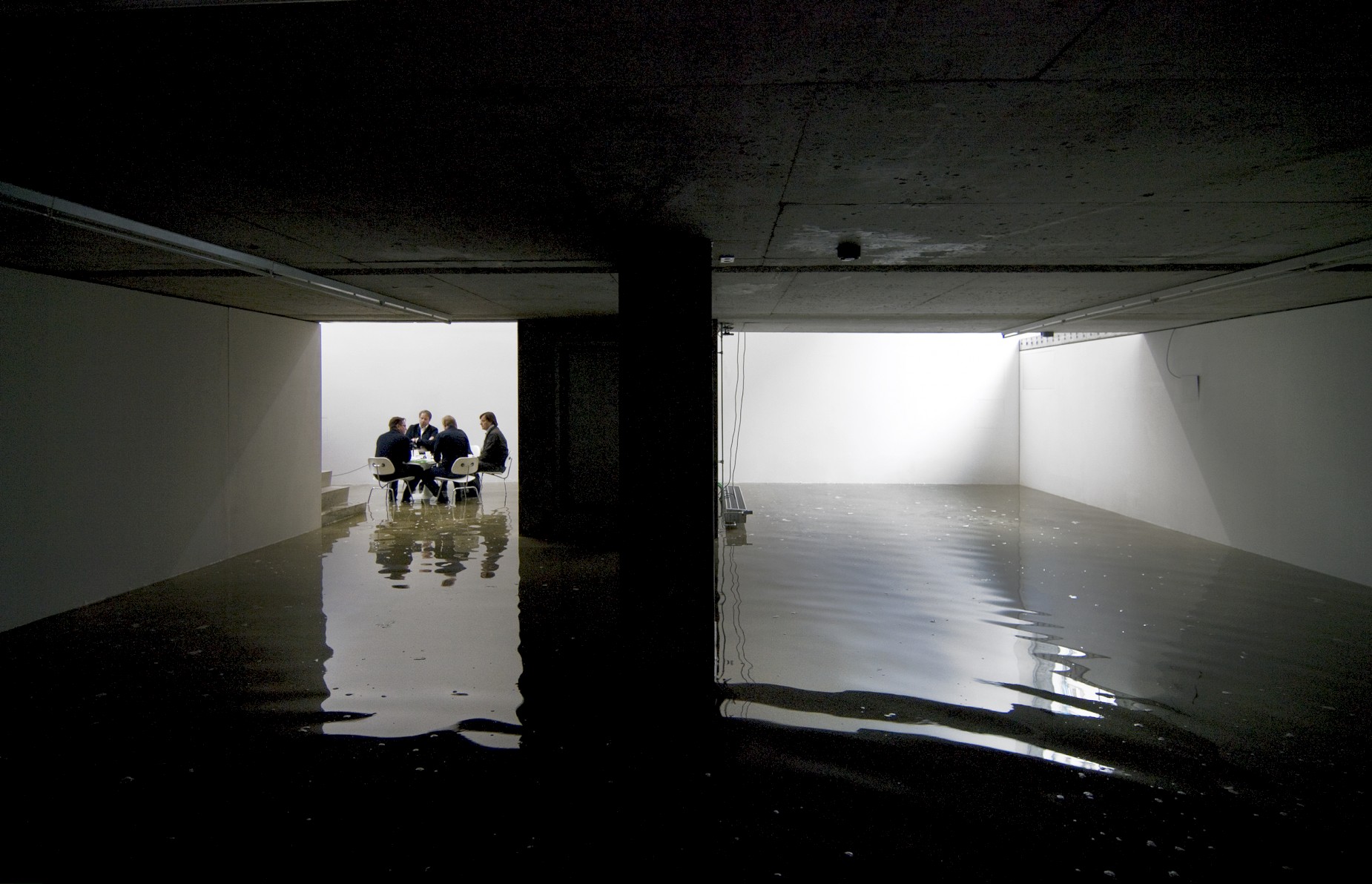
KOW, the gallery that I co-founded and whose programme I have primarily curated, is a private enterprise. But it is also a space for creating public moments and visibility. Since 2009, alongside our exhibitions, we have hosted numerous public events with diverse audiences: discussions, conferences, concerts, performances, readings, and book releases. Each exhibition opening is also a public event and sometimes a celebration. In fact, a gallery like KOW serves as a nexus between private and public interests, discourses, and economies, both in terms of its claims and functions.

Cell 5 – Film Project

2022

Jury Statement

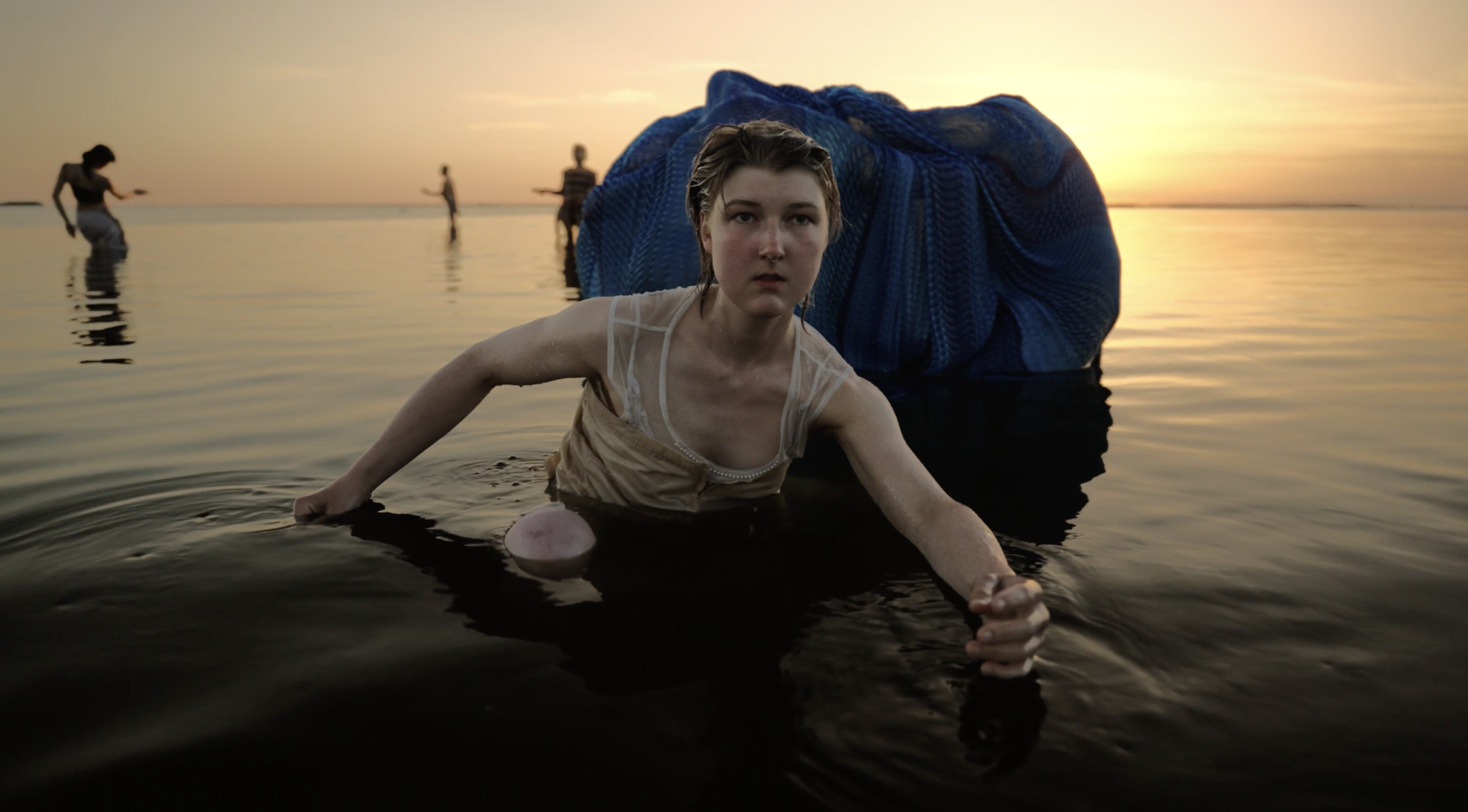
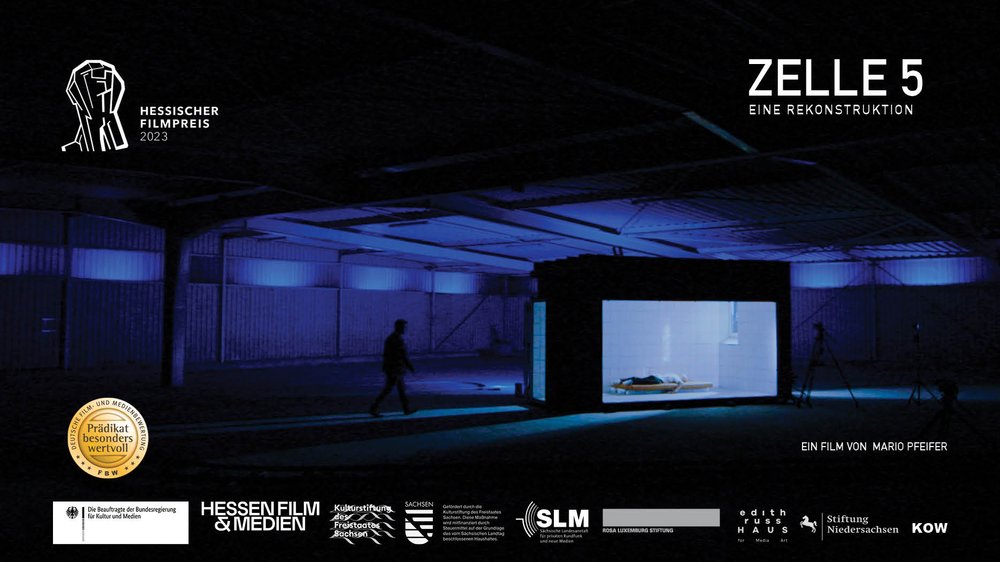
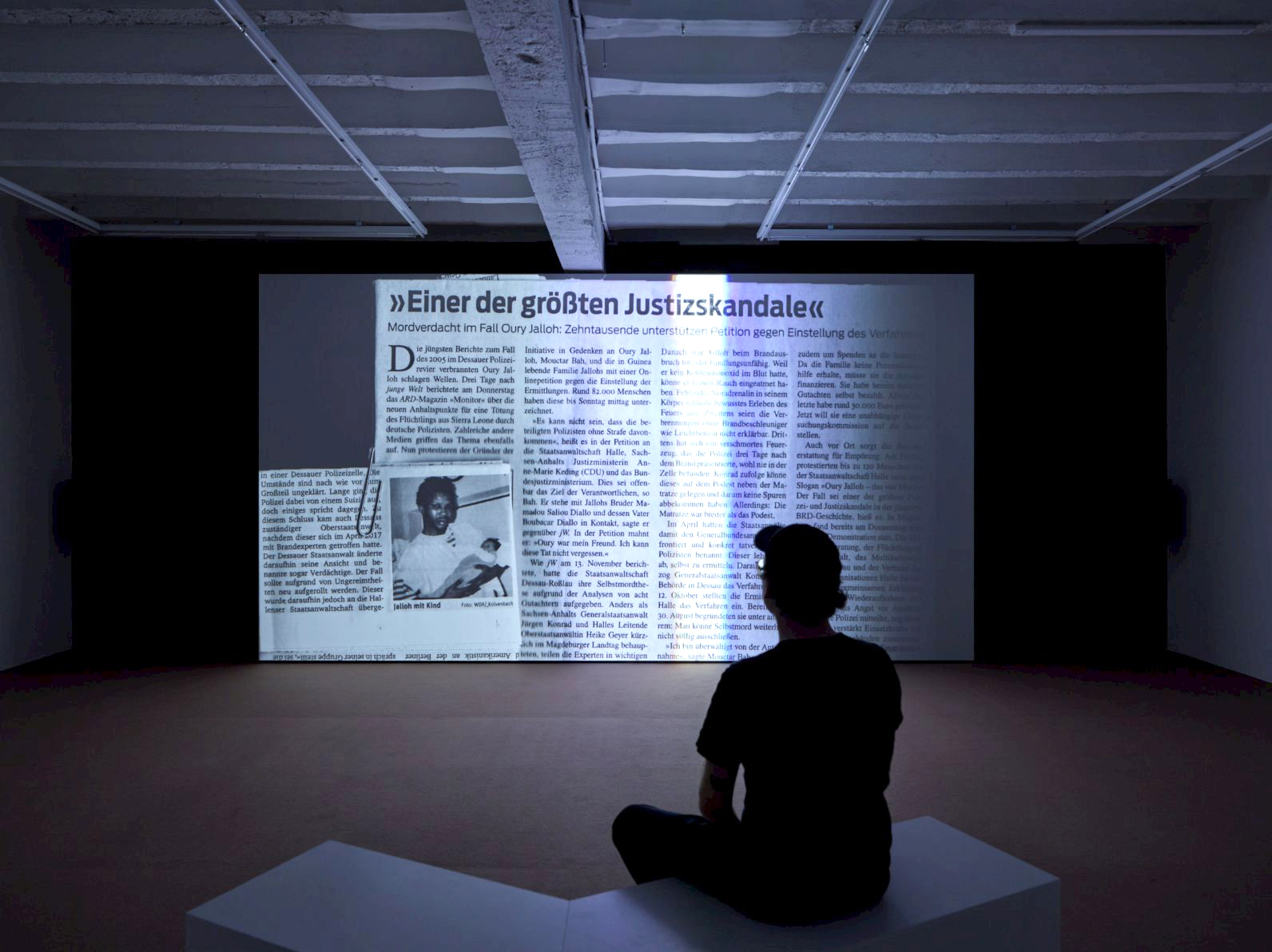
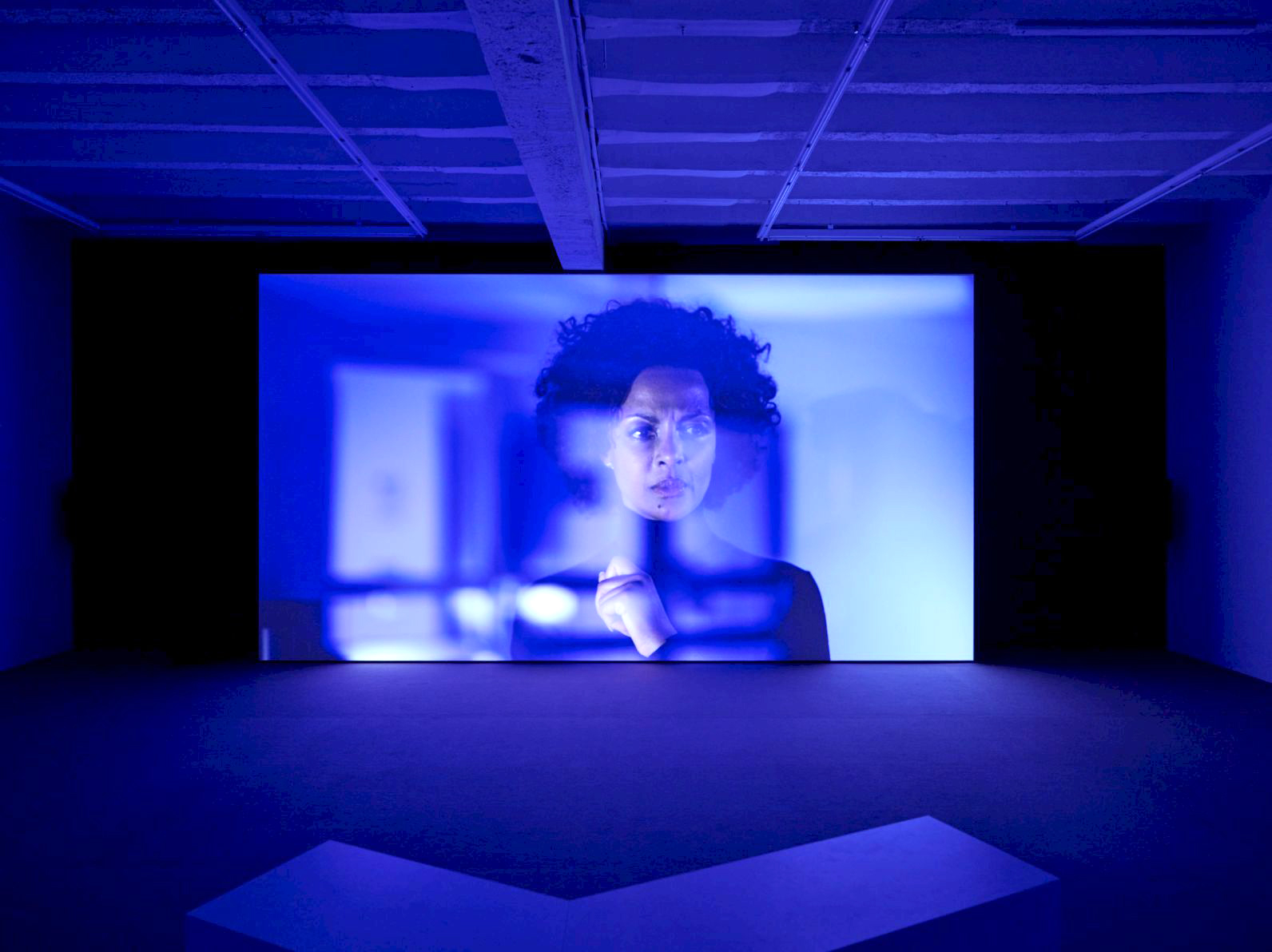
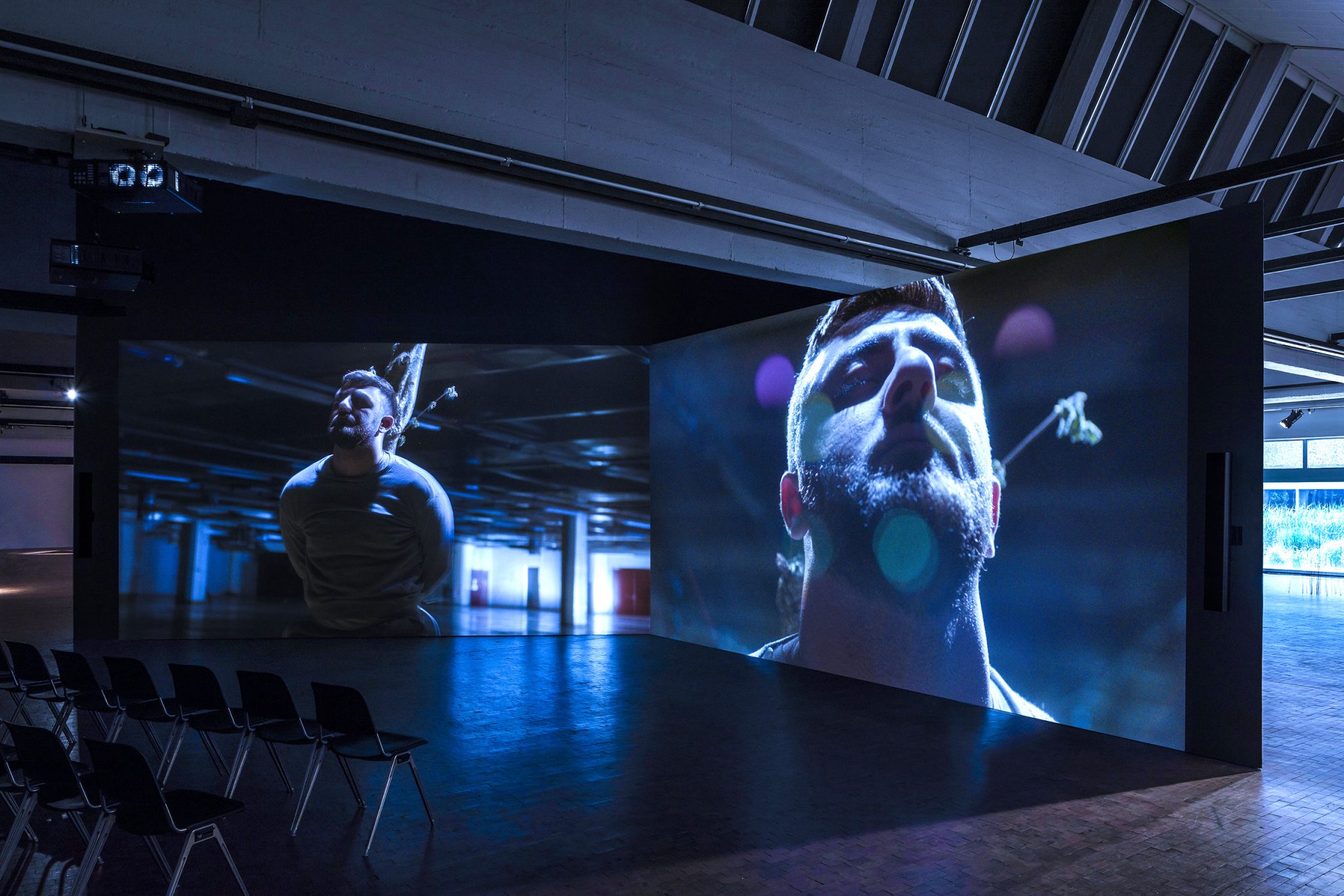
"A prison cell with a bunk bed is reconstructed in an airplane hangar. On it lies a human doll that repeatedly bursts into flames. In a fire in Cell No. 5 of the Dessau police station, the asylum seeker Oury Jalloh, bound by his hands and feet, died. What exactly happened on January 7, 2005?

This film is more than just a documentary; its director conducts research, looks closely, and reconstructs a process that has been ongoing for almost 20 years. Actors read witness statements and court documents in an empty room. The prosecution wants to quickly close the case. Activists, friends, and family members of Oury Jalloh doubt that the young man and father of a small child set himself on fire. What stands out are the rather factual words of the police officers, investigators, and experts. There seems to be no compassion or … read more

documenta 15 – Konzept

2018

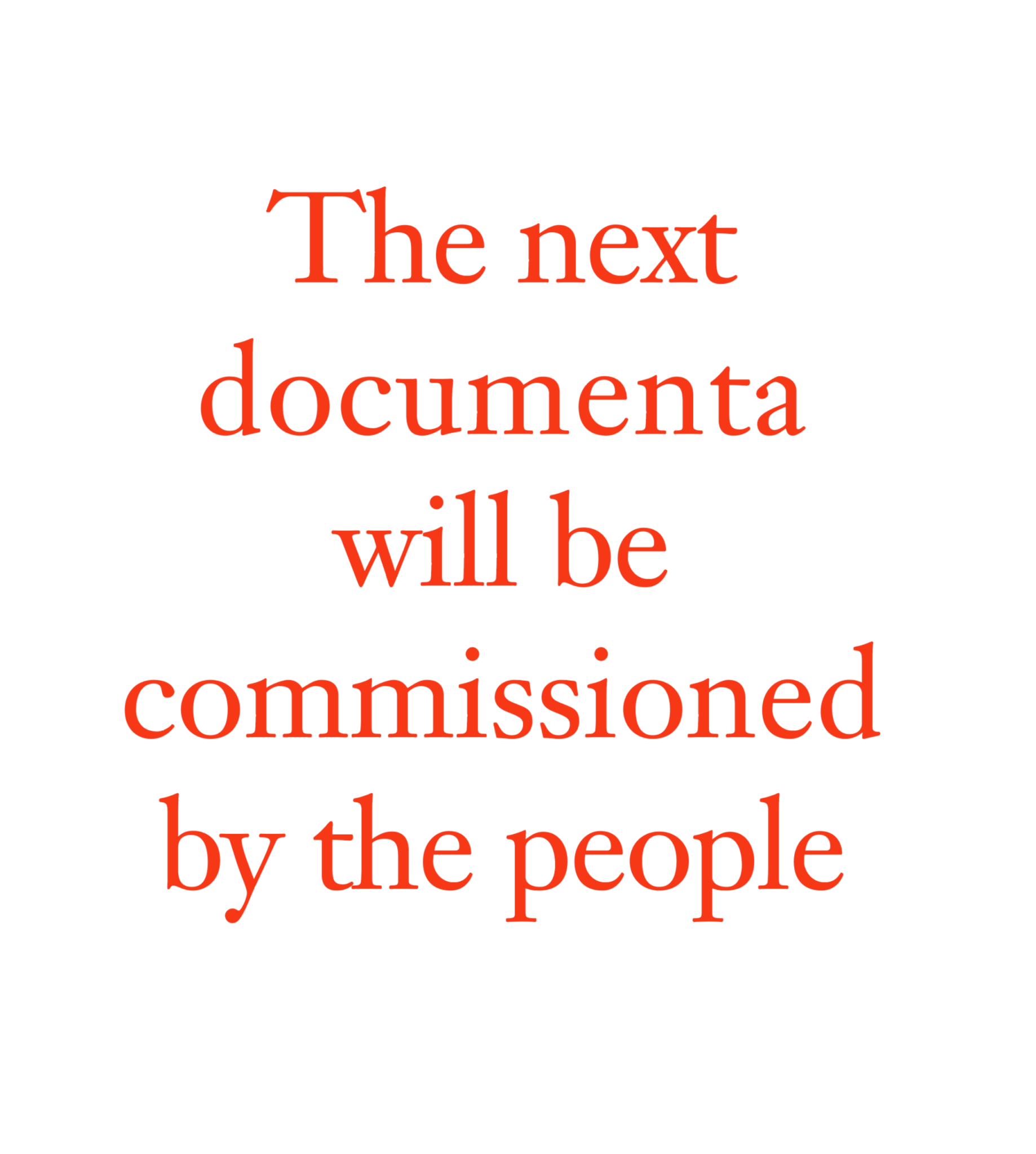
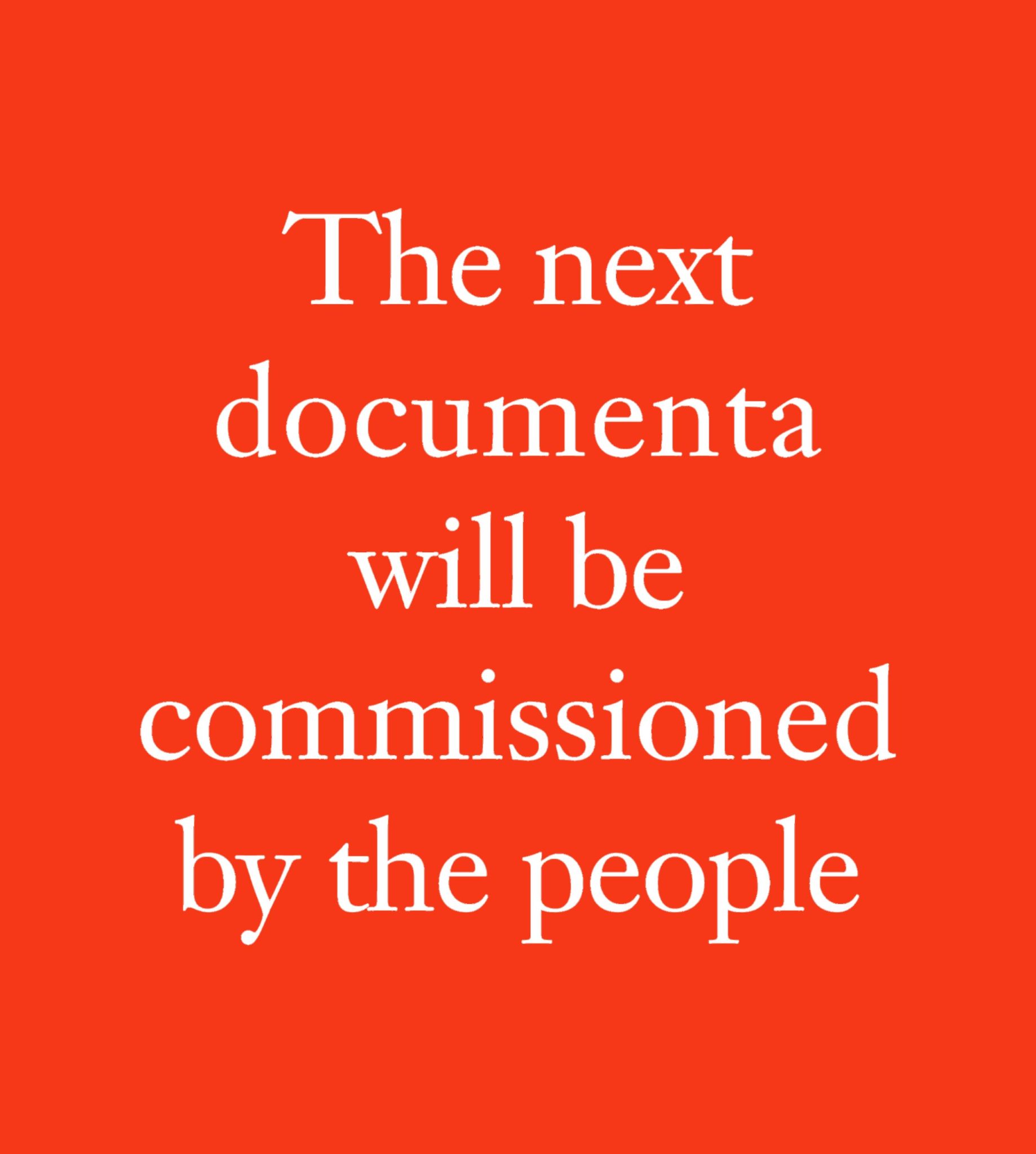
“The next documenta will be commissioned by the people.”

The following idea for documenta is inspired by a major shift in the social history of art, and it responds to the challenges that democratic societies, as much as art institutions, are facing today. This idea takes into account a long historical development, which has continuous relevance. Since the modern revolutions, ambitions have not diminished to reconsider the role of the arts for the development of communities and societies. The basic question, how art can respond to the needs of society, and how it may instigate solidarity, is not only crucial to the art world. It is politically crucial, again today. d15 can facilitate one answer to that question. Consciousness has grown in recent years that today’s social crisis, and the mistrust in representative politics, demand increasing efforts to strengthen social and cultural … read more

Teaching Assignment at the Institute for Art in Context, University of the Arts, Berlin

Teaching Assignment at the Institute for Art in Context, University of the Arts, Berlin

2018–2020

Mediation in the New Patrons Program – A Framework for Action

At the invitation of Jörg Heiser, I developed a seminar that introduced and experimentally developed the concept of art commissioned by citizens and the mediation practice model at the Institute for Art in Context (IfKiK).

Again / Noch Einmal – Film Project

2018

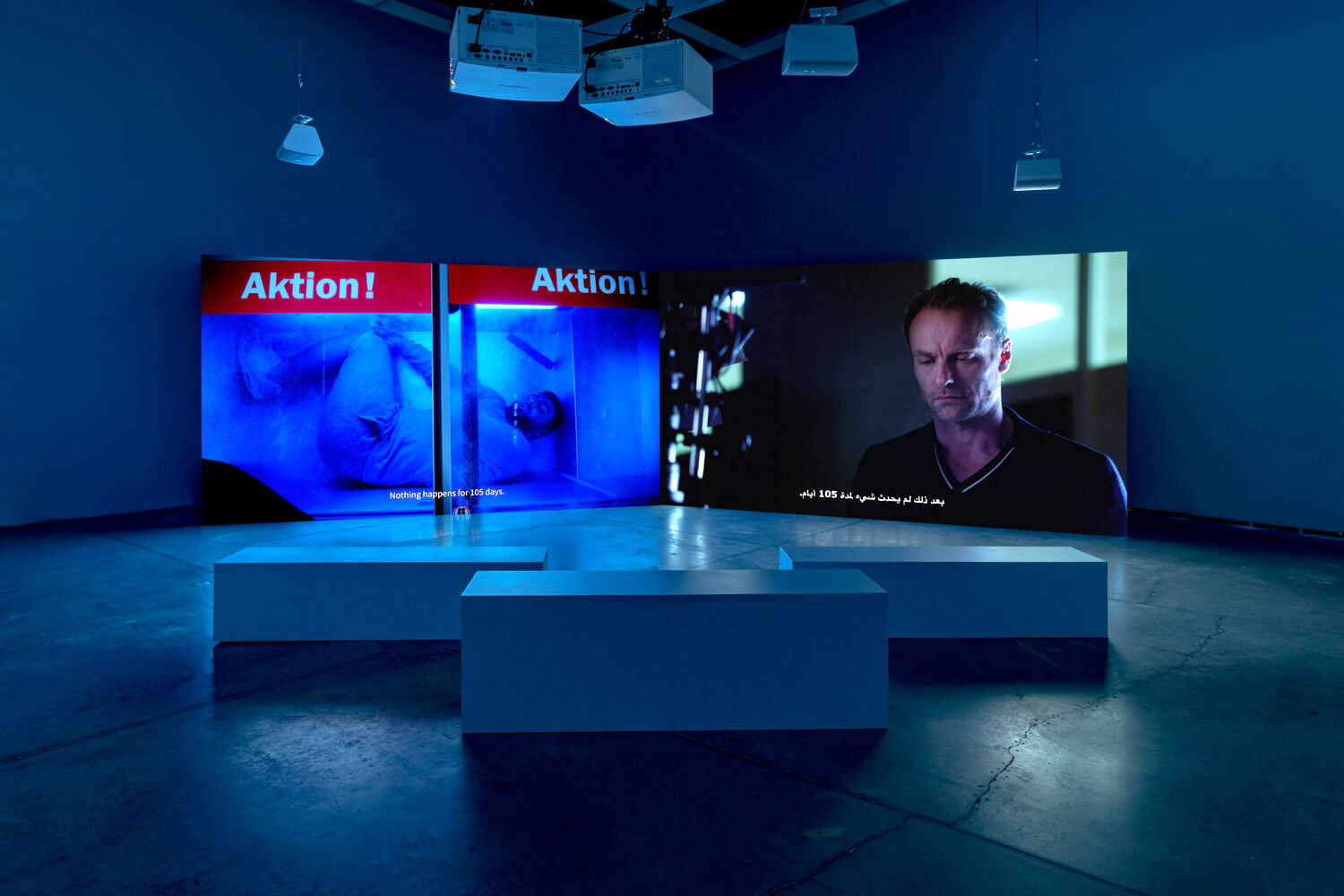
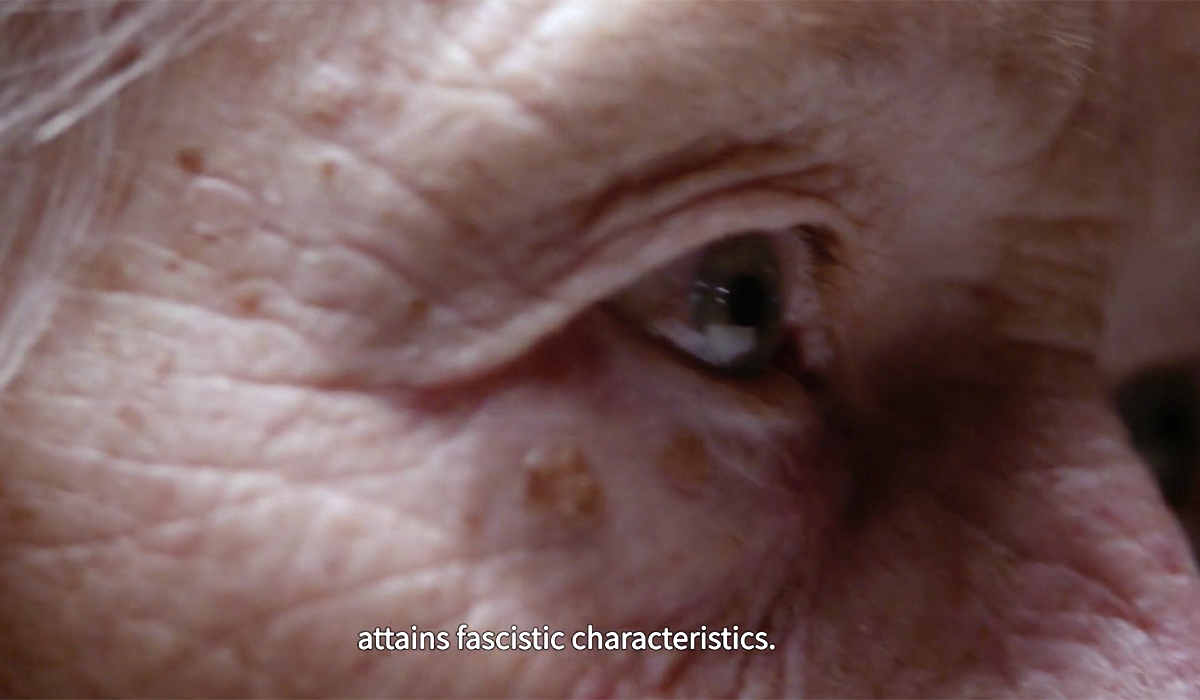
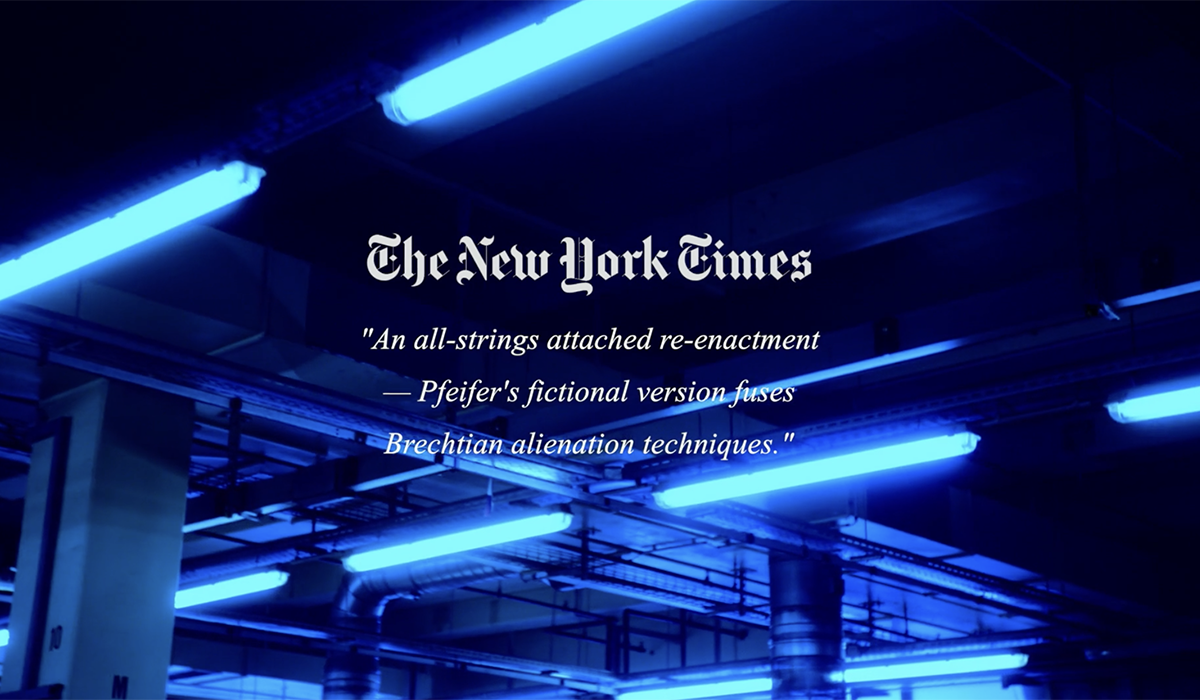
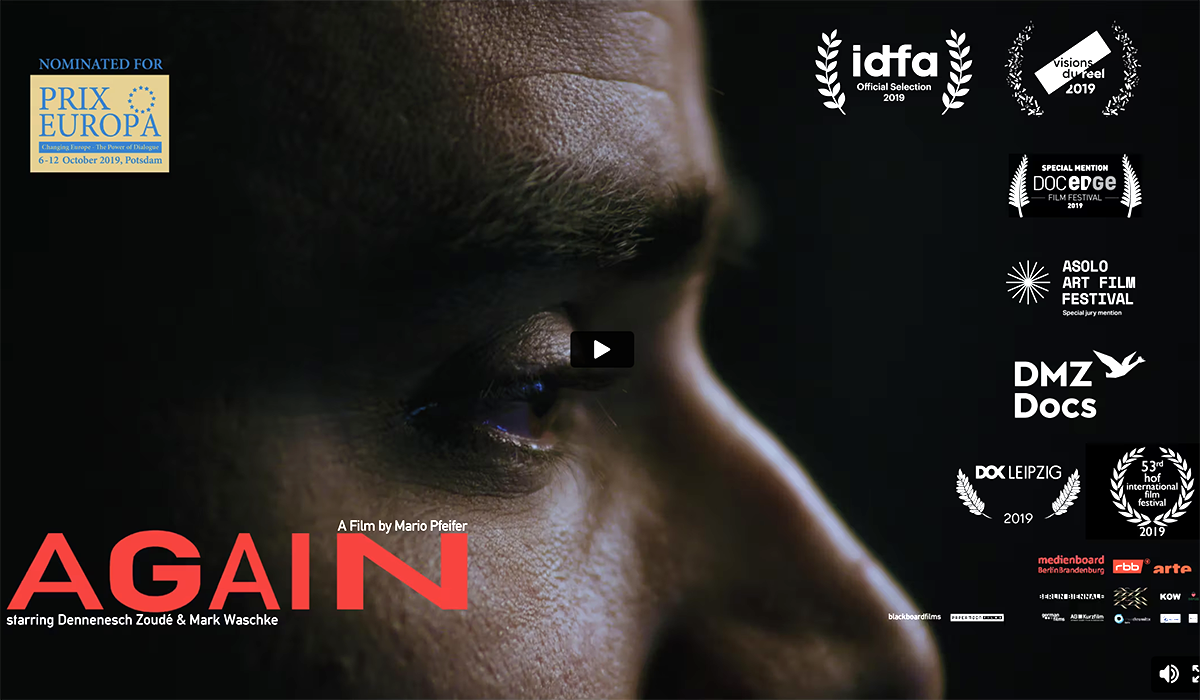
In Again / Noch Einmal (2018), Mario Pfeifer addresses an incident that has become so typical for Germany: In May 2016, an unpleasant scene occurred at the checkout of a supermarket in Arnsdorf (near Dresden, Saxony). The young man Shabaz Al-Aziz, who fled Iraq to Germany in 2015, tried to exchange a faulty SIM card – and had an epileptic seizure, which made him noticeable. Instead of helping the man, four men in black immediately appeared, dragged him out of the supermarket, and tied him to a tree. A customer filmed the situation, and the footage went viral, particularly in far-right circles. The four men were charged with deprivation of liberty and were acquitted in 2017. The victim could not testify in court: One week before the trial began, he was found dead in the forests of Central Saxony.

In his film project, in which I participated, Pfeifer … read more

Appeal to the Youth of All Nations – Ruhrtriennale

Appeal to the Youth of All Nations – Ruhrtriennale

2018

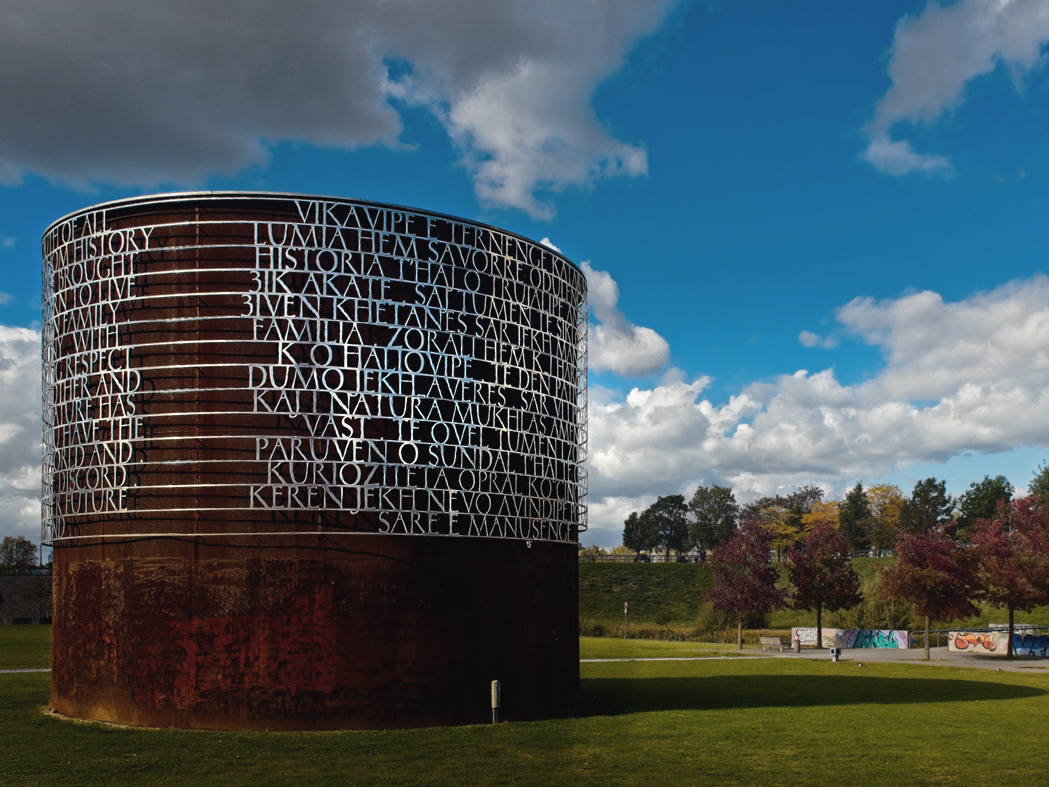
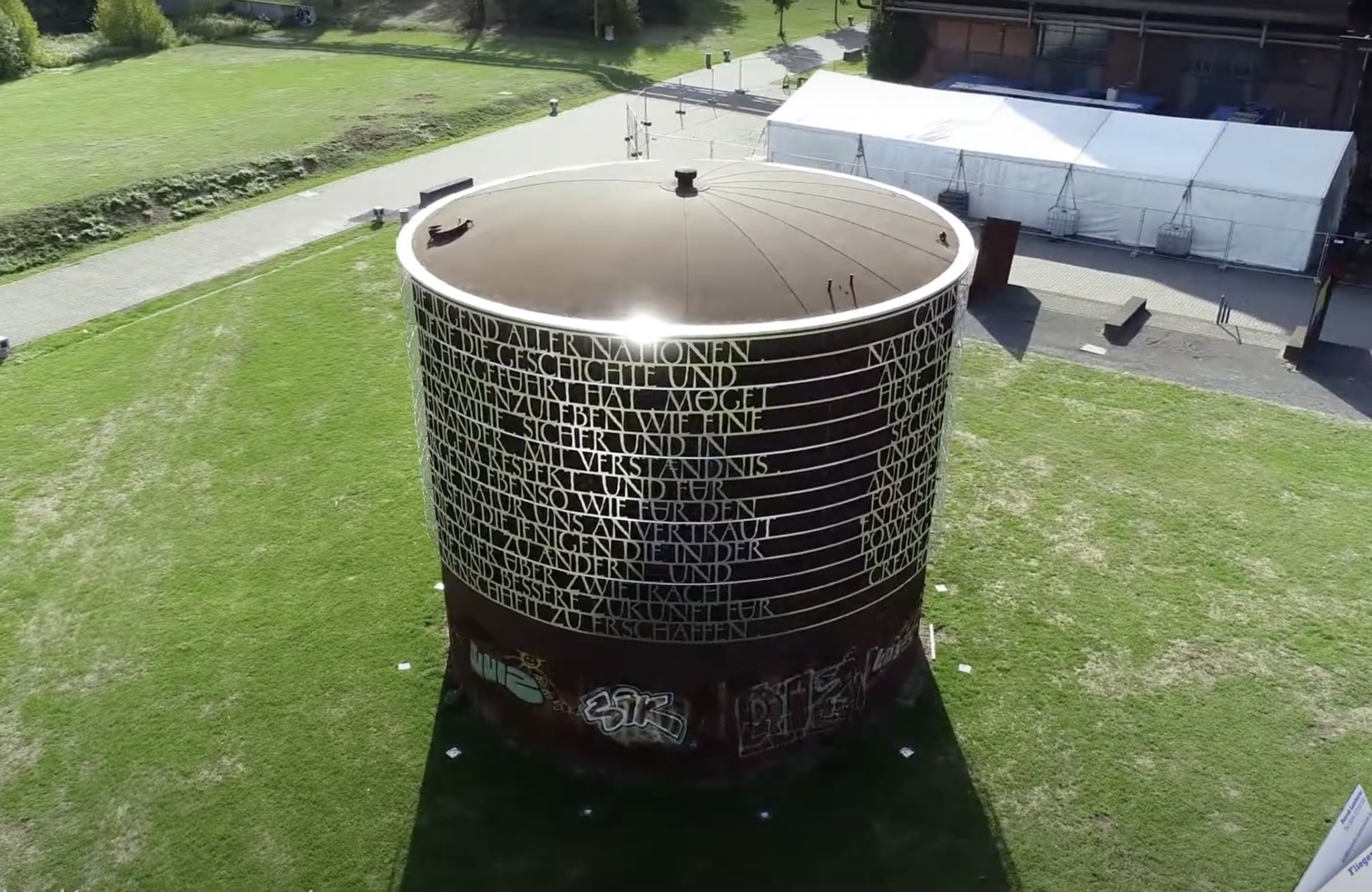
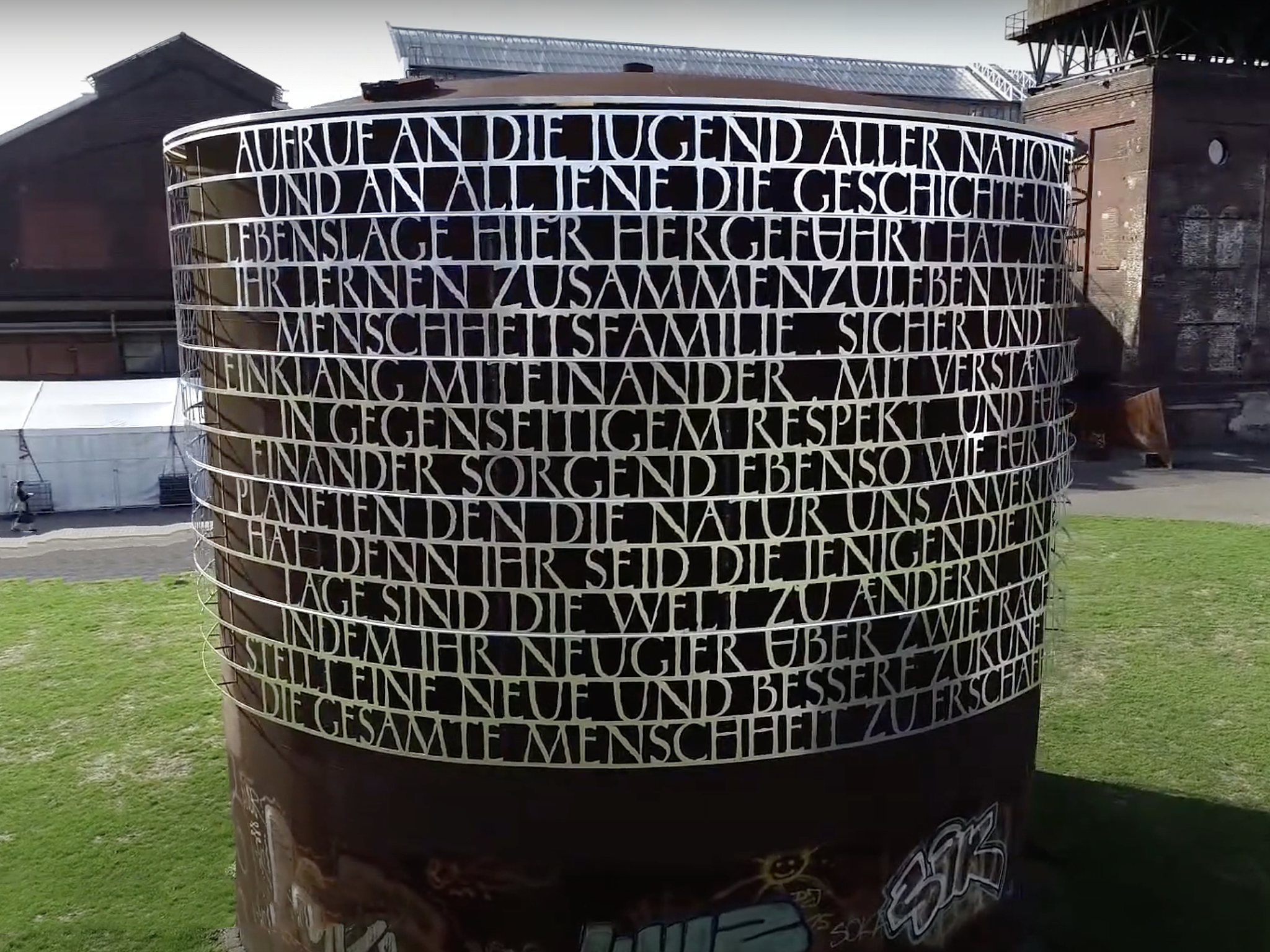
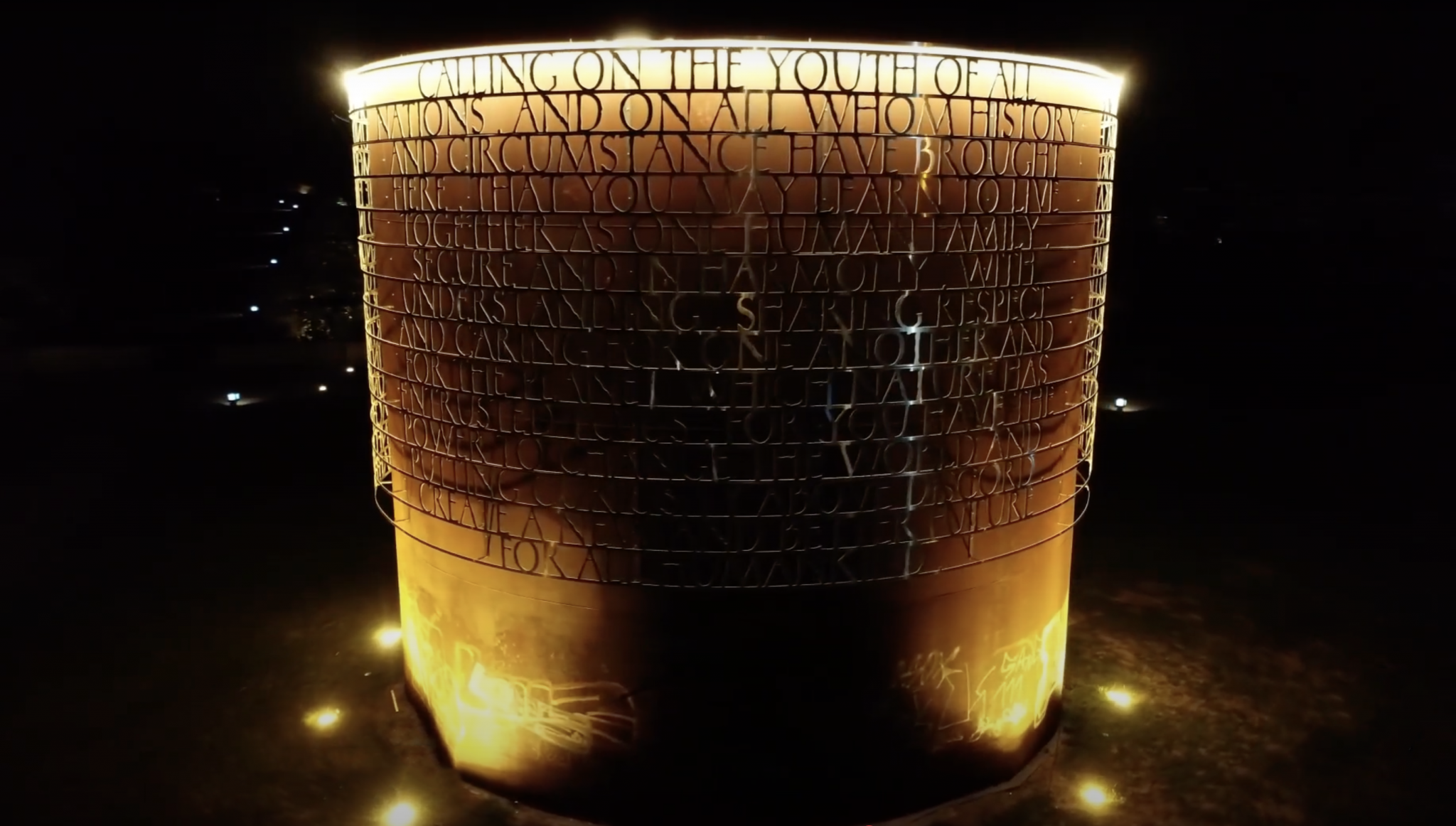
At the site of the Jahrhunderthalle Bochum, Olu Oguibe installed a universal call to the youth of all nations in three languages: German and English, the most widely spoken languages in Europe, and Romani, the language of a large minority that represents one of the earliest migrant groups in Europe.

Olu Oguibe’s call adopts the pathos of an epochal address and formulates the hope that ‘the youth of all nations’ will treat people and the planet more responsibly than previous generations. ‘For you are the ones who are able to change the world.’

I was able to make this project possible in 2018 for Olu Oguibe, together with the Ruhrtriennale.

documenta 14 – The Monument for Strangers and Refugees

2017/18

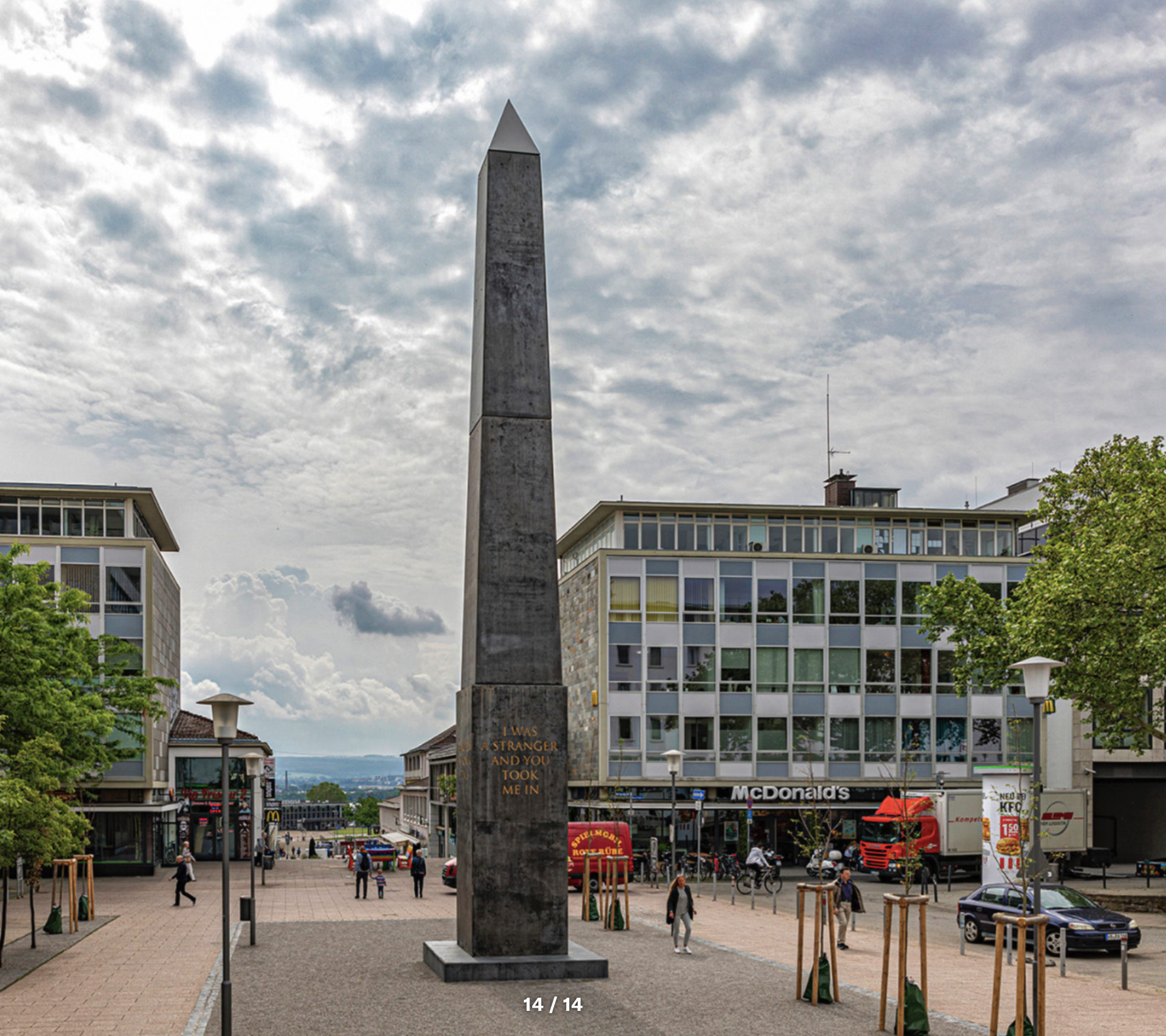
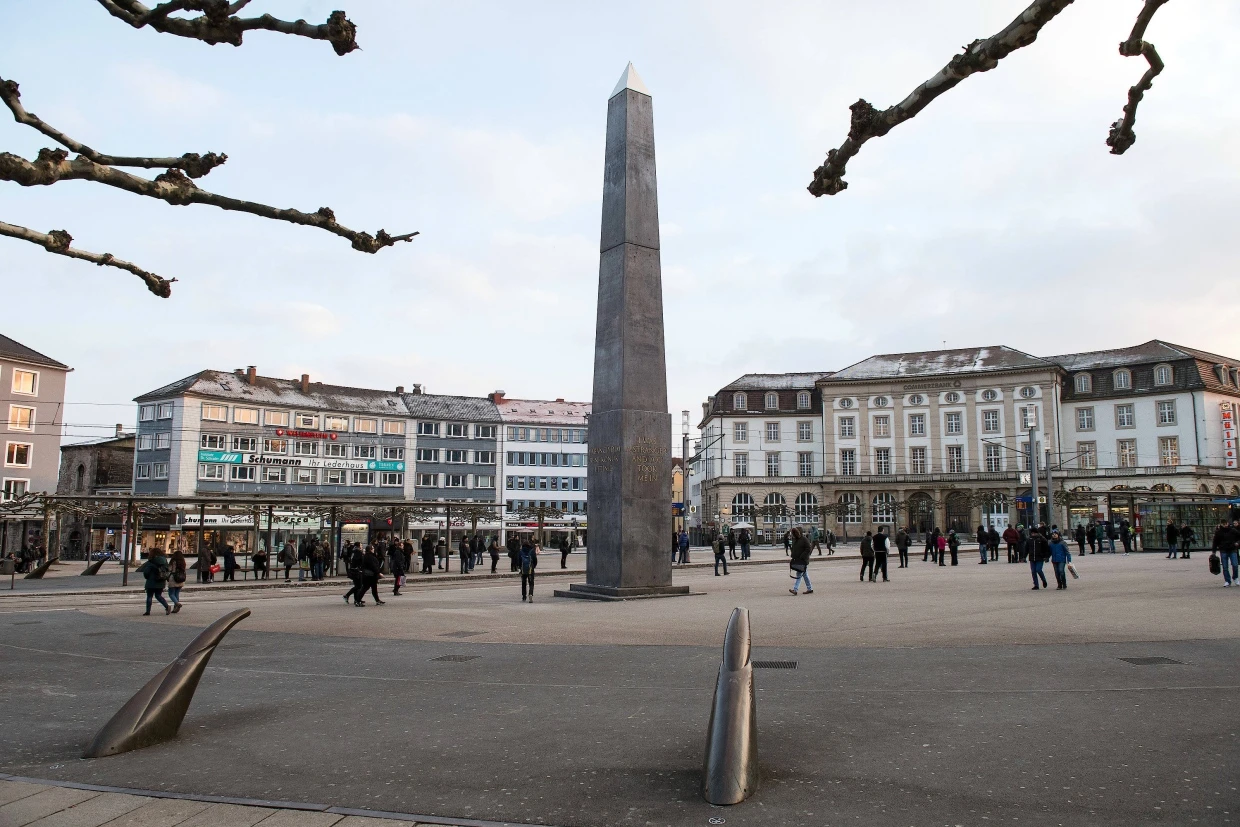
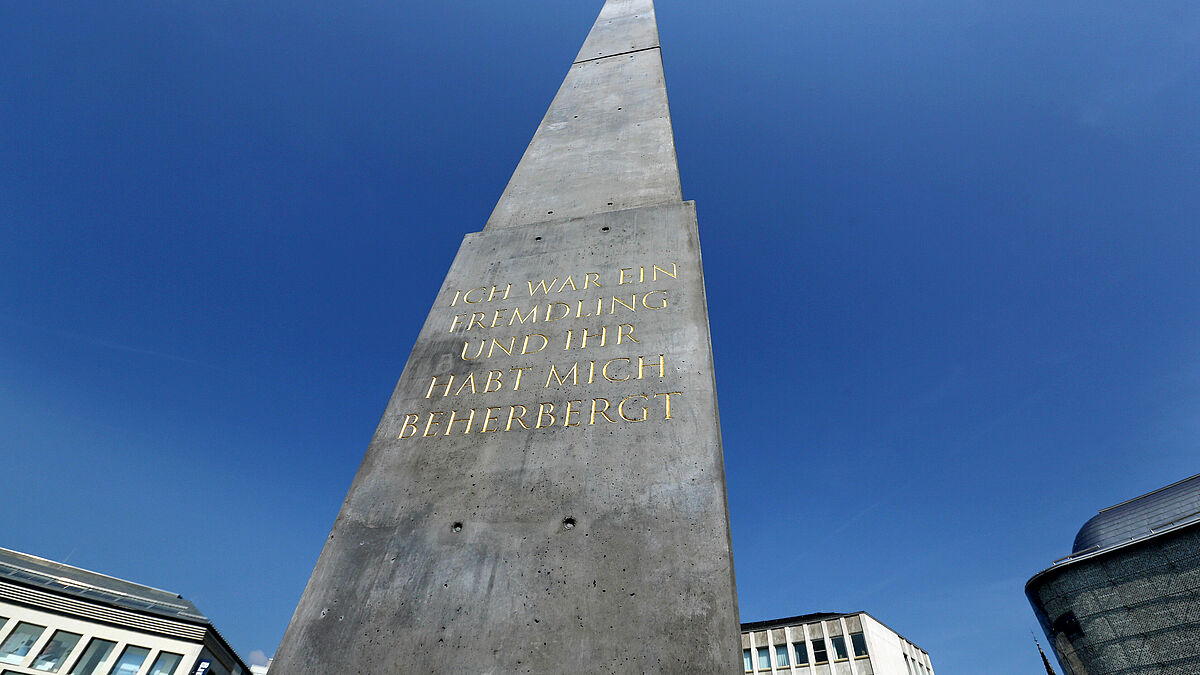
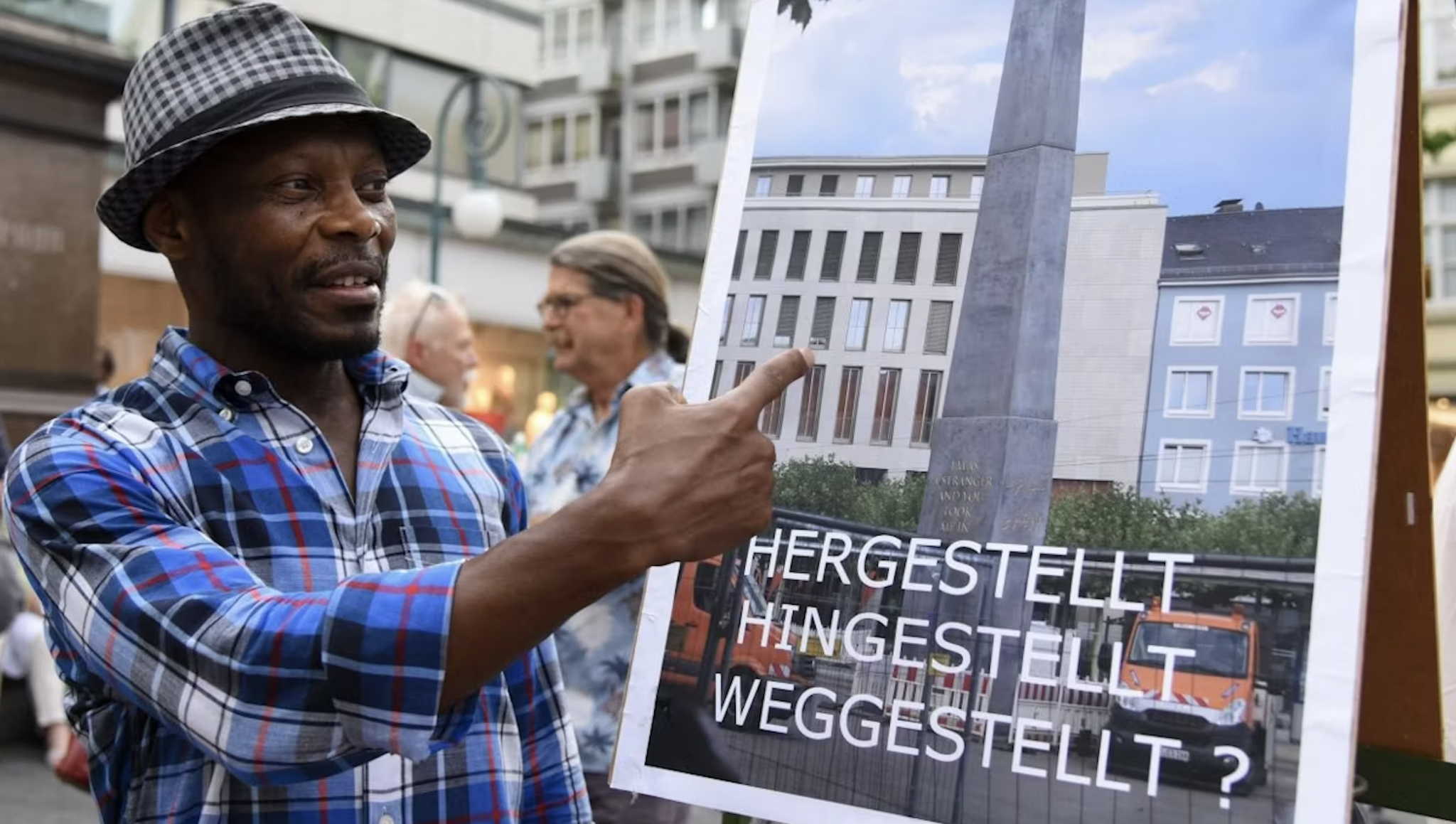
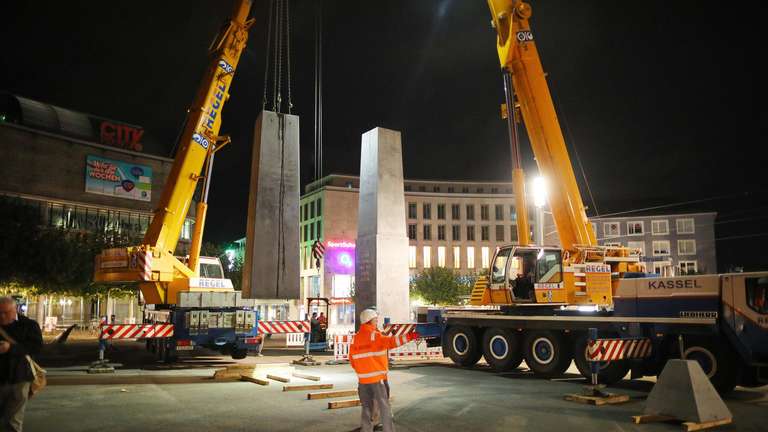
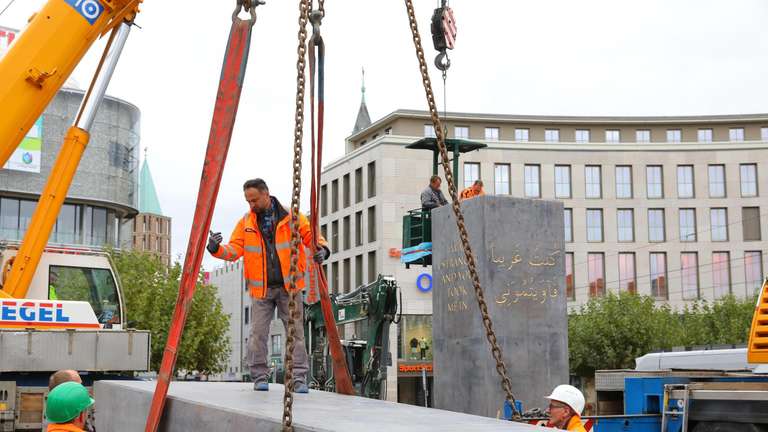
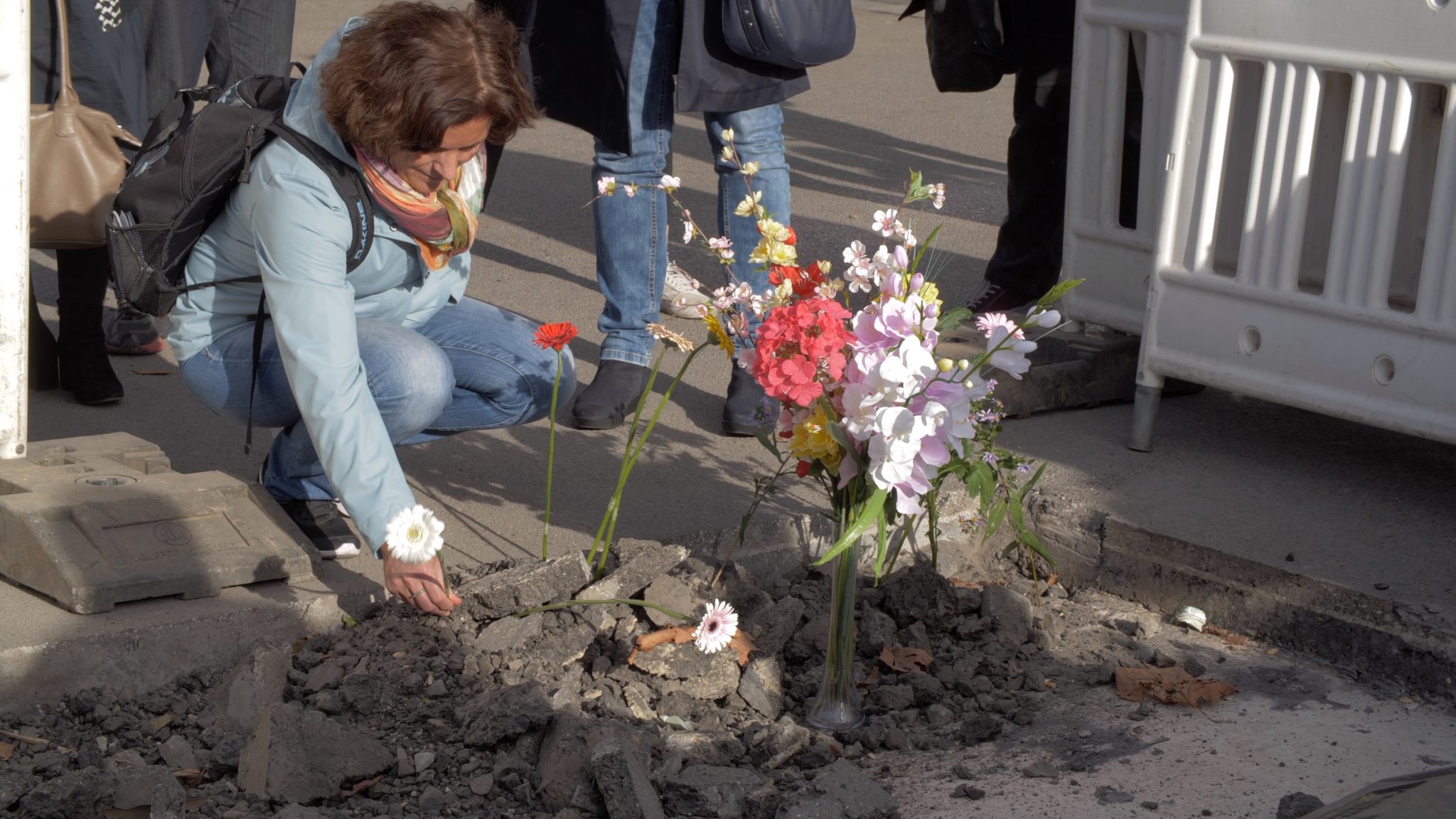
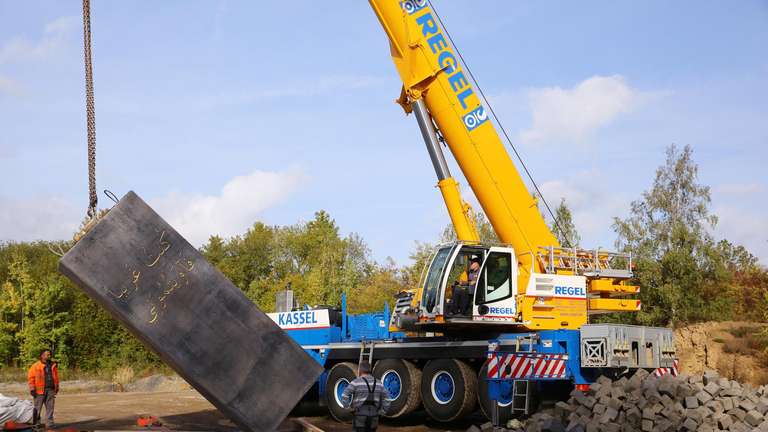
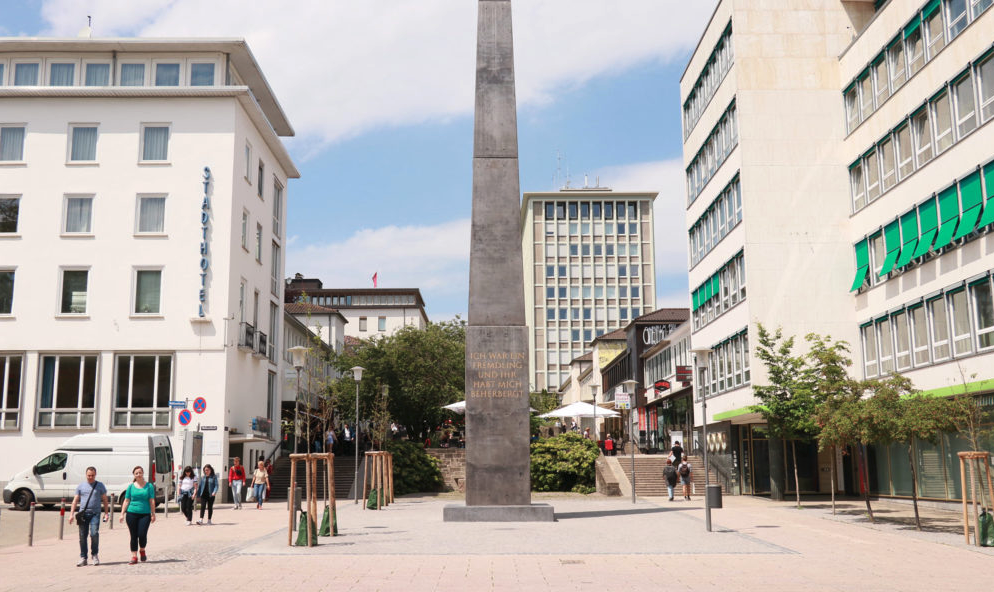
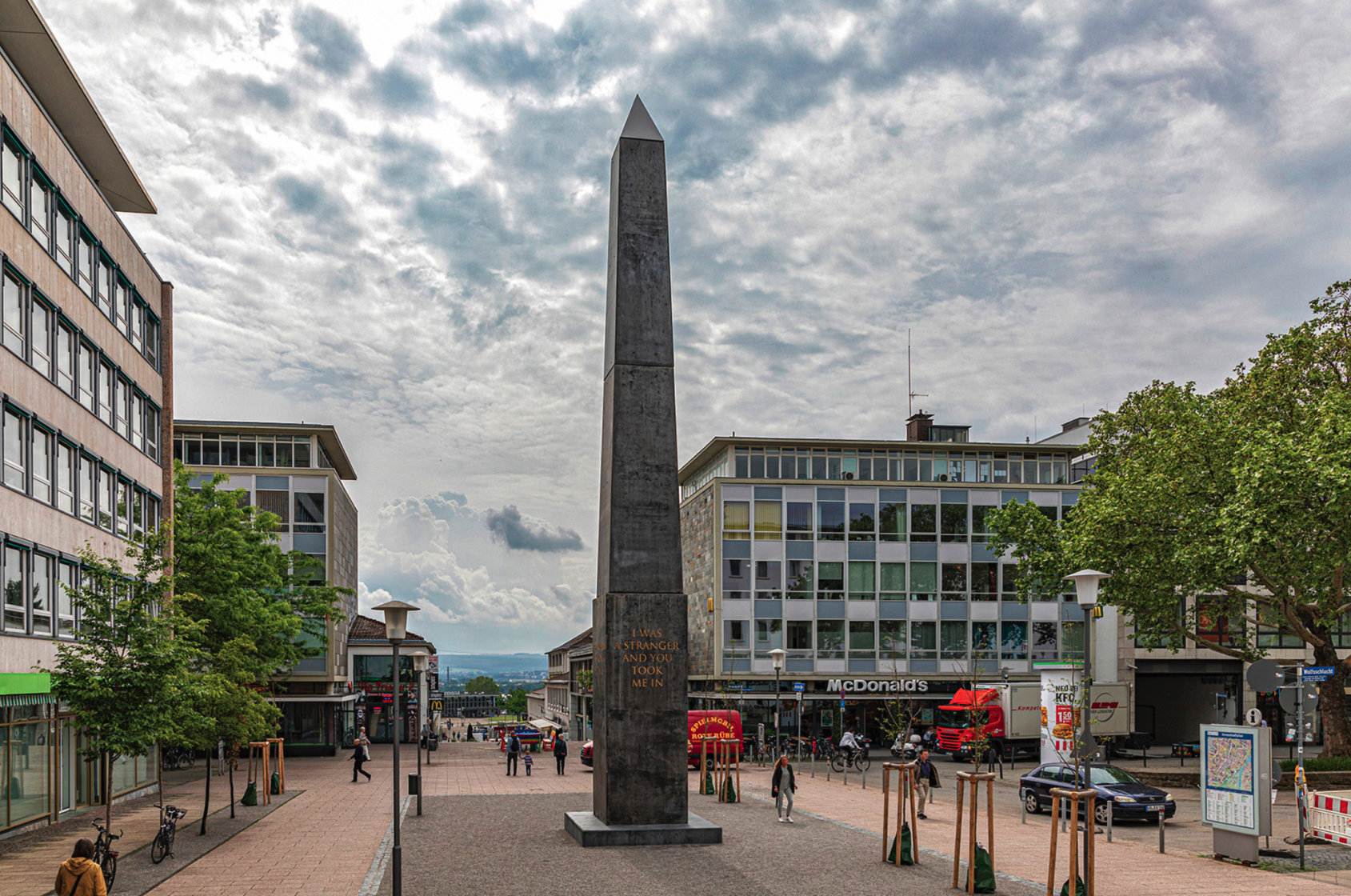
The obelisk by Nigerian-American artist Olu Oguibe was one of the most popular and controversial works at Documenta 14 in Kassel. In the fall of 2018, it caused a nationwide stir due to the political and public dispute surrounding its location, which escalated to the point where, on October 3rd – the Day of German Unity – the city administration removed the massive artwork in a sudden, covert operation. My task was to resolve this conflict.

“The Monument for Strangers and Refugees” features a quote from the Bible (Matthew Gospel) on its four sides in four languages: “I was a stranger, and you welcomed me.” The shape of the obelisk gives this message a timeless, cross-cultural form. The work, produced with great care by Documenta, was installed in June 2017 at Kassel's Königsplatz. The city of Kassel awarded Olu Oguibe the Arnold Bode Prize for the … read more

International New Patrons Initiatives

International New Patrons Initiatives

2013–today

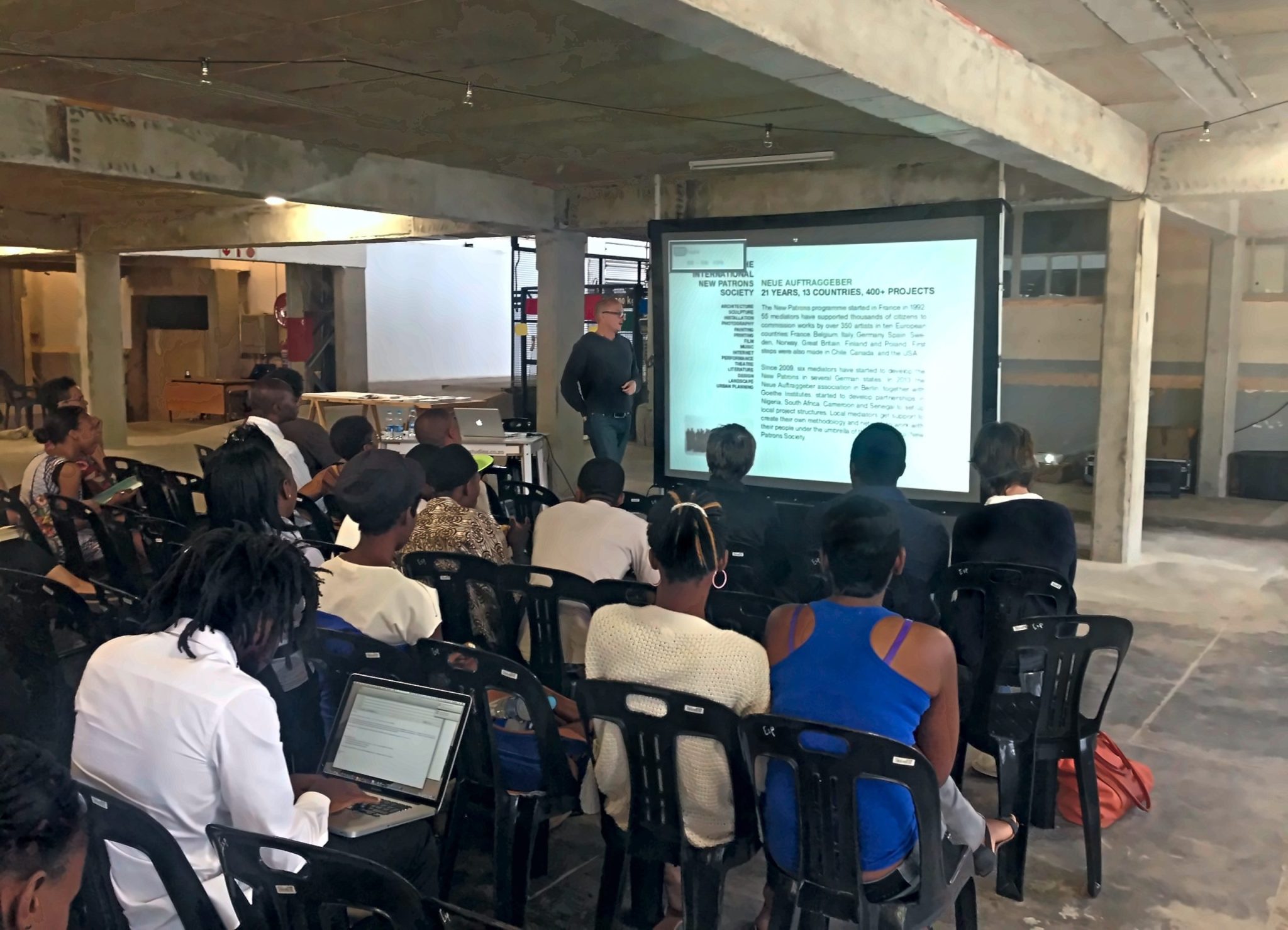
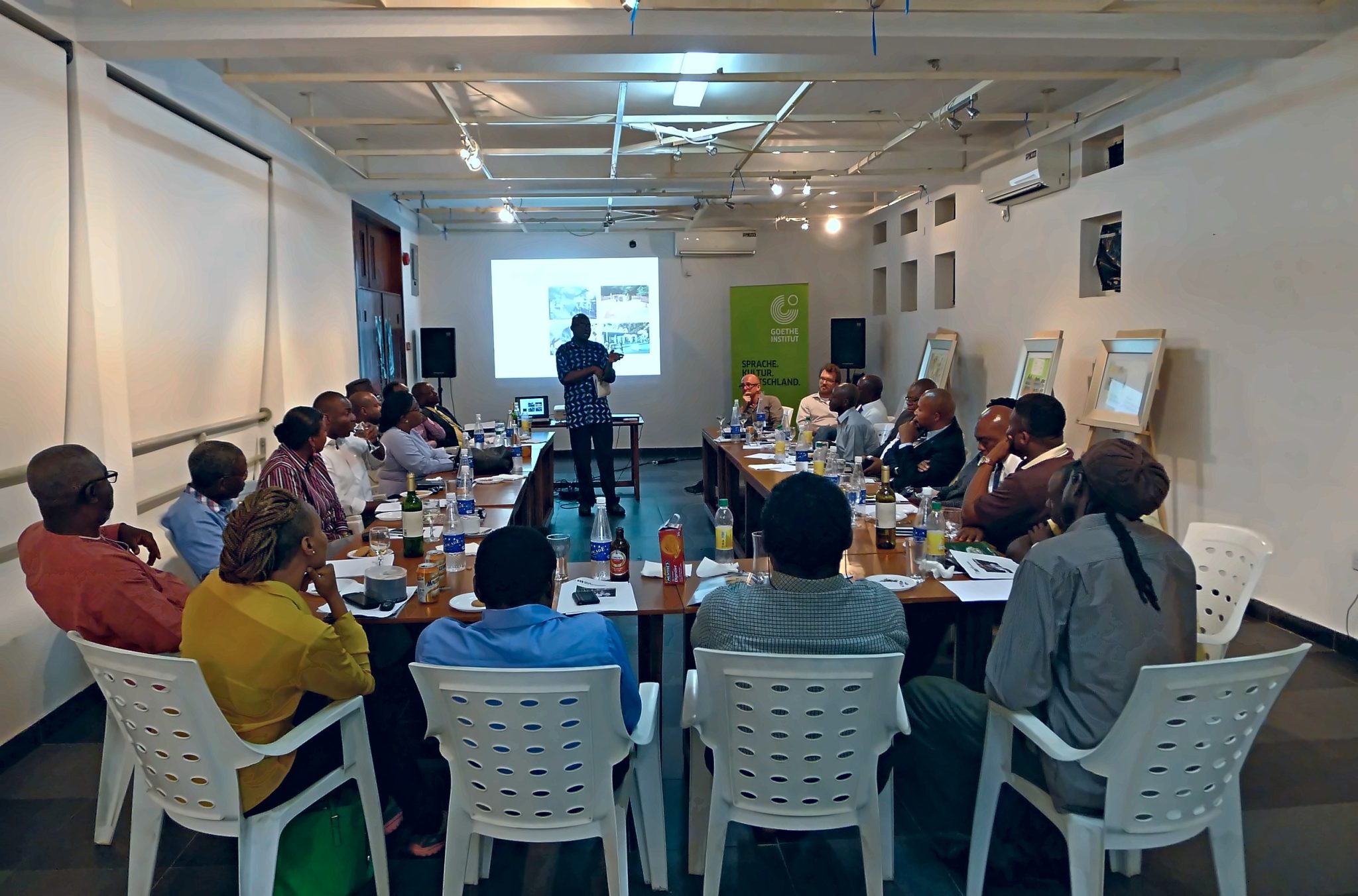
In 2013, I began carrying the idea of art on commission from citizens to other countries, sometimes in collaboration with Goethe Institutes, sometimes at the invitation of third parties, and occasionally on my own initiative.

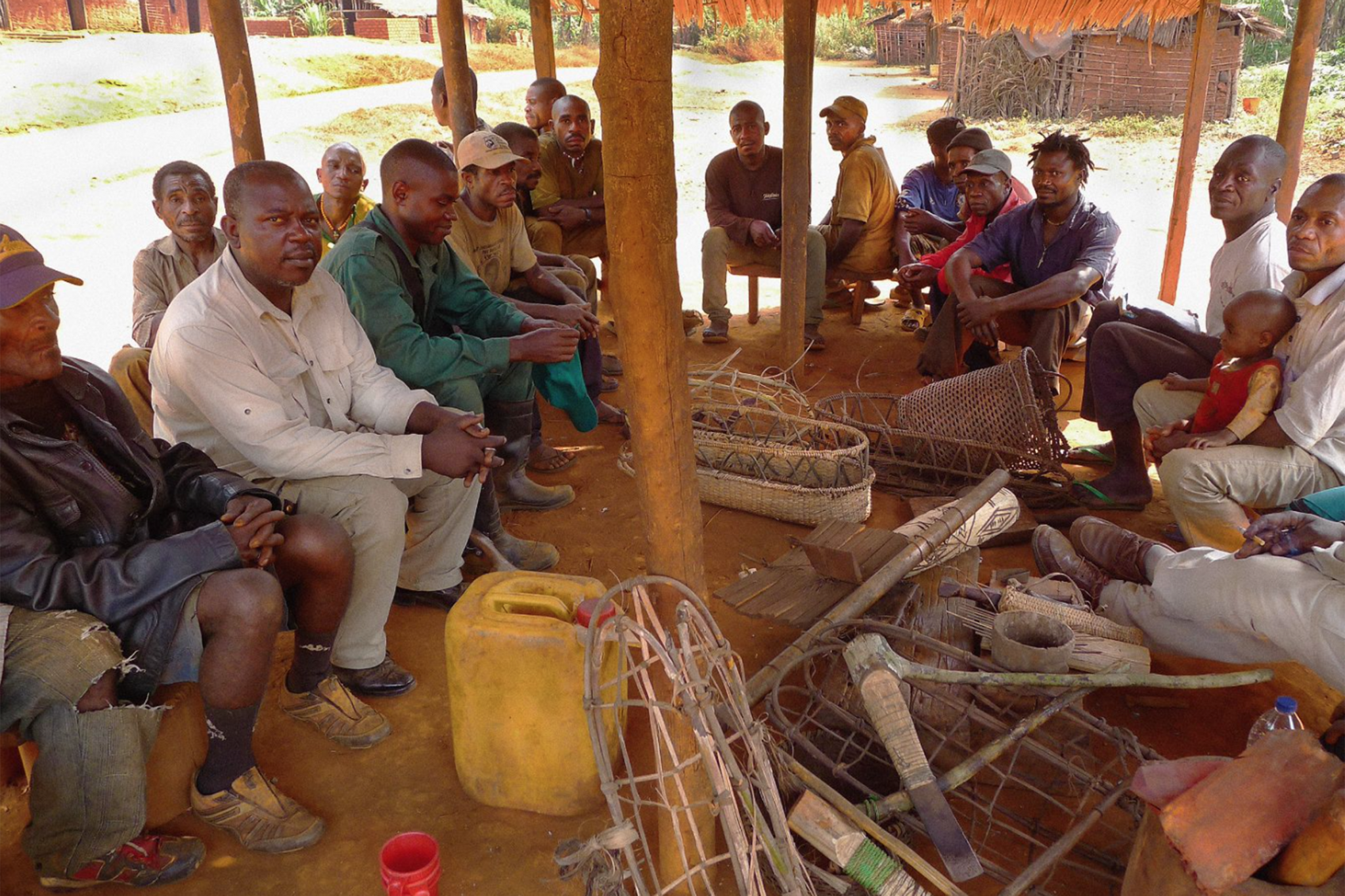
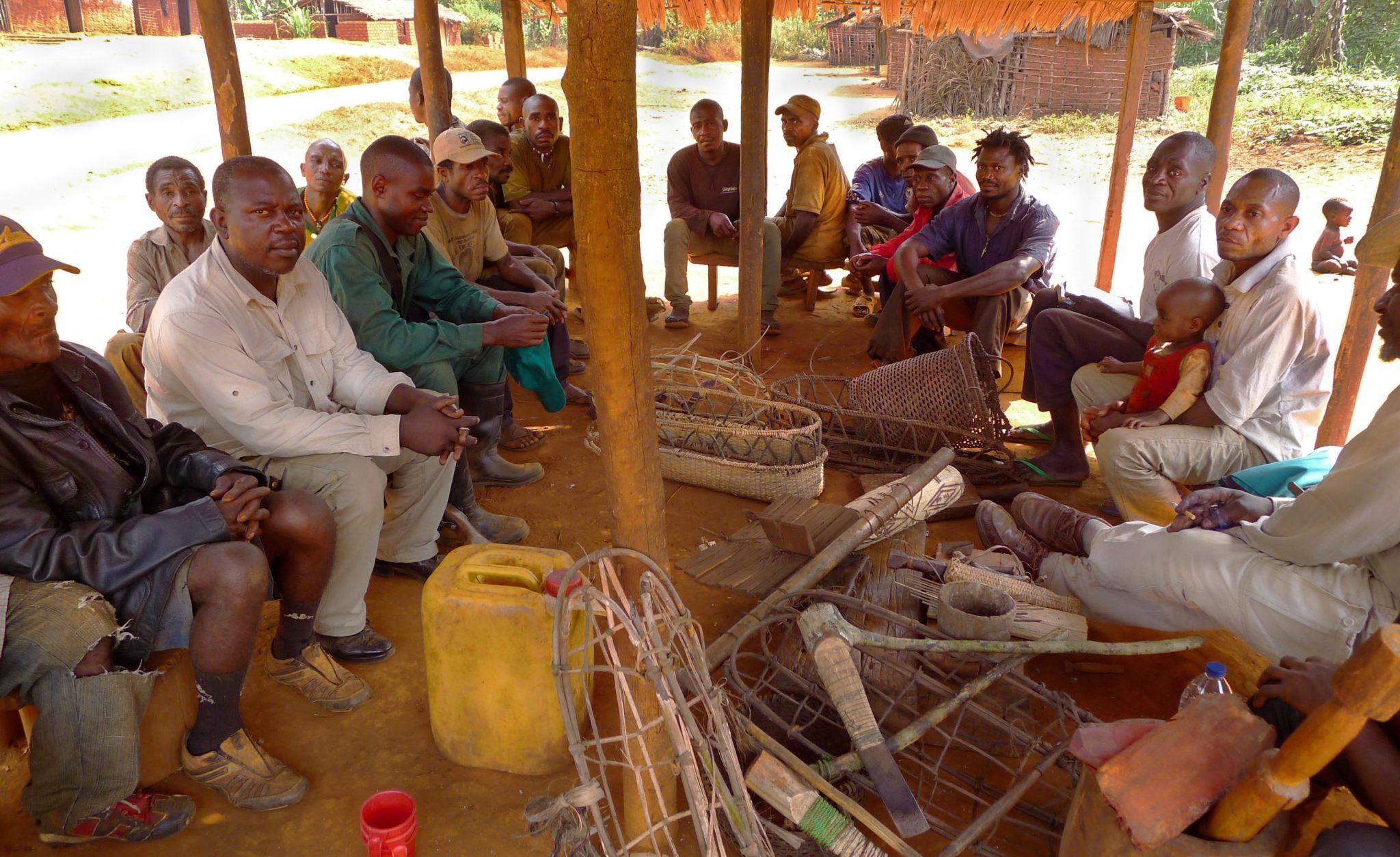
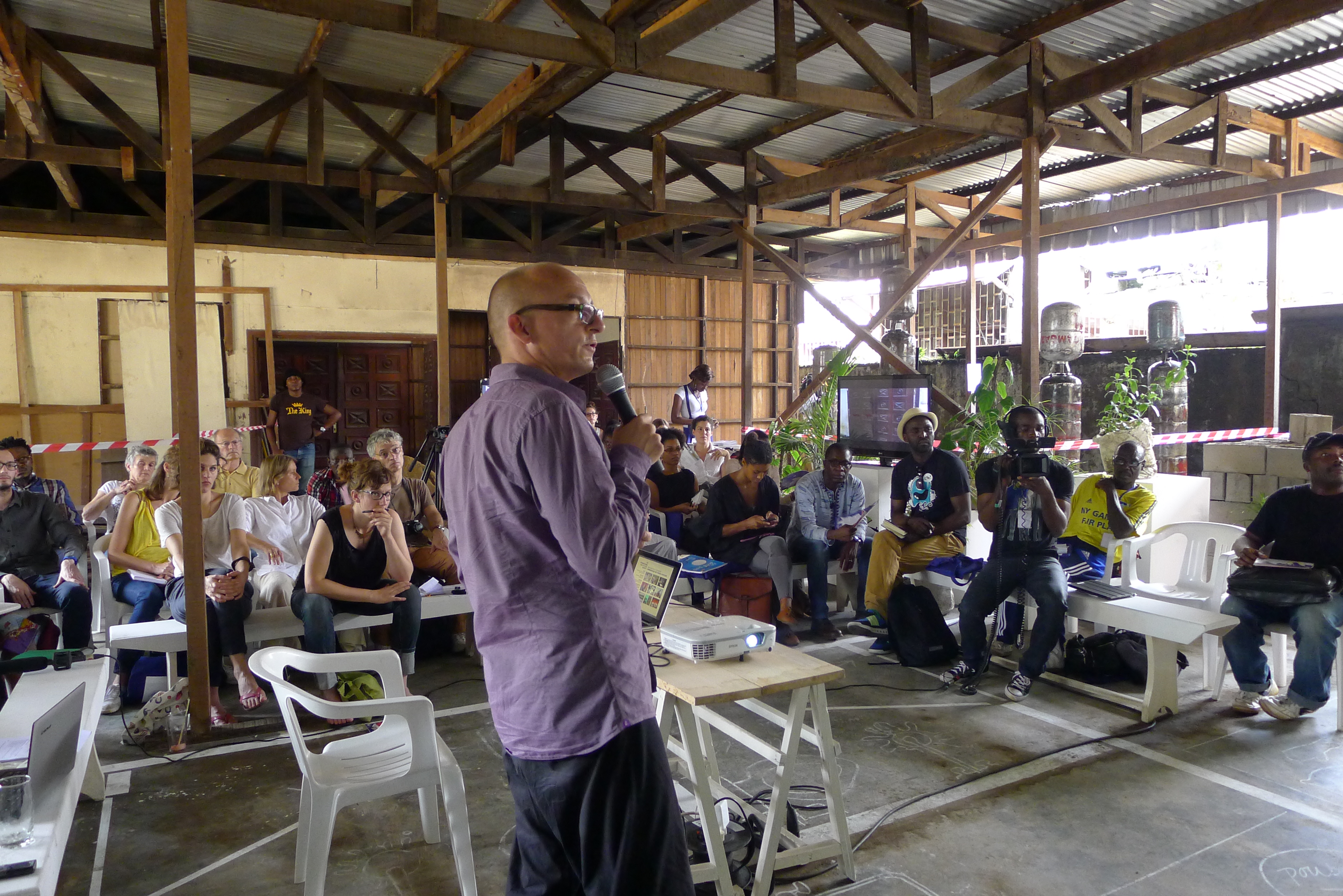
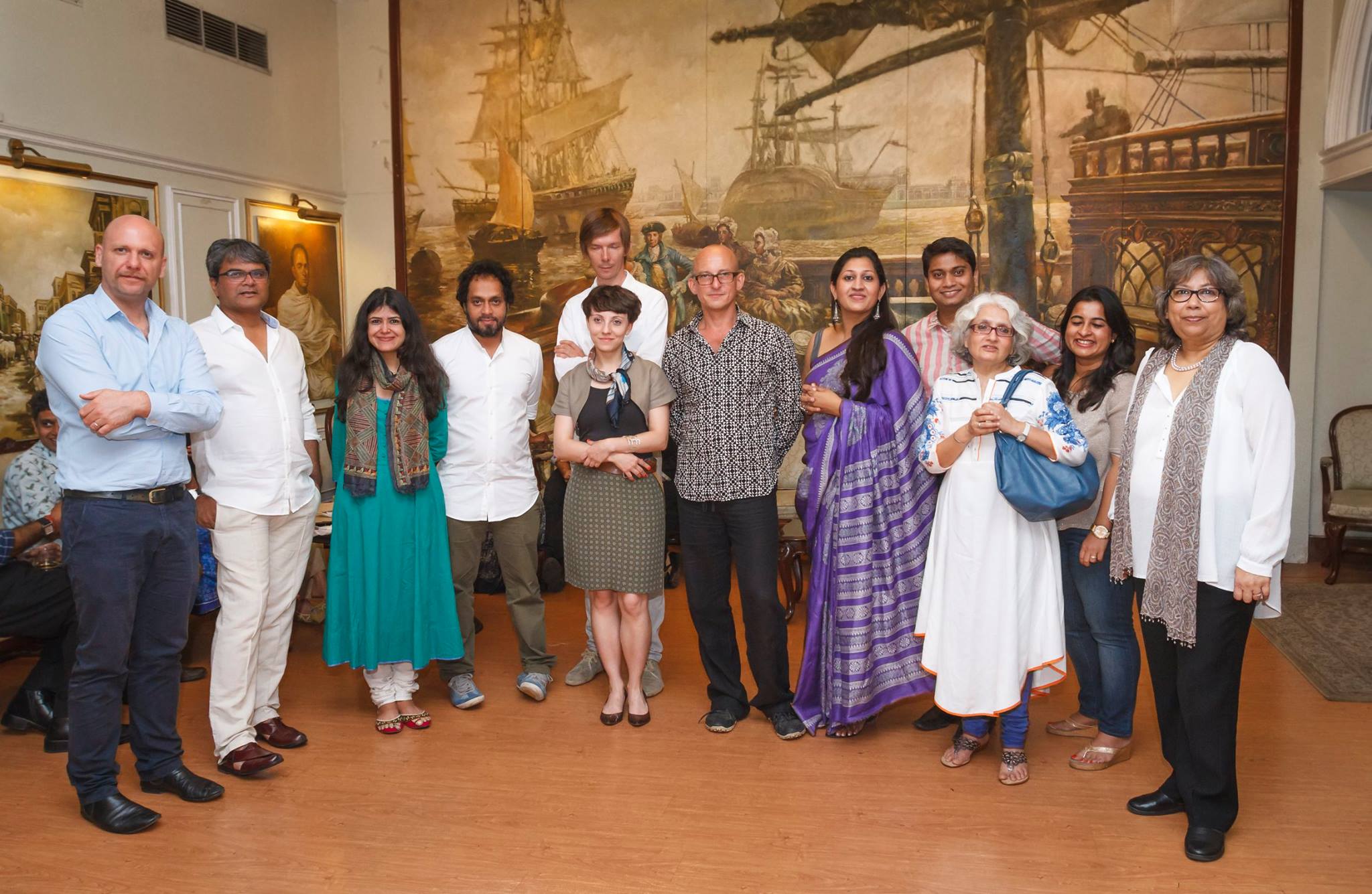
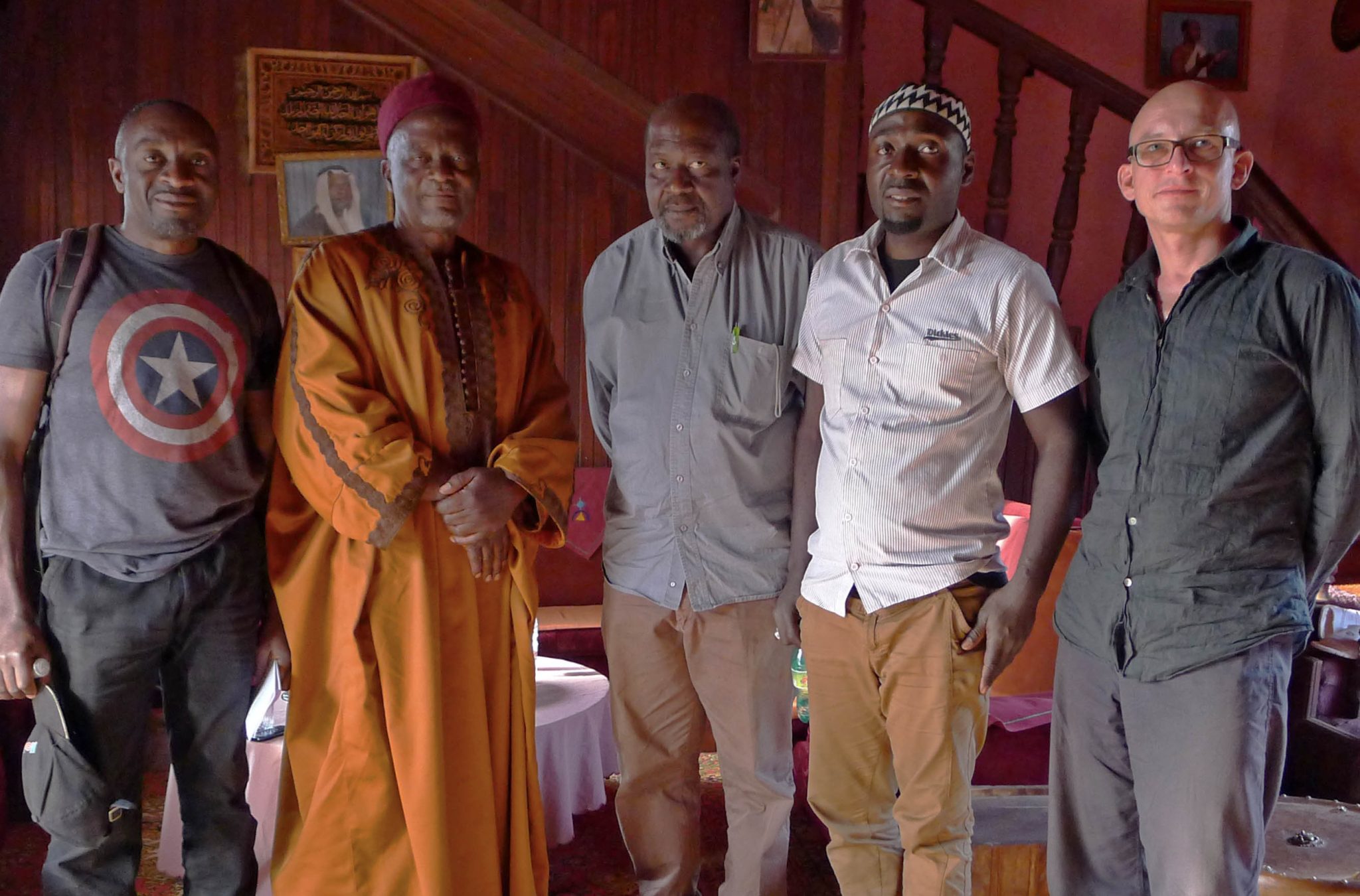
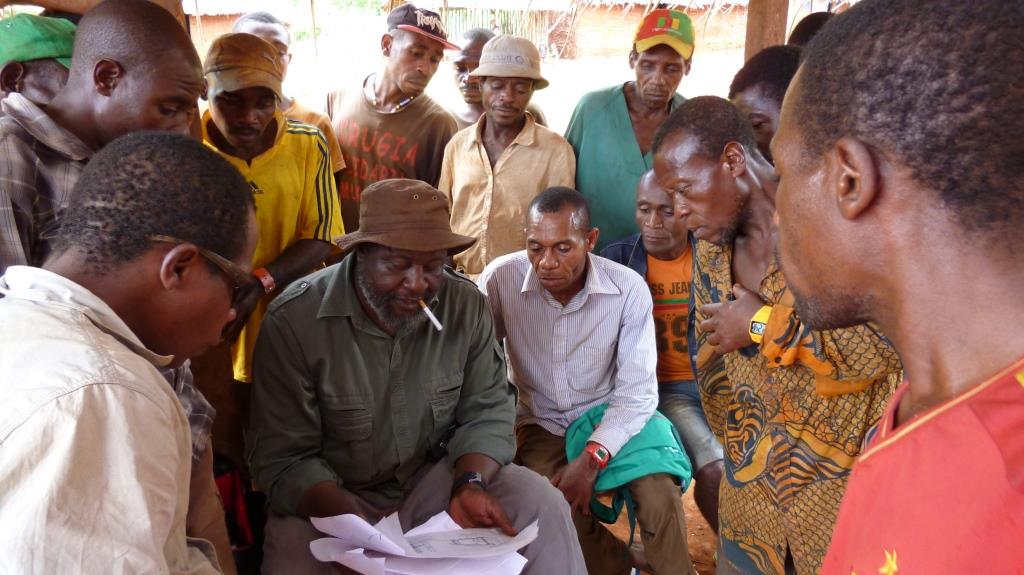
Argentina, India, Iceland, Cameroon, Lebanon, the Netherlands, Sweden, Tunisia, USA. In these countries, I have met potential partners, sought mediators, and learned a great deal about the conditions of possibility for art and culture in different systems and about the limits of art on commission from citizens. In India, an initiative began but was later abandoned. The same happened in Nigeria and South Africa. In Lebanon, there were several collaborations that stopped after the 2020 explosion and, as a result, could not be revived. Currently (2025), I am advising a pilot project in the Netherlands. As the first non-European country, Cameroon has joined the network of New Commissioners. I was able to kick-start and make possible the first pilot project there.

Leipzig Monument to Freedom and Unity

2012

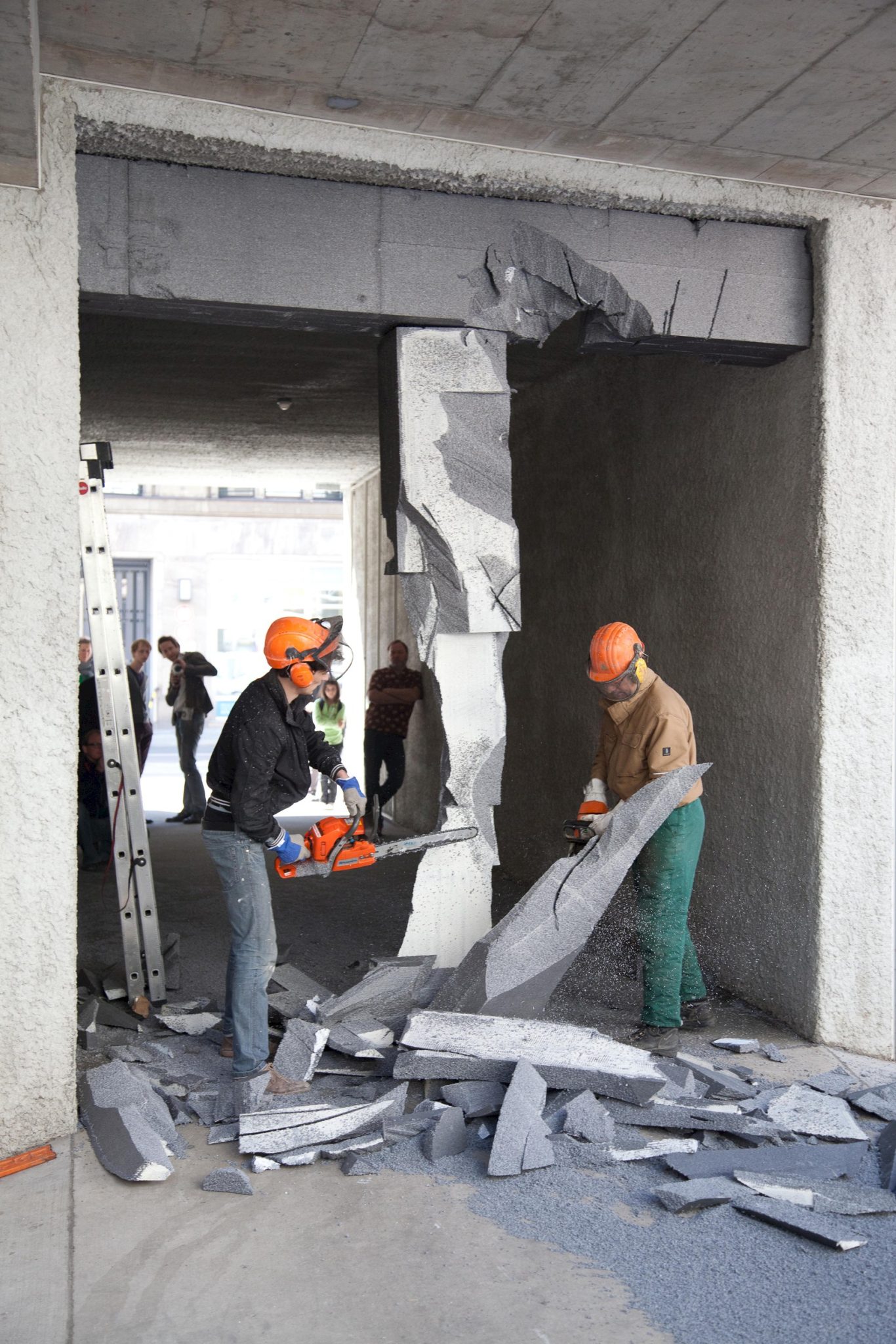
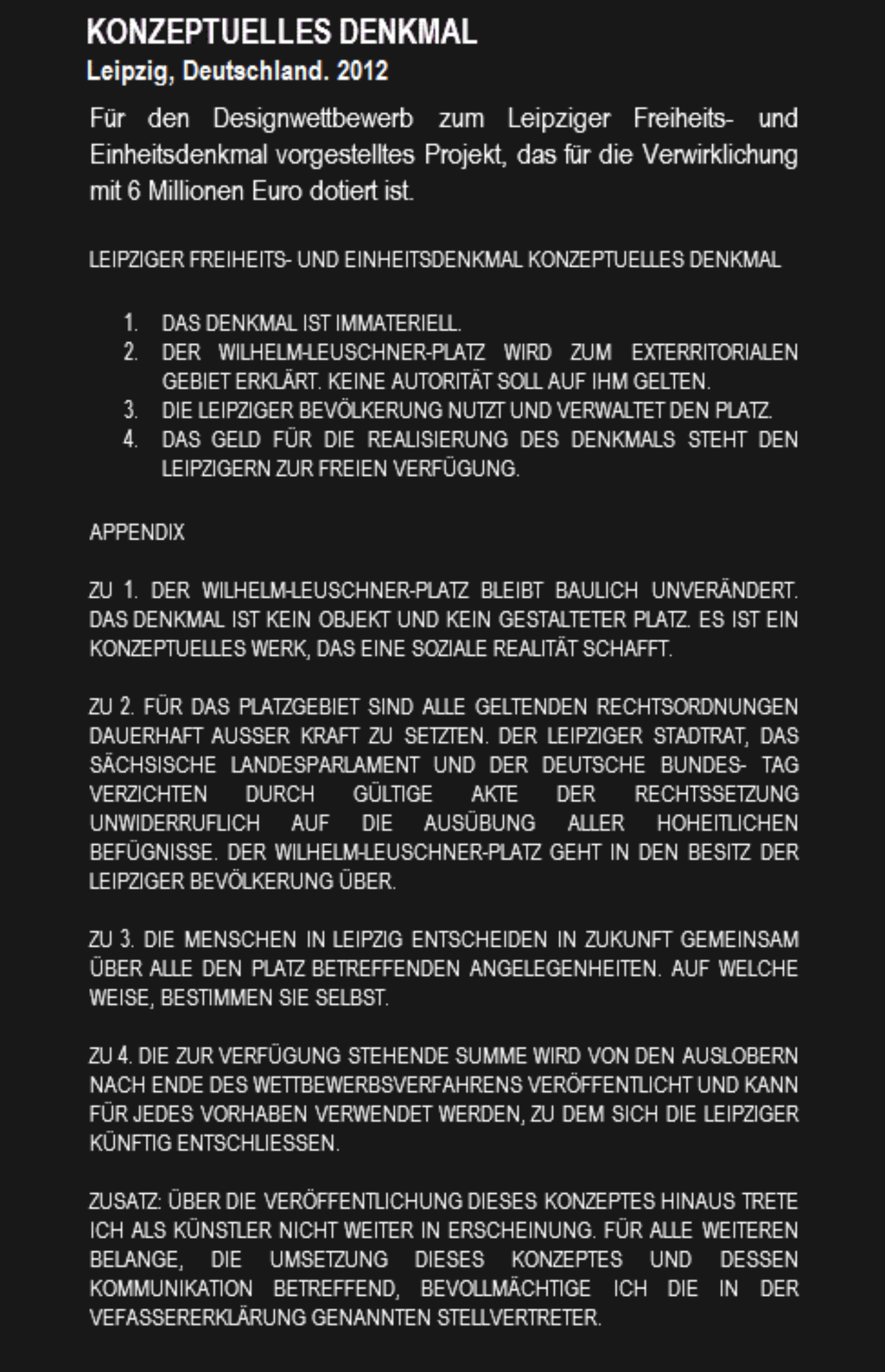
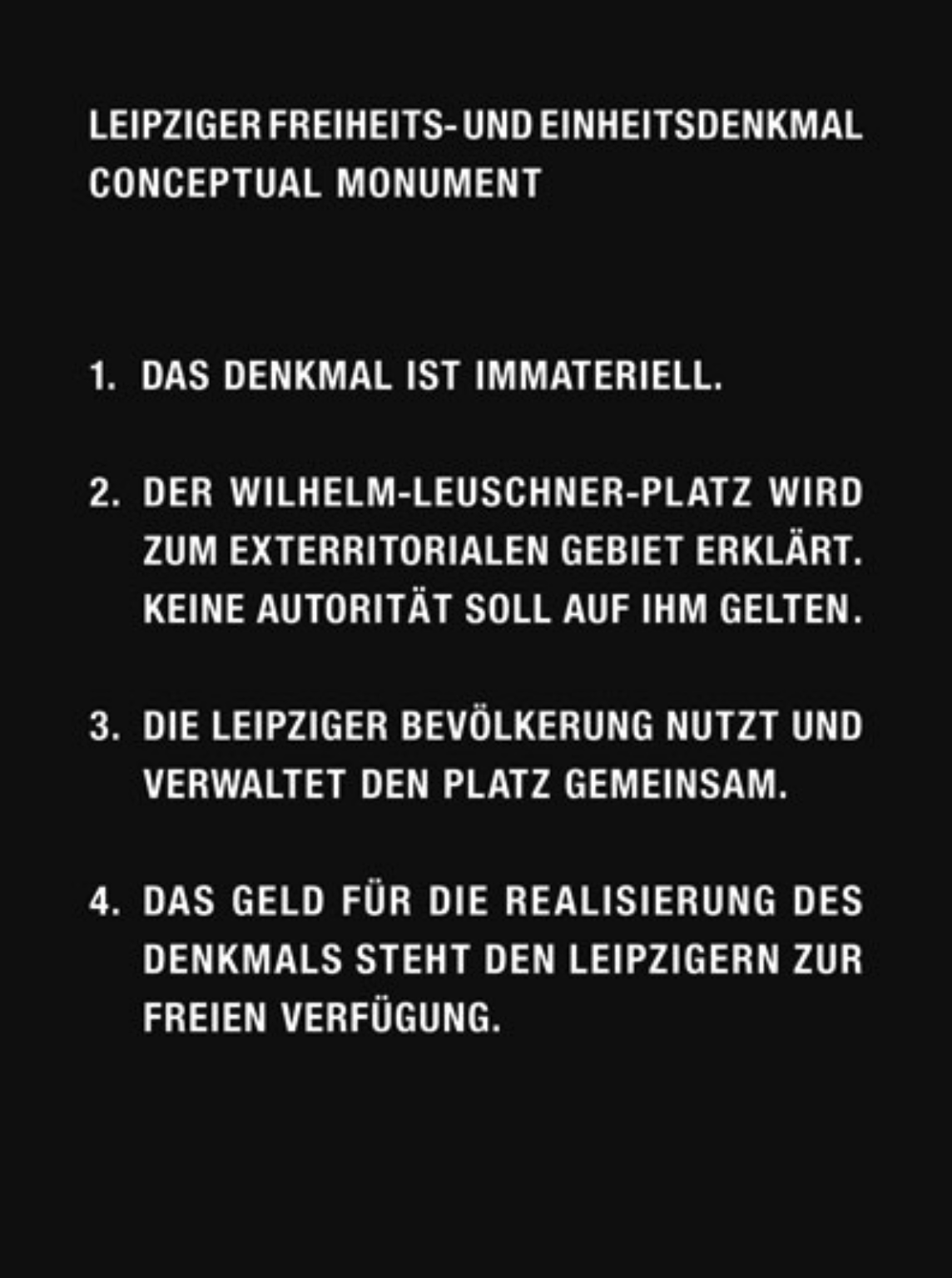
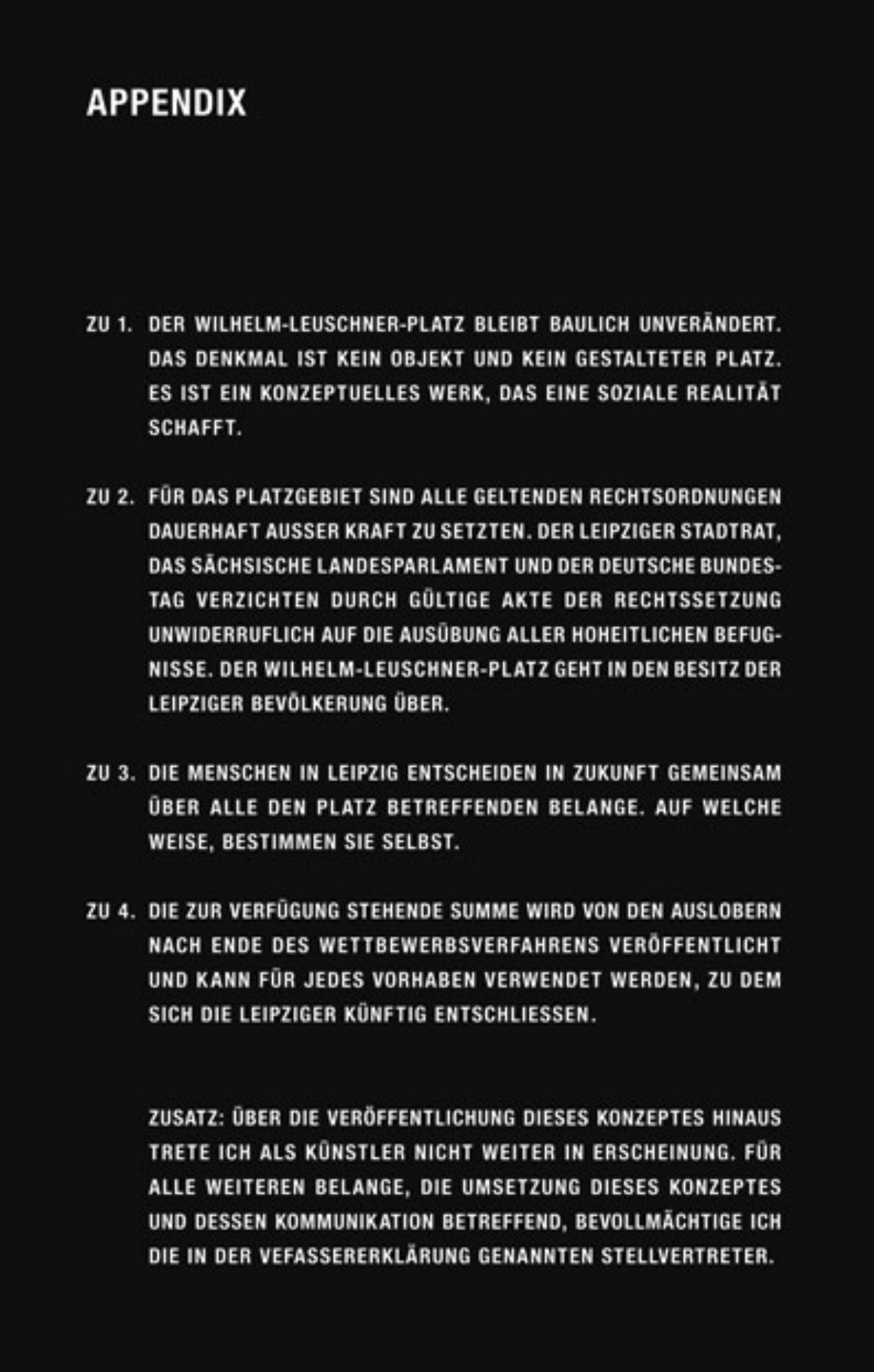
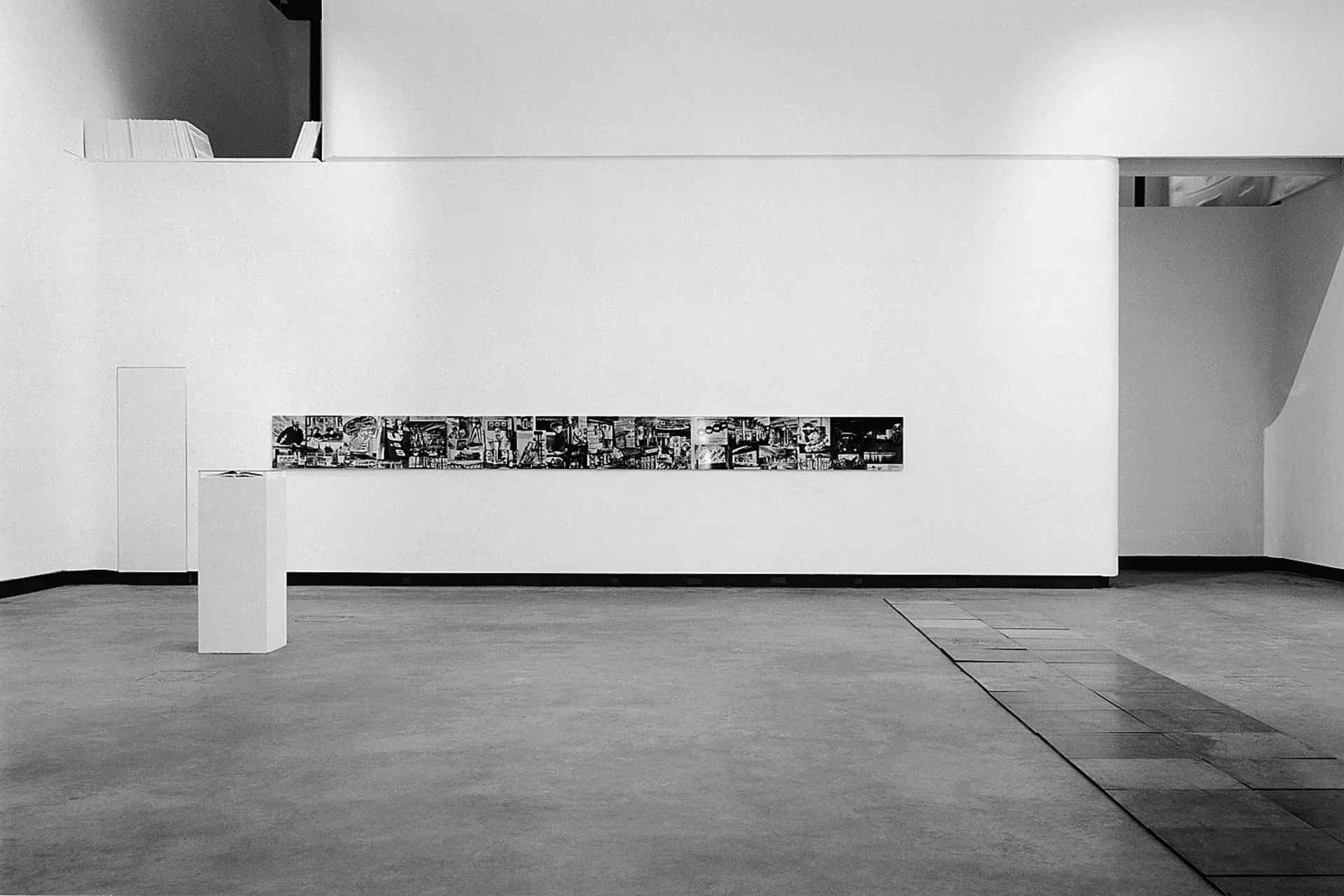
Santiago Sierra’s competition entry for the Leipzig Monument to Freedom and Unity was undoubtedly the most radical design of the competition. It was inconceivable that anyone would ever implement it. However, it was conceptually and politically brilliant, which is why we were frustrated when the proposal was removed from the competition process.

When the call for submissions for the Leipzig Monument to Freedom and Unity was made public, I suggested to Santiago Sierra that he develop a proposal. In Leipzig, I introduced him to some of the key figures of the autumn of 1989, we conducted site visits, and eventually, we had a plan.

Sierra was, and still is, an anarchist and has worked with many anarchist groups worldwide. For him, it was clear: In Leipzig, a solution against the state and state order had to be found if the monument was to capture the essence of the … read more

Projekte mit Arno Brandlhuber

2010–2013

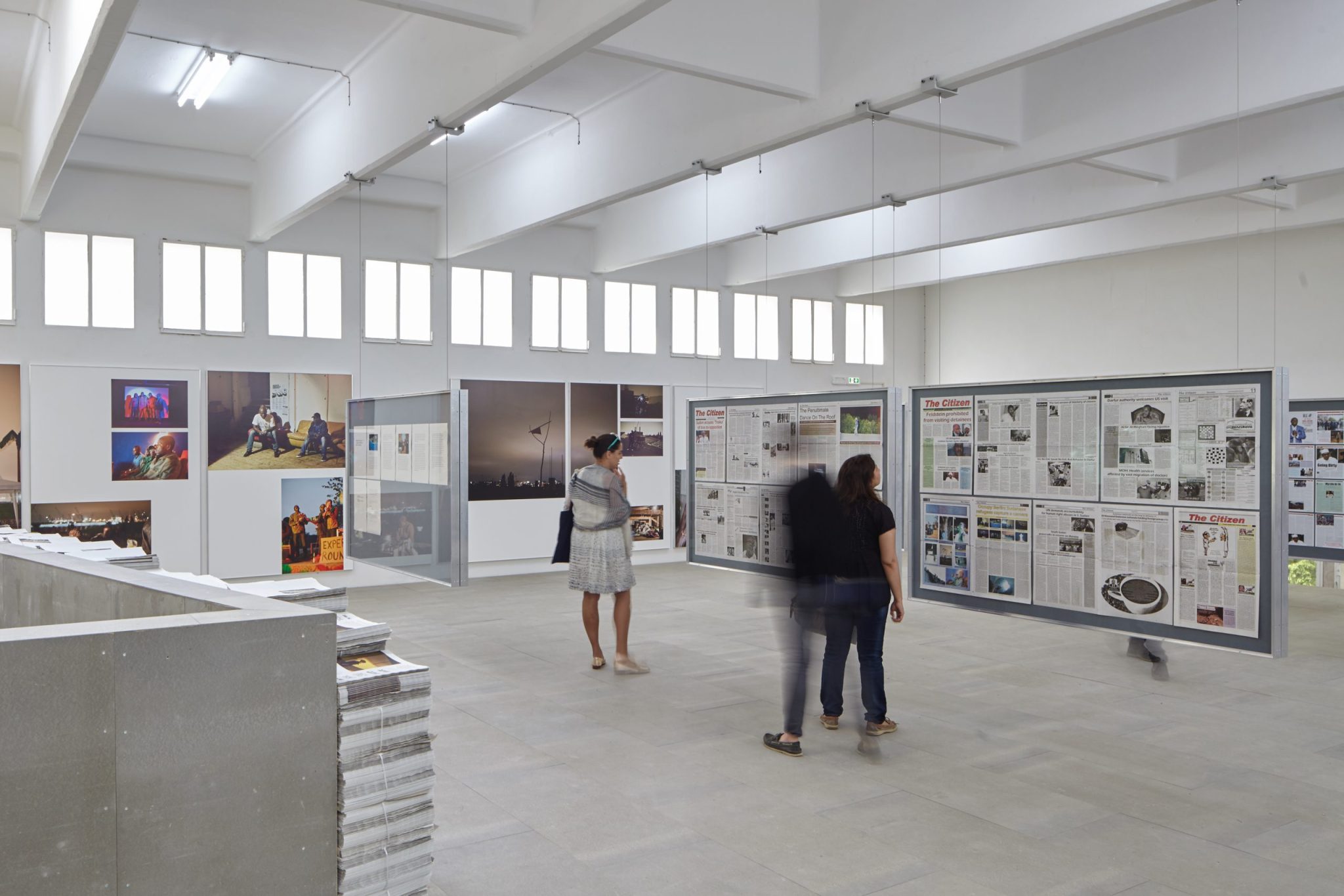
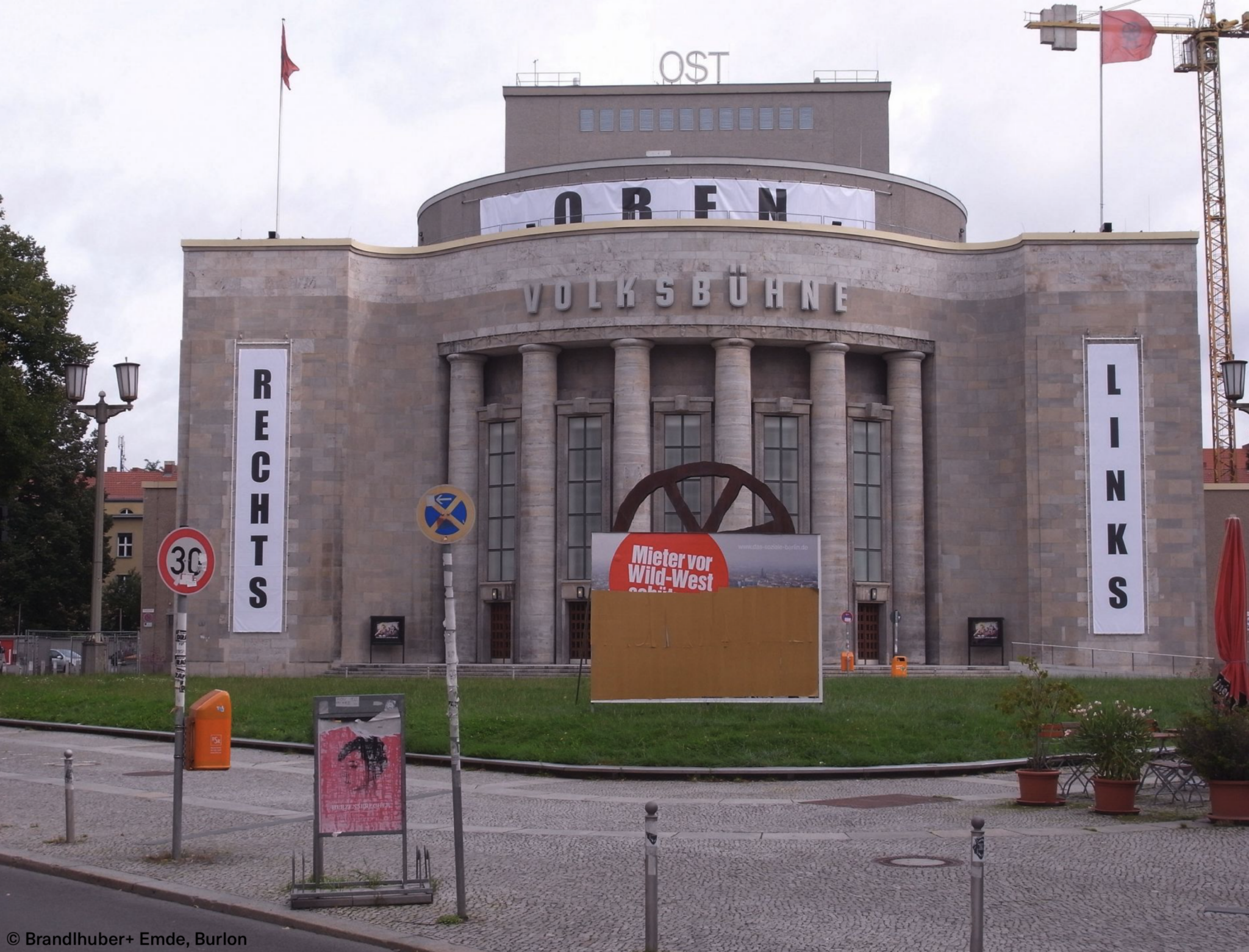
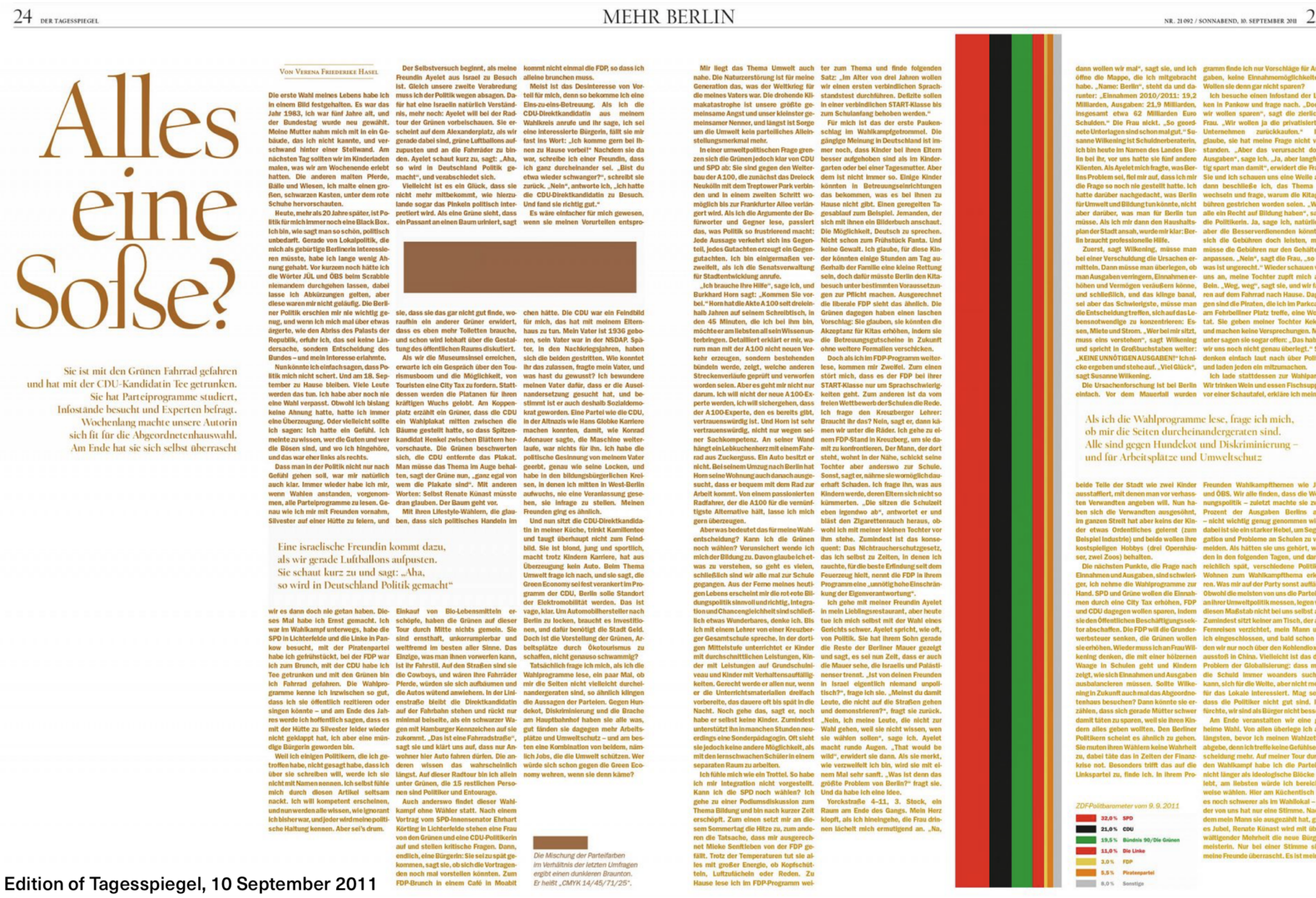
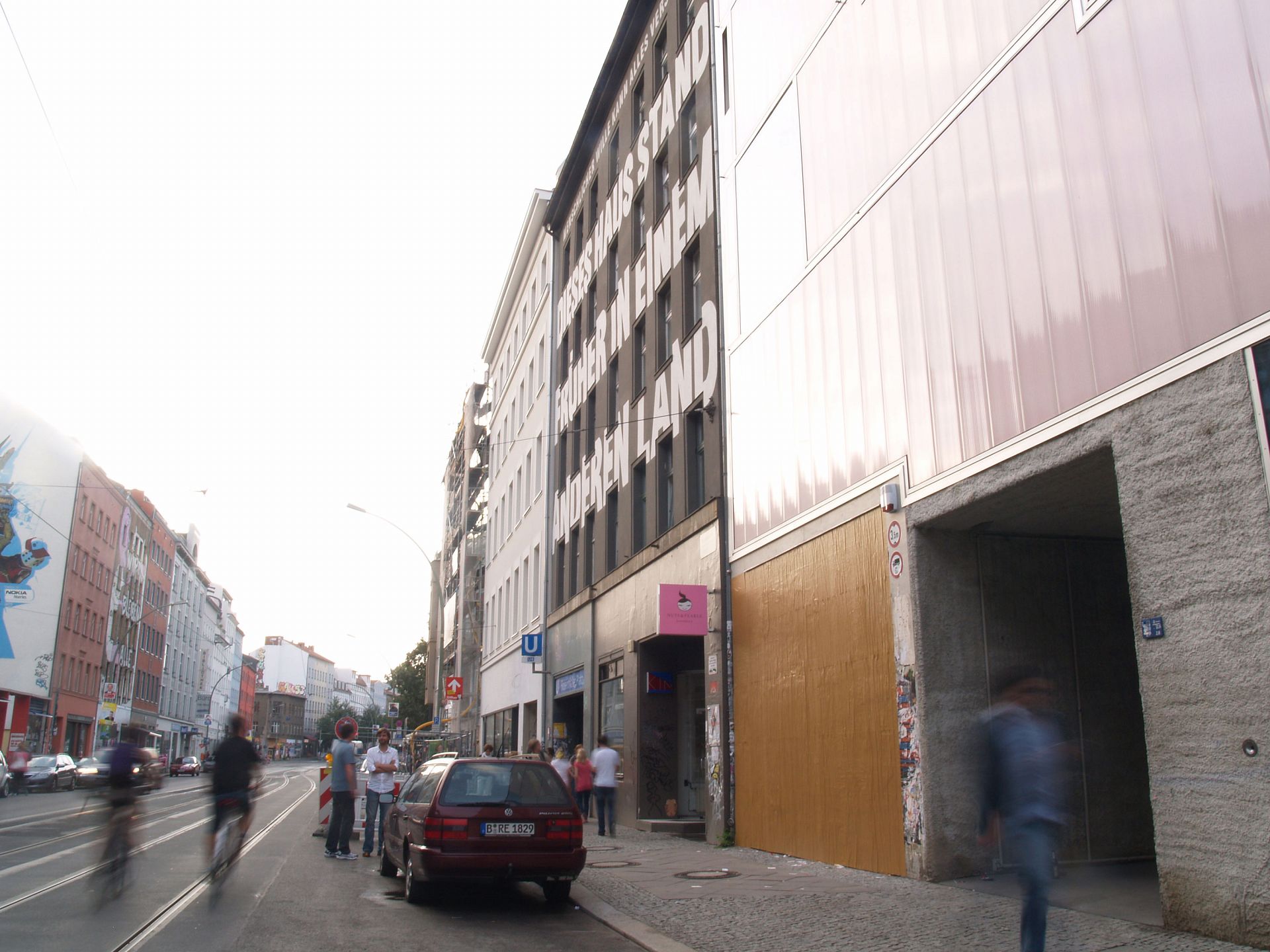
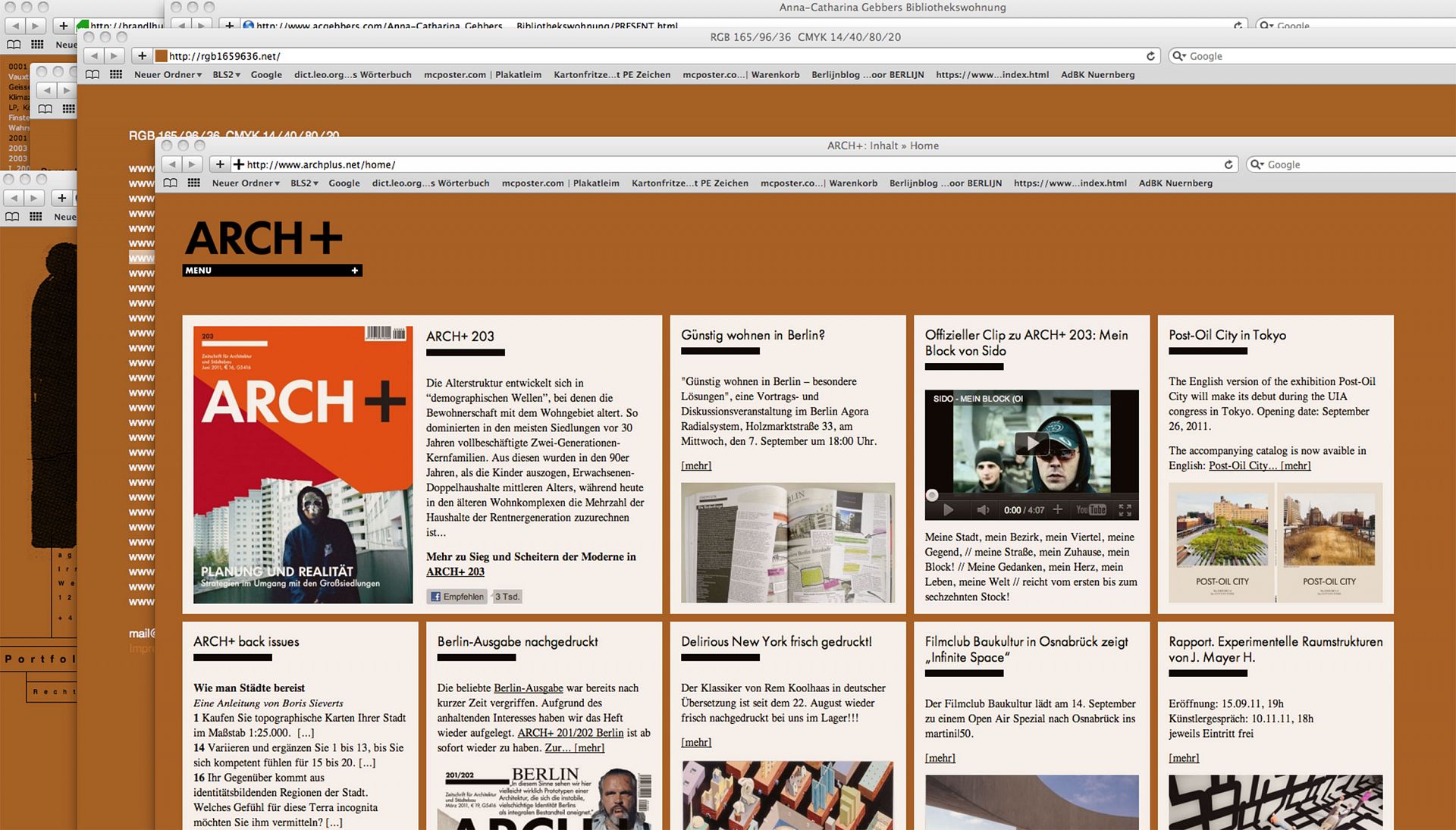
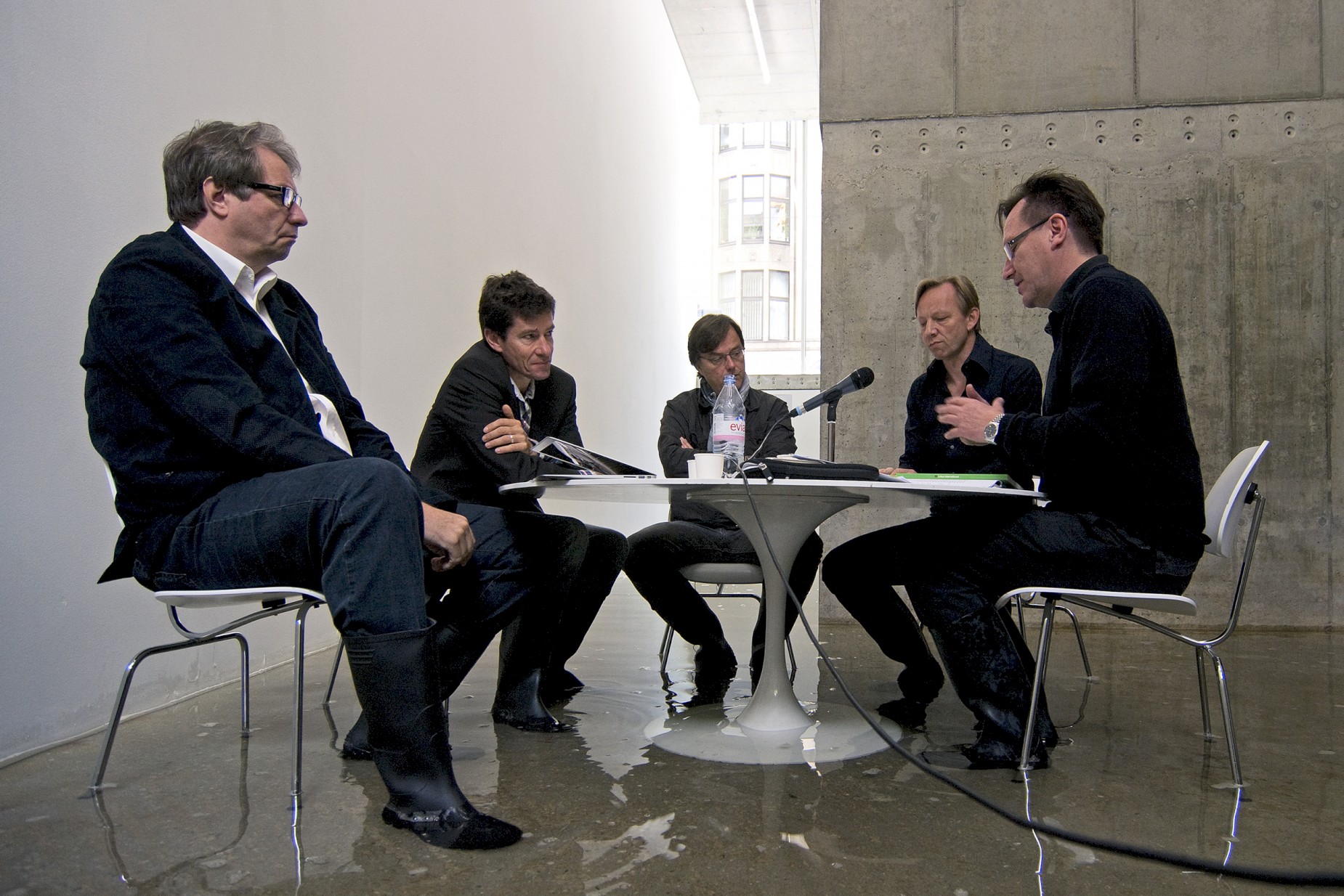
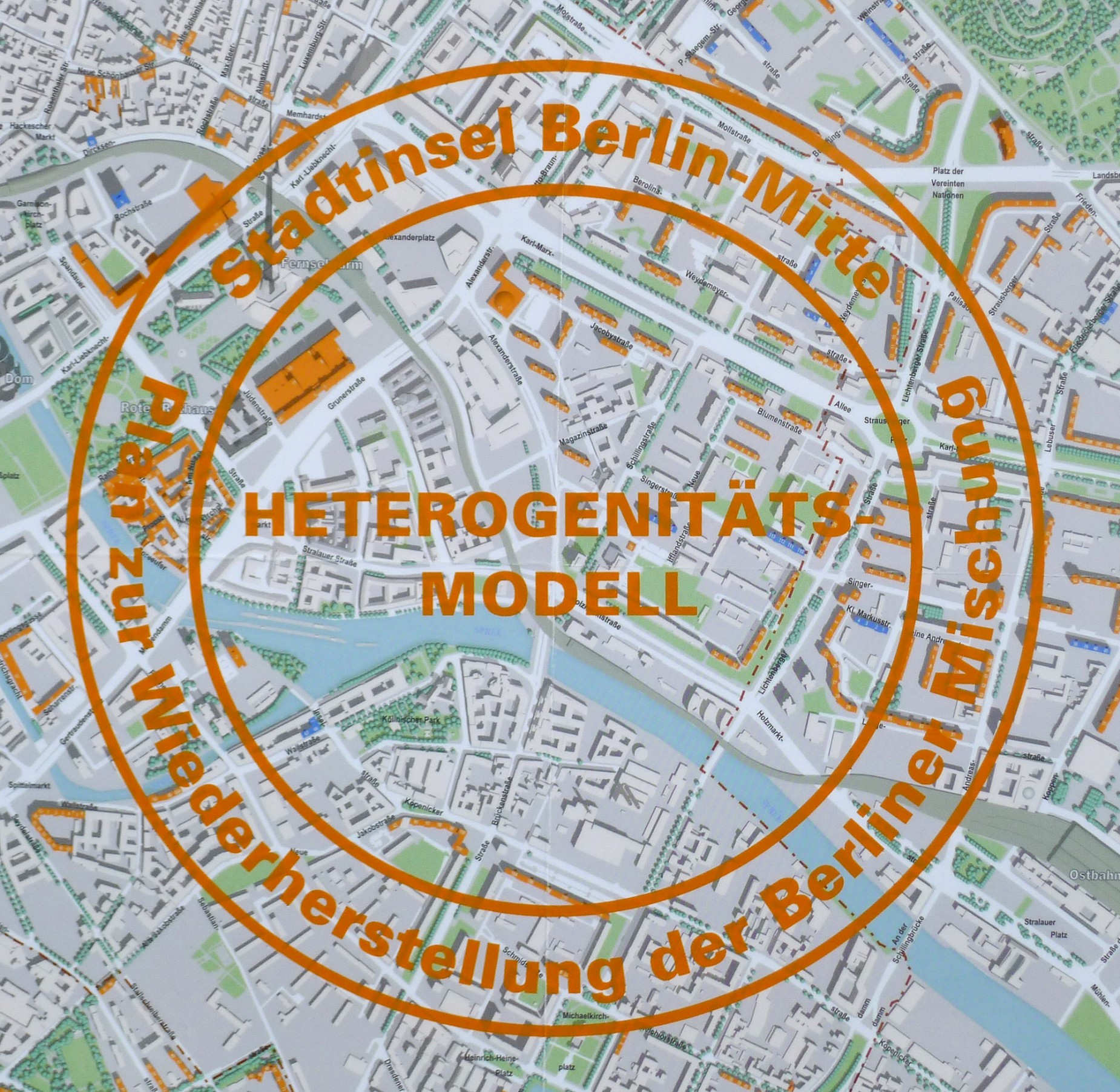
In August 2011, Berlin’s major political parties were running their campaigns for the upcoming election of the House of Representatives (Abgeordnetenhaus). Although the parties stand for different programs and values, there was no clear position on housing politics. To draw attention to this political dedifferentiation, Brandlhuber+ launched a poster-campaign: mixing the colors of the major political parties—SPD (Social Democratic Party), Bündnis 90 die Grünen (Alliance 90/The Greens), CDU (Christian Democratic Union), Die Linke (The Left) and FDP (Free Democratic Party)—in equal parts resulted in a brownish tone: RGB 165/96/36 CMYK 14/40/80/20. This color of political evenness was printed on posters and billposted in public space. The initiative enabled an intensive public discussion about the need for a repoliticization of housing issues in Berlin. … read more

Research Assistant: HGB Leipzig

2000–2005

Between 2000 and 2005, my dual role at the Academy of Fine Arts Leipzig included the conception and development of a training module that integrated curatorial practices into artistic education. It was the first model of its kind in Germany. In 2000, Beatrice von Bismarck joined the Academy, and together we developed this program, which we gave an independent form within the institution under the /D/O/C/K project area.

We worked directly on the discourses of the time and with key figures from the contemporary scene, creating experimental projects that were new in terms of both form and method for all involved—delicate and often conflict-ridden. Critique of institutions and the de-hierarchization of relationships between students, teachers, and artists mobilized forces that sometimes became uncontrollable. The conditions of project … read more

Artistic Assistant: HGB Leipzig

Artistic Assistant: HGB Leipzig

2000–2005

During my dual role at the Academy of Fine Arts Leipzig between 2000 and 2005, I had the opportunity to work as an assistant to Prof. Astrid Klein, who was exemplary for me in many ways. I had previously studied under her, and it was she who ensured that I became the first art student in Germany to graduate as a curator. Over time, I was able to take on more of the artistic supervision of the department and learned an immense amount. Among the graduates of the department during my time were, among others, Peggy Buth, Loretta Fahrenholz, Ramon Haze, Christian Naujoks, Mario Pfeifer, Christoph Weber, and Clemens von Wedemeyer. The internet was just emerging at the time—today, there is nothing from that period to be found on it.

Conference: Perspectives on Gallery Work Connecting Theory and Practice

Conference: Perspectives on Gallery Work Connecting Theory and Practice

2000

HGB Leipzig

With Helmut Draxler (Merz Akademie Stuttgart), Anna Harding (Goldsmiths College London), Ulrike Kremeier (Independent Curator/Platform Berlin), Catherine Queloz (Sous-Sol Geneva), Andreas Spiegl (Academy of Fine Arts Vienna), Ulf Wuggenig (Art Space of the University of Lüneburg), Concept and Moderation: Beatrice von Bismarck and Alexander Koch.

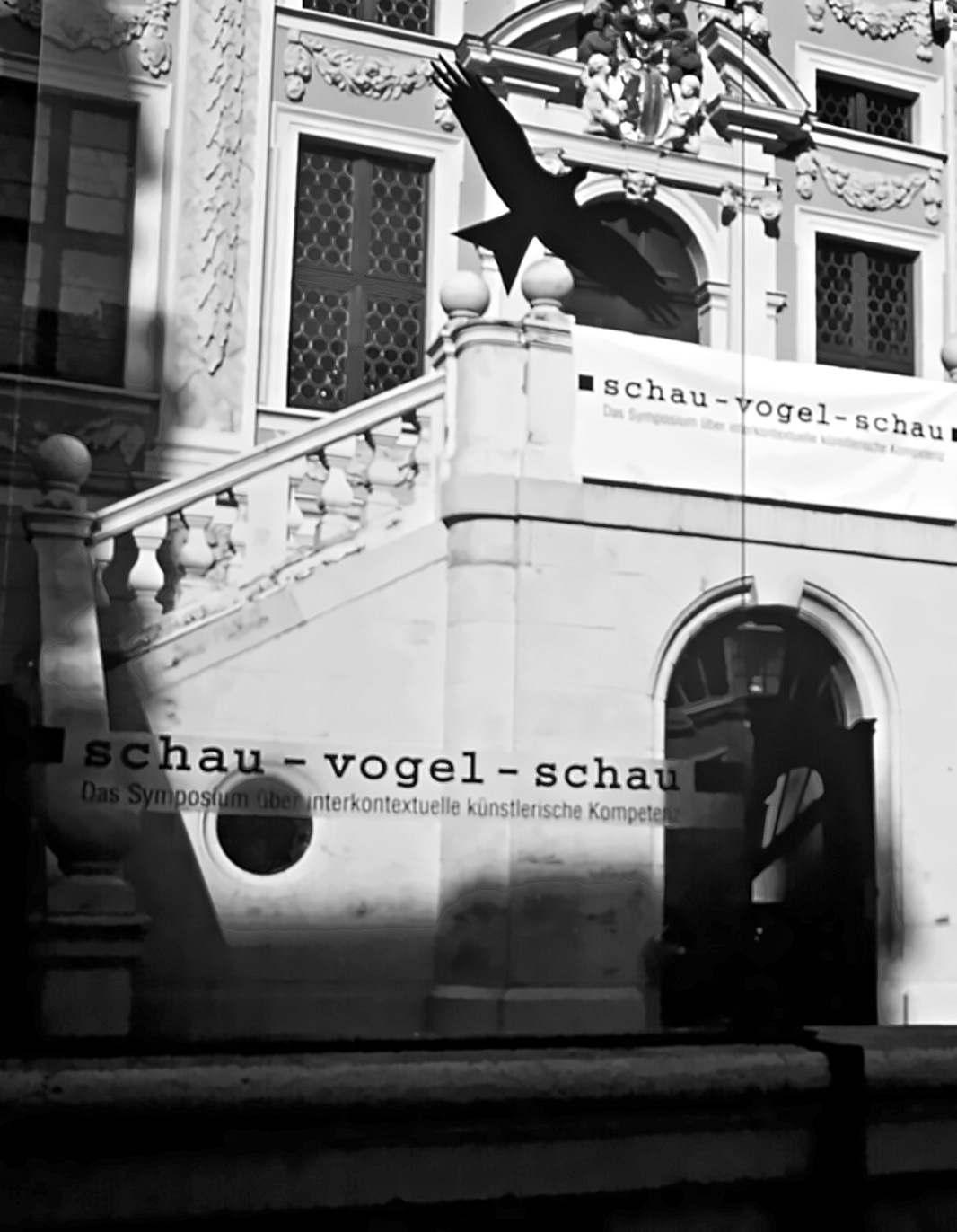
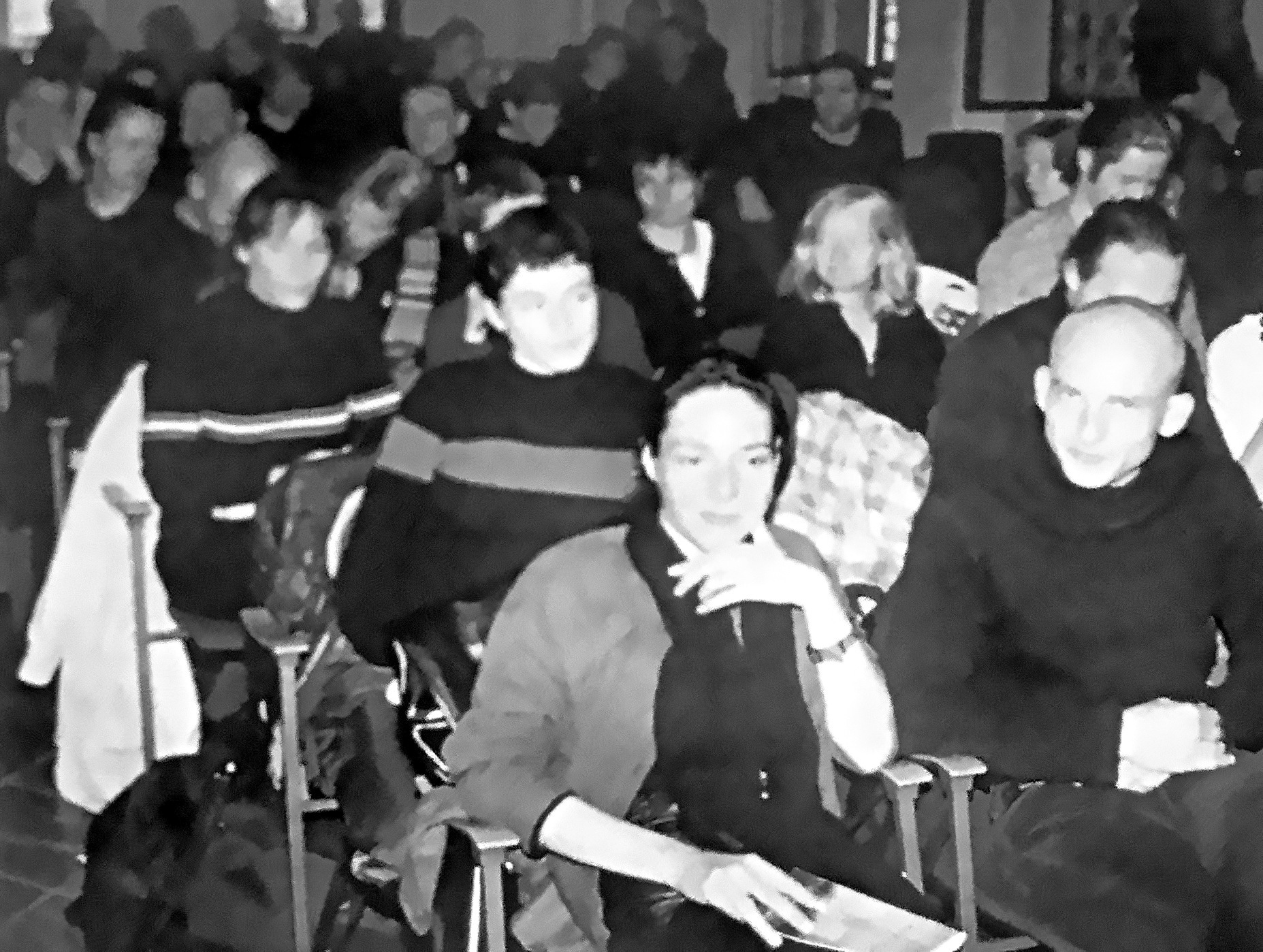
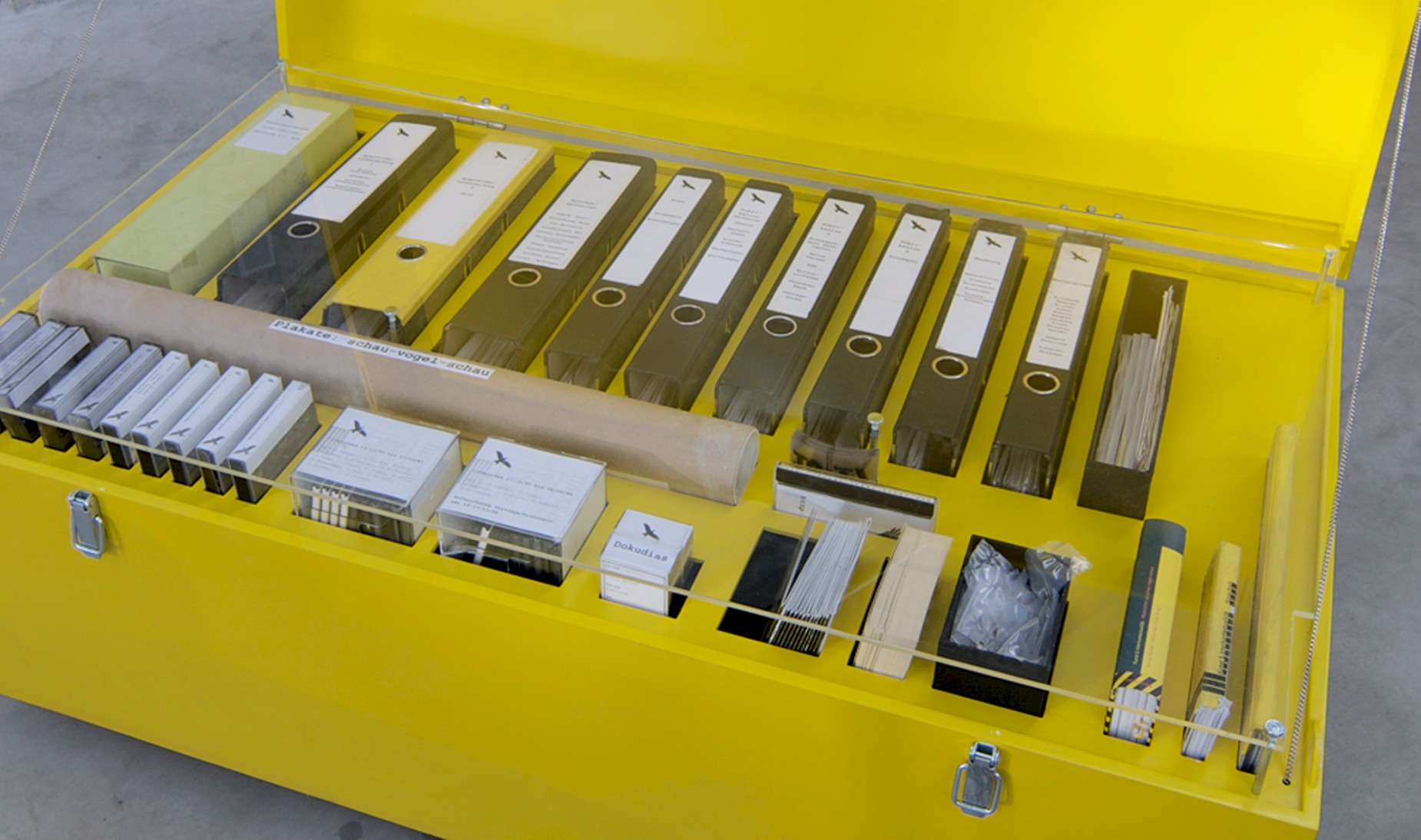
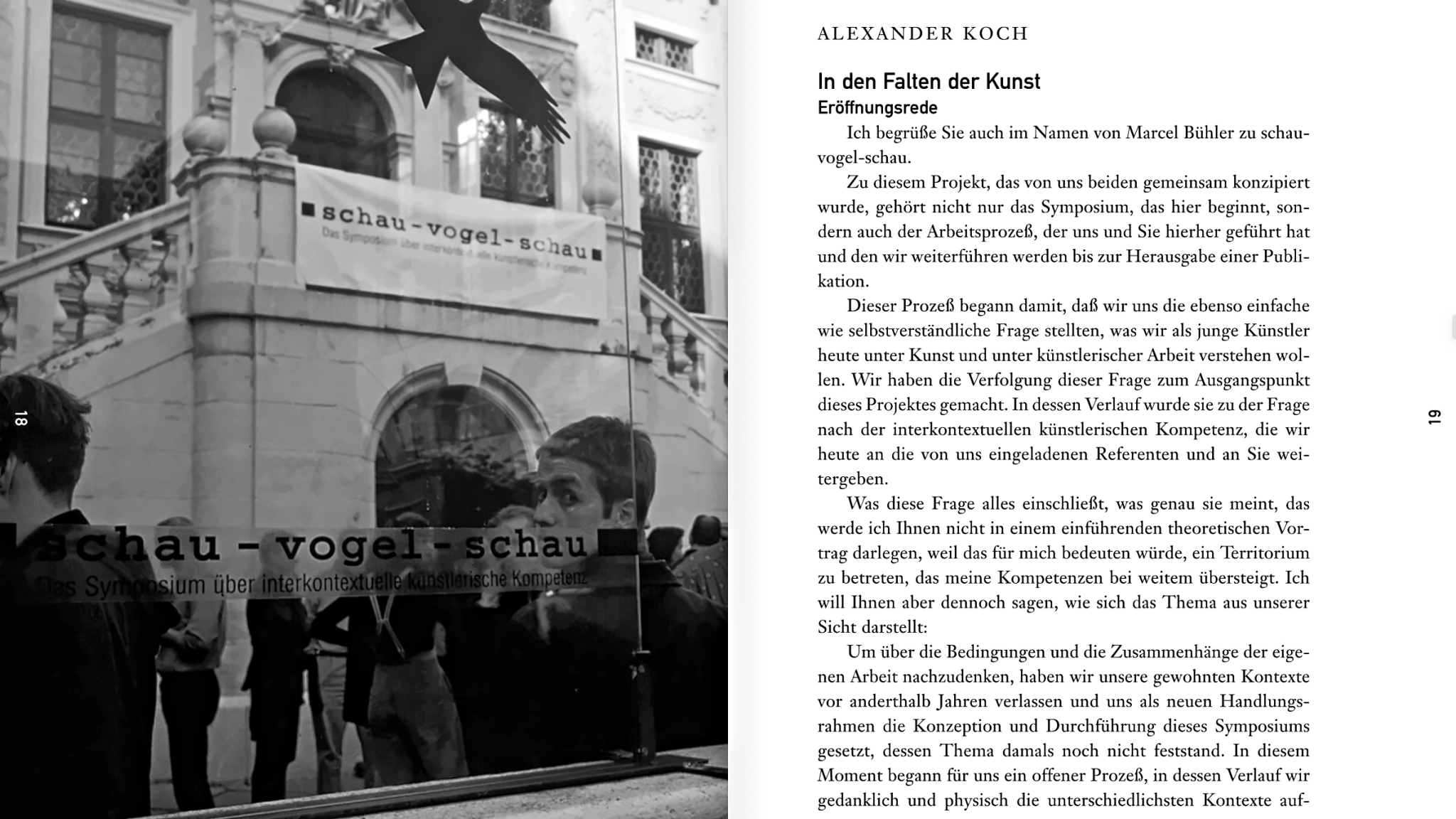
Das Symposium über interkontextuelle künstlerische Kompetenz

1998

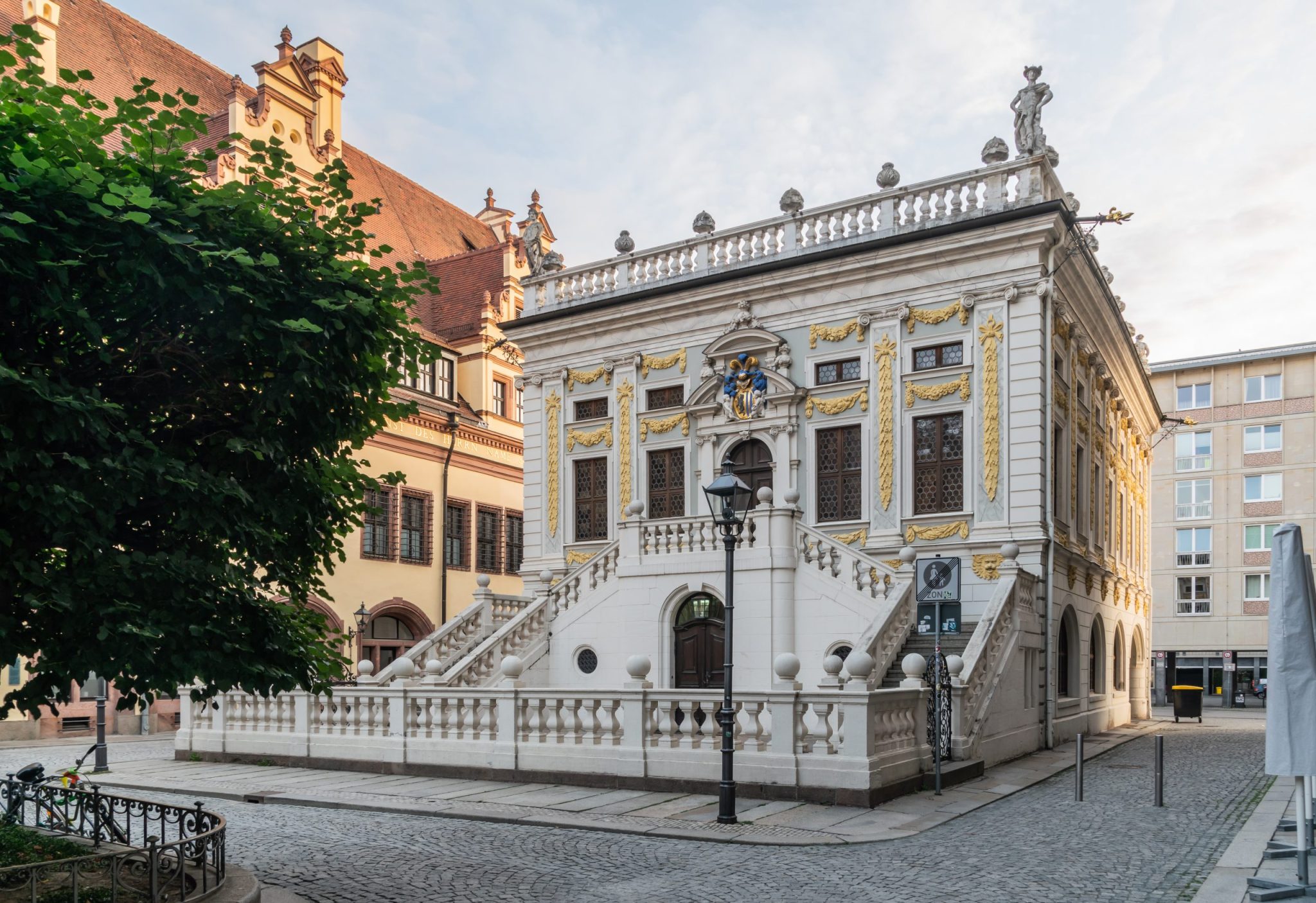
Alte Handelsbörse Leipzig, 16./17. Oktober 1998

Ein Projekt von Marcel Bühler und Alexander Koch

Teilnehmende: Jean-Christophe Ammann, Bettina Allamoda, Christine Eichel, Hans Dieter Huber, Christian Janecke, Dietmar Kamper, Olaf Nicolai, Horst Prehn Moderation: Stephan Schmidt-Wulffen

Die 90er Jahre waren erneut von der Hoffnung getragen, künstlerisches Handeln könne auf verschiedenen Feldern gesellschaftlicher Wirklichkeit (re)aktiviert werden. Was aber tatsächlich geschieht, wenn dabei das Feld der Kunst etwa mit jenem der Politik, der Ökonomie oder der Wissenschaft in ein Wechselverhältnis tritt, war und ist Gegenstand umfangreicher und kontroverser Diskussion.

“Wie faltet sich die Kunst in ein Anderes, und wie faltet sich ein Anderes in die Kunst?” Mit dieser Frage schaltete … read more